

| IN A NUTSHELL |
|
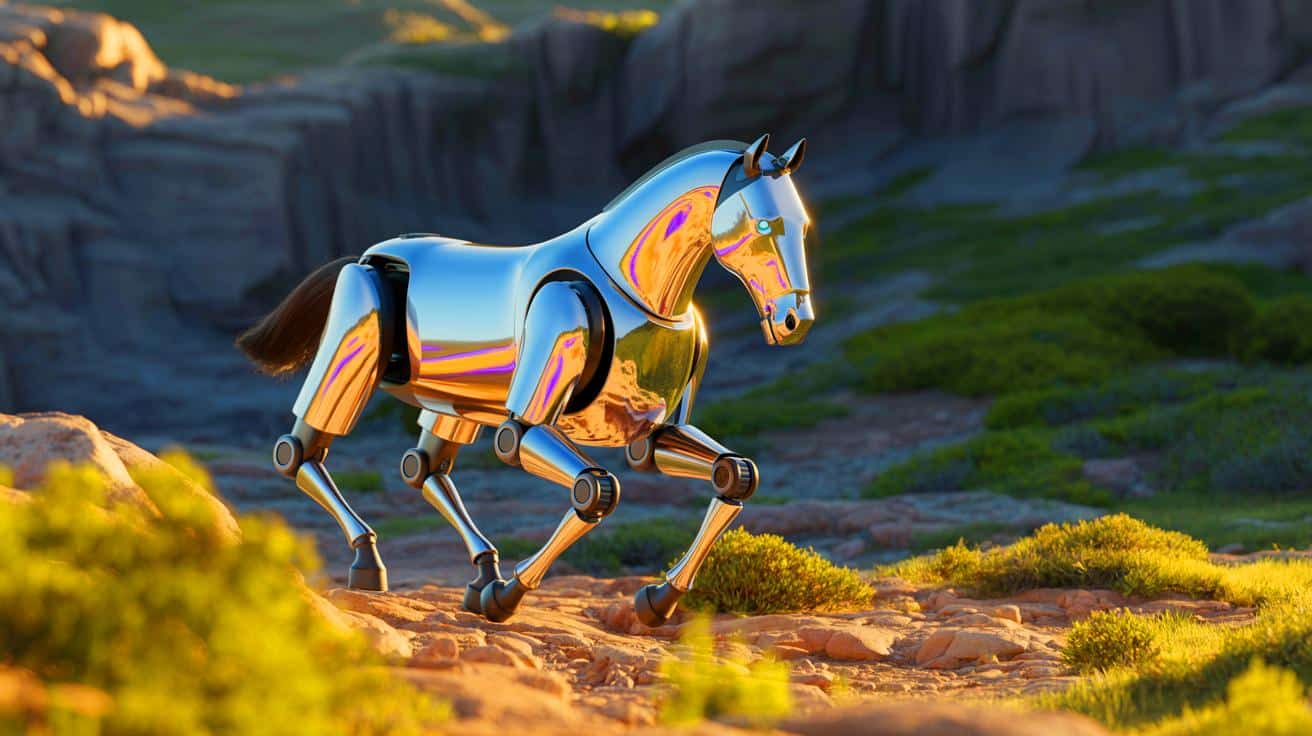
The world of personal mobility is on the brink of a fascinating transformation, as evidenced by Kawasaki Heavy Industries’ latest concept vehicle: the Corleo. This groundbreaking robot horse, powered by a hydrogen engine, represents a bold vision for the future of transportation. With its AI-driven capabilities and environmentally friendly design, the Corleo aims to redefine how we navigate challenging terrains. While the concept may seem ambitious, it is a testament to Kawasaki’s commitment to innovation and sustainable technology.
An Ambitious Vision for Mobility
Kawasaki’s Corleo is not just a concept; it is an audacious vision for the future of personal transportation. The robot horse is designed to offer a unique combination of agility and sustainability. Powered by a hydrogen fuel cell, the Corleo produces only water as a byproduct, making it an environmentally friendly alternative to traditional vehicles. Its AI-driven design allows it to navigate rough terrains with ease, responding to the rider’s body language for seamless control.
Unlike traditional horses, the Corleo does not require feeding or grooming and avoids the environmental impact of animal waste. It offers a clean, efficient, and innovative mode of transportation that could transform how we interact with our environment. This vision aligns with broader global efforts to reduce emissions and promote sustainable living. By leveraging cutting-edge technology, Kawasaki is pushing the boundaries of what is possible in personal mobility.
Integrating AI and Advanced Robotics
The Corleo's design is a marvel of modern engineering, integrating artificial intelligence and advanced robotics to create a machine that is both intelligent and responsive. Its AI vision system allows it to analyze terrain and make real-time decisions, ensuring both the safety and comfort of the rider. The robot's bifurcated hooves and adjustable stirrups are engineered to adapt to various riders and terrains, enhancing its versatility.
The potential applications of such technology are vast. From recreational use in rugged environments to practical applications in search and rescue operations, the Corleo could revolutionize how we approach mobility in challenging conditions.
The integration of AI in mobility devices like the Corleo highlights a shift towards smarter and more adaptive modes of transportation.
As we continue to innovate, the role of AI in everyday life becomes increasingly significant, offering solutions that are both intelligent and intuitive.
Challenges and Realities
Despite its impressive design, the Corleo faces significant challenges before becoming a mainstream reality. The prototype, as demonstrated, is still a concept—one that is heavily reliant on computer-generated imagery rather than a fully functioning model. Kawasaki envisions this as part of a 2050 mobility project, highlighting the long-term nature of its development.
Currently, the Corleo serves more as a symbol of possibility rather than a practical solution. The technological hurdles, including the refinement of AI and the development of robust hydrogen fuel systems, are substantial. Moreover, the market readiness for such a futuristic vehicle is uncertain. While the concept is fascinating, it needs further development and practical testing to address these challenges effectively.
The Future of Ride-On Quadrupeds
Kawasaki's Corleo is part of a broader trend towards ride-on quadrupeds, a field gaining momentum with other companies exploring similar concepts. For instance, XPeng's rideable Unicorn, designed for children, highlights the growing interest in robotic quadrupeds. These innovations suggest a future where such vehicles are more common, offering new ways to engage with technology and the environment.
However, Kawasaki's vision of a high-speed, all-terrain robot horse remains aspirational. The practicality of such a vehicle, including safety concerns and user experience, poses questions that need to be addressed. Yet, the creativity and innovation behind the Corleo cannot be understated. It represents a bold step towards a future where personal mobility is reimagined, blending technology, sustainability, and adventure into a single, compelling package.
As we look forward to the advancements in personal mobility, concepts like Kawasaki's Corleo spark the imagination and drive the conversation about what's possible. How will these innovations shape our transportation landscape, and what role will they play in achieving a more sustainable future?