

Gas-only cars fall below half of global new-car sales
Mobility Global data show gasoline-only vehicles at 49% of new sales in early 2026, while hybrids outsold battery-electric models and regional trends diverged.
 By
Graham Pettigrew
By
Graham Pettigrew

Gasoline-only vehicles made up 49% of new vehicles sold worldwide between January and June 2026, down from 73% in 2021. It is the first time on record that they have dropped under half of the global market. The data comes from Mobility Global, an automotive data firm that used to be called S&P Global Mobility and was separated from S&P Global earlier in 2026. Electrek relayed the data after Nikkei first reported it.
In brief
- It is the first time on record that they have dropped under half of the global market.
- According to Nikkei, oil explains the faster shift.
- Analysts cited by Yahoo estimate that EVs will exceed 30% of total vehicle production by 2030, overtaking hybrids and pure combustion vehicles, diesel included.
The slide is steep. In a single year the share fell three points, from 52% to 49%, and gas-only volume dropped 10% to 20.25 million units over the six months. The International Energy Agency puts the shrinkage of the whole car market at about 5% over the same period, which means gas-only sales contracted at twice the pace of the market.
Hybrids counted apart from gas-only cars
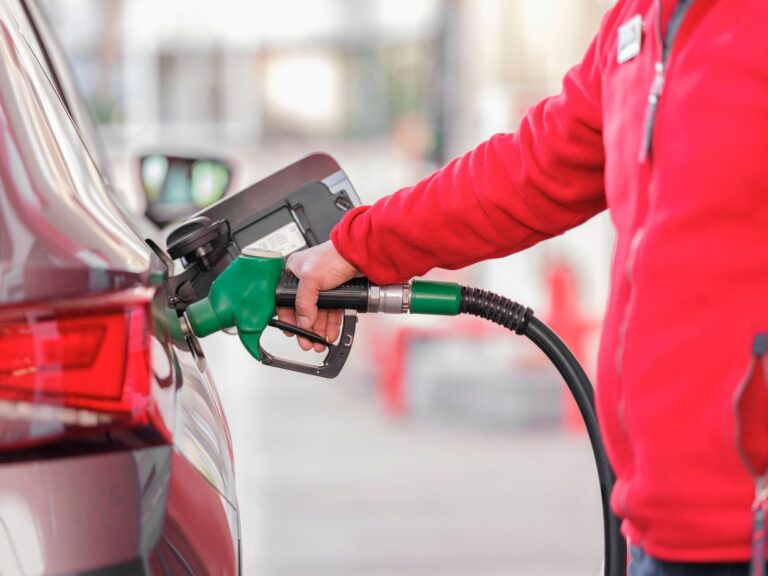
The label needs careful reading. The 49% covers vehicles that run on gasoline and nothing else, so hybrids are counted in a separate category. Conventional hybrids actually outsold battery-electric models in the first half, even though both grew.
| Powertrain | Units, first half 2026 | Change on a year earlier | Share of sales |
|---|---|---|---|
| Gasoline-only | 20.25 million | Down 10% | 49% |
| Conventional hybrid | 7.27 million | Up 10% | 18% |
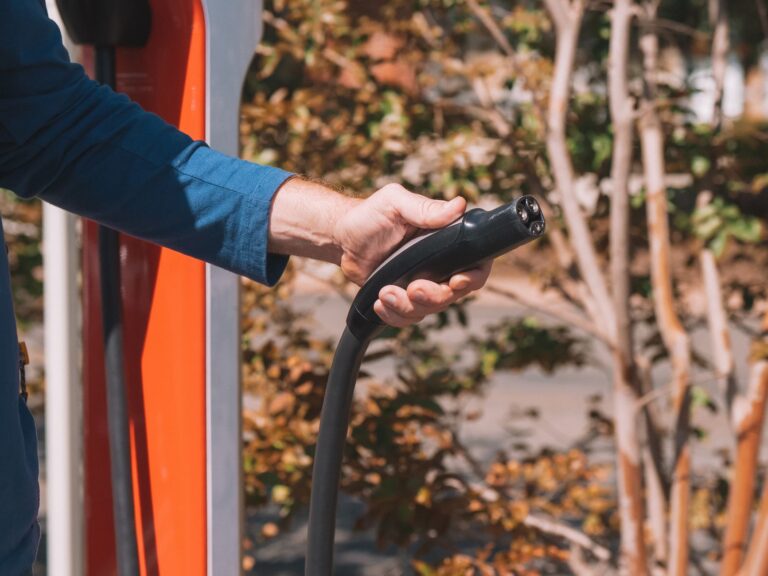
| Battery-electric | 6.87 million | Up 12% | 17% |
Those three rows add up to 84%. Electrek notes that the rest is made of diesel, plug-in hybrids and a few minor fuels. Because only the battery-electric slice burns no fuel at all, about 83% of the new vehicles sold worldwide this year still came with an engine, by Electrek’s tally. The 49% is also a six-month reading taken during an oil price spike, so whether the full year stays below one half remains to be seen.
Oil prices and uneven regional shifts
According to Nikkei, oil explains the faster shift. Fuel prices climbed after fighting broke out in the Middle East, and buyers began hunting for cheaper vehicles to run. Yoshiaki Kawano, an associate director at Mobility Global, said that EV adoption slowed around 2024 and hybrids grew because of subsidy cuts and other factors, but that higher oil prices have renewed appreciation for the lower operating costs of EVs.
The regional picture is uneven. Gas car sales fell most in China, down 26%, followed by Europe at 13%. On the battery-electric side, Europe grew 32% to 1.81 million units, Southeast Asia rose 81% to 350,000, and Oceania more than doubled to 110,000. China slipped 3% to 3.44 million, which still represents half of the world total, and North America fell 15%. In the European Union, ACEA registration data through August show 1,641,333 battery-electric cars against 1,634,733 petrol cars, with petrol registrations down 18.6%.
The United States and the outlook for EVs
The United States is often cited as the exception, with gas cars said to be regaining ground since the federal tax credit ended. Electrek shows the picture is more nuanced. Cox Automotive forecasts close to 239,000 new EVs sold in the third quarter, near 6% of the market, which is about 45% under the 437,000 sold a year earlier, when buyers rushed to beat the September 30 deadline. Yet those buyers did not return to gas-only cars. In the second quarter, hybrid volume rose 23% to a record 16.3% share, and electrified vehicles as a group edged up from a 22.4% share to 23.2%. Cox further puts gasoline near $4.50 a gallon, 41% higher than a year earlier.
Kawano also told Nikkei that few EV buyers go back to gasoline vehicles or hybrids, and that as prices keep falling, demand rooted in real consumer needs instead of subsidies should grow. Analysts cited by Yahoo estimate that EVs will exceed 30% of total vehicle production by 2030, overtaking hybrids and pure combustion vehicles, diesel included.
Featured image. Source: Pexels. Credit: Engin Akyurt. License: Pexels License.