

2027 Jeep Cherokee Trailhawk Adds Low Range, a Rear Locker and Hybrid Battery Protection
The returning trim adds gearing, underbody protection and terrain-oriented dimensions that matter more on difficult trails than its horsepower figure alone.
 By
Renée Castellano
By
Renée Castellano
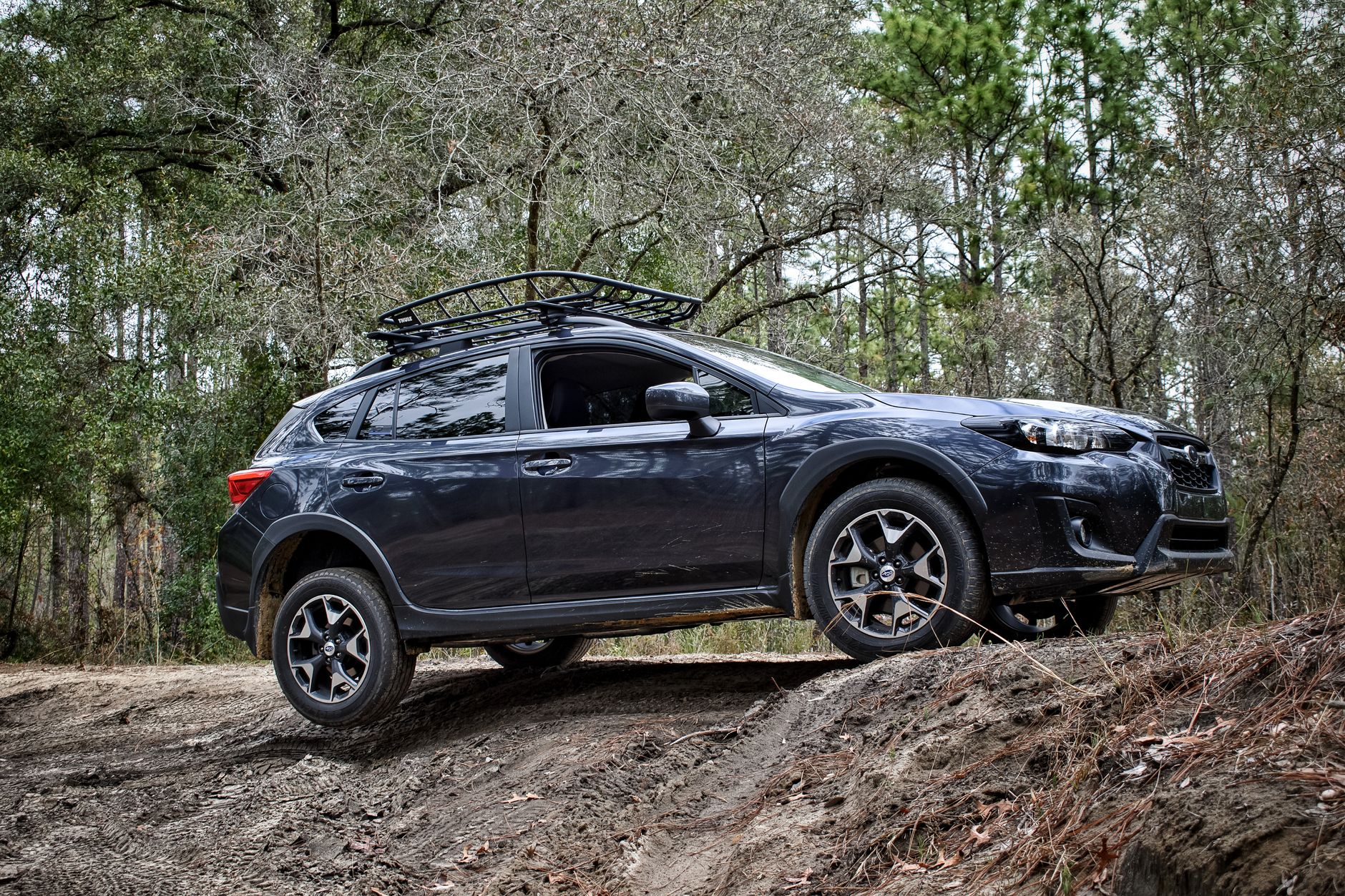
Jeep is bringing the off-road-focused Trailhawk trim back to the Cherokee lineup for the 2027 model year.
The returning version combines the Cherokee’s 1.6-liter-based hybrid powertrain with equipment intended for low-speed trail driving. Output is rated at 210 horsepower and 230 lb-ft of torque, but those figures provide only part of the picture. The more consequential Trailhawk changes are found in its four-wheel-drive system, gearing, suspension, tires and underbody protection.
Horsepower describes how quickly an engine or powertrain can do work, while torque measures rotational force. Neither number, viewed alone, establishes how effectively an SUV will negotiate a loose climb or maintain controlled progress over rocks. Available traction, low-range gearing, clearance and the ability to keep power moving through the driven wheels all affect that task.
The hybrid output therefore should not be read as a complete off-road performance score. It identifies the power available from the system, but it does not supply a real-world fuel economy result, acceleration time or direct comparison with another SUV. The Trailhawk’s trail-oriented hardware gives buyers more specific information about what separates it from the rest of the Cherokee range.
Low range and a locking rear differential are the defining upgrades
The 2027 Cherokee Trailhawk has a two-speed transfer case with a 2.92:1 low-range ratio. Low range introduces additional gear reduction between the powertrain and the wheels, prioritizing controlled wheel movement over road speed. That is relevant when the vehicle needs to move slowly through uneven terrain rather than gather speed on pavement.
Jeep also lists a 37.5:1 crawl ratio. The crawl ratio represents the combined reduction available in the vehicle’s lowest gearing. A larger numerical reduction allows the wheels to rotate more slowly relative to powertrain speed, helping the driver make small, deliberate movements. The figure does not prove how the Cherokee will perform on every surface, but it confirms that the Trailhawk has dedicated low-speed gearing rather than relying only on ordinary road ratios.
A locking rear differential is included in the four-wheel-drive system. An open differential can allow the two wheels on an axle to turn at different speeds, which is useful in normal cornering. When grip becomes uneven, however, a locking function can connect the rear wheels so that the wheel with more traction can continue contributing to forward movement. Its value is most apparent when one rear tire is on a more slippery or uneven surface than the other.

Together, the transfer case and rear locker are more meaningful indicators of the Trailhawk’s intended role than exterior trim alone. They address two practical off-road needs: multiplying torque at low speed and managing traction across the rear axle. Jeep’s published specifications identify both systems as standard Trailhawk equipment.
The hardware also helps distinguish this Cherokee from vehicles that use off-road styling without adding low-range gearing. Buyers comparing different SUV designs may also find useful context in our examination of how vehicle construction affects off-road durability and performance. The Cherokee Trailhawk’s specifications should still be judged on their own rather than treated as directly equivalent to those of another model.
Clearance and terrain specifications in context
Ground clearance and body angles indicate how much room an SUV has around common trail obstacles. The Trailhawk sits one inch higher than other Cherokee variants and receives separate suspension tuning. Its revised front and rear geometry produces an approach angle of as much as 28.8 degrees and a 31.8-degree departure angle. TFLcar adds a ramp breakover angle of 21.9 degrees.
| Specification | 2027 Cherokee Trailhawk | Why it matters off road |
|---|---|---|
| Ground clearance | 9 inches | Creates space beneath the vehicle when crossing ruts, rocks and uneven ground. |
| Suspension | One-inch lift with upgraded tuning | Raises the body and adapts the suspension specification for rougher surfaces. |
| Water-fording rating | Up to 24 inches | States the maximum published water depth for which the vehicle is rated. |
| Approach angle | Up to 28.8 degrees | Indicates the incline the front can meet before the lower body becomes the limiting point. |
| Departure angle | 31.8 degrees | Describes the corresponding clearance at the rear while leaving an obstacle or slope. |
The 24-inch fording number is a rated depth, not permission to enter any body of water below that level. Surface stability, current, hidden obstacles and changes in depth are separate conditions that a single specification cannot describe. Likewise, 9 inches of clearance applies to the vehicle’s published geometry, but it does not prevent contact if a driver chooses a poor line over an obstacle.
Trail equipment protects vulnerable areas
The Trailhawk’s supporting equipment combines tire sidewall, wheel sizing and steel protection beneath the vehicle:
- 17-inch wheels fitted with 245/65R17 all-terrain tires;
- steel skid plates protecting the front axle;
- steel protection around wiring and the fuel tank;
- a separate protective plate for the hybrid battery.
All-terrain tires are the contact point for the Trailhawk’s traction hardware, while the 17-inch wheel and specified tire combination provides the model’s published setup. The skid plates address the risk of underbody contact in areas containing major mechanical, electrical and fuel-system components. Battery protection is particularly relevant here because the Cherokee combines its trail equipment with a hybrid system.
These components do not make the underside immune to damage, and the dimensional ratings do not guarantee passage over every obstacle. They do show where Jeep concentrated the Trailhawk’s changes: controlled low-speed gearing, rear-axle traction, additional clearance, terrain-oriented tires and protection for vulnerable hardware.
Photo: Connor Scott McManus / Pexels