

“2,000 Horsepower Electric Van Destroys Supercars”: Ford’s SuperVan 4.2 Becomes Eighth Fastest Car Ever at Nürburgring With Shocking 6:48 Lap Time
 By
Graham Pettigrew
By
Graham Pettigrew
| IN A NUTSHELL |
|
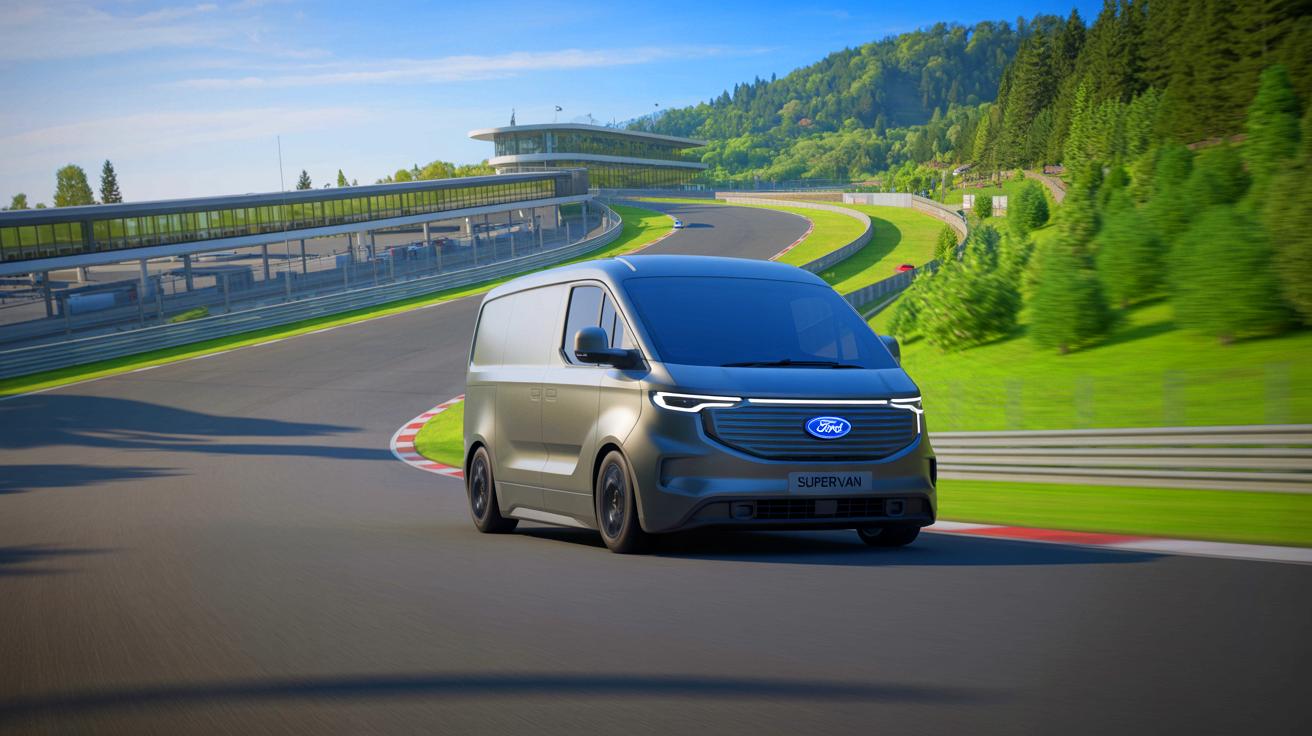
In a remarkable display of innovation and engineering prowess, Ford has made a striking comeback on the Nürburgring circuit with its electrifying SuperVan 4.2. This isn’t just any commercial vehicle but a testament to Ford’s commitment to pushing the limits of electric vehicle (EV) technology. The SuperVan 4.2, an all-electric powerhouse, recently set a record time of 6:48.393 on the Nürburgring, surpassing the previous record held by Chevrolet’s Corvette ZR1X. This achievement underscores the rapid advancements in EV capabilities and the potential future of electric motorsports.
The Birth of a Revolutionary Van
The SuperVan 4.2 is not your average Ford Transit vehicle. While the Transit is typically known as a reliable cargo van, the SuperVan 4.2 transforms this everyday vehicle into a high-performance machine. Ford has equipped this van with nearly 2,000 horsepower, allowing it to achieve speeds that rival and even surpass some of the most celebrated sports cars in the world.
This revolutionary vehicle is part of a lineage that dates back to 1971 when the first SuperVan made its debut with a radical design. Over the years, Ford has continued to evolve this concept, culminating in the creation of the SuperVan 4.2. This latest iteration not only pays homage to its predecessors but also showcases Ford’s ability to adapt and innovate in the rapidly changing automotive landscape.
Despite its impressive performance, it’s important to note that the SuperVan 4.2 is not a production vehicle. Instead, it serves as a prototype for testing and demonstrating cutting-edge EV technology. It is a custom race car with slick tires, crafted to achieve record-breaking speeds on the track rather than on public roads.
“680 Horsepower in 4 Seconds”: Volvo ES90 Destroys Tesla With 435-Mile Range and Lightning Charging
Breaking Records and Setting New Standards
The SuperVan 4.2’s record-breaking performance on the Nürburgring is a significant milestone for Ford and the electric vehicle industry. By completing the lap in 6:48.393, it not only shattered the previous record set by the Chevrolet Corvette ZR1X but also became the eighth fastest car to ever lap the famous track.
This achievement was made possible by the skilled driving of Romain Dumas, a veteran of the Nürburgring circuit. Dumas is no stranger to breaking records, having previously set the fastest EV lap time in 2019 with the Volkswagen ID.R. His experience and expertise were instrumental in extracting the maximum performance from the SuperVan 4.2.
The SuperVan’s success at the Nürburgring highlights the growing competitiveness of electric vehicles in motorsports. It demonstrates that EVs are not only environmentally friendly alternatives but also capable of delivering unparalleled performance on the racetrack.
Technological Innovations and Future Implications
The SuperVan 4.2 is more than just a record-breaking vehicle; it represents Ford’s commitment to advancing electric vehicle technology. The innovations developed for this project are expected to influence future Ford EVs, contributing to more efficient and powerful consumer vehicles.
Ford has emphasized that the technologies used in the SuperVan 4.2 could be transferred to next-generation electric vehicles, potentially impacting the design and performance of future EVs. This cross-pollination of technology between concept vehicles and production models is crucial for accelerating the adoption of electric vehicles.
Additionally, the SuperVan 4.2’s success underscores the importance of continued investment in EV technology. As automakers strive to meet increasingly stringent emissions regulations and consumer demand for sustainable vehicles grows, innovations like those seen in the SuperVan 4.2 will be essential for the industry’s future.
The Legacy of the SuperVan and Future Prospects
The SuperVan 4.2 is the latest chapter in a storied legacy of innovation and performance. From its origins in the 1970s to its current iteration, the SuperVan has always been a symbol of Ford’s willingness to experiment and push boundaries.
As Ford celebrates the SuperVan 4.2’s achievements, the company is already looking ahead to future projects. Ford has hinted at the development of the F-150 Lightning SuperTruck, another vehicle that promises to deliver groundbreaking performance on and off the track.
This commitment to innovation raises important questions about the future of electric vehicles in motorsports and the automotive industry at large. How will advancements in EV technology continue to reshape the landscape of high-performance vehicles, and what role will companies like Ford play in this evolving narrative?
Ford’s SuperVan 4.2 has set a new standard for electric vehicles on the Nürburgring, demonstrating the incredible potential of EV technology in motorsports. As Ford and other automakers continue to innovate, the future of electric vehicles looks promising. What new records will be set, and how will these advancements impact the everyday driving experience for consumers worldwide?