

“AI Just Designed a $1 Million Hypercar”: Vittori and Pininfarina Reveal a 1,110-HP Hybrid Masterpiece Blending Machine Precision With Human Artistry
 By
Owen Fairbrother
By
Owen Fairbrother
| IN A NUTSHELL |
|
The integration of artificial intelligence into various industries has sparked a wave of curiosity and skepticism. In the automotive sector, AI is beginning to make its mark, albeit slowly. While companies like Alpine have started using AI to streamline design processes, it has not yet replaced human ingenuity. However, the recent unveiling of an AI-assisted hypercar by the American startup Vittori, in collaboration with the design house Pininfarina, has brought this possibility into sharper focus. This venture has set the automotive world abuzz with questions about the future of car design and the role of AI in crafting the vehicles of tomorrow.
The AI Influence in Automotive Design
The automotive industry has long been on the cutting edge of technology, with innovations continuously reshaping the landscape. The introduction of AI into this field marks another significant evolution. Companies have experimented with AI to enhance design efficiency and creativity. Alpine, for instance, has utilized AI to speed up their design process, indicating a shift towards more tech-driven methodologies. However, the widespread adoption of AI in replacing human designers has not yet occurred.
Vittori’s recent announcement of their AI-assisted hypercar represents a bold step forward. The company claims to use “forward-looking technology” in their development process, which many interpret as a nod to AI. Despite this, AI has not displaced human designers at Vittori. The collaboration with Pininfarina, a renowned design firm, underscores the continued importance of human expertise in creating aesthetically compelling vehicles.
Design and Aesthetic Appeal
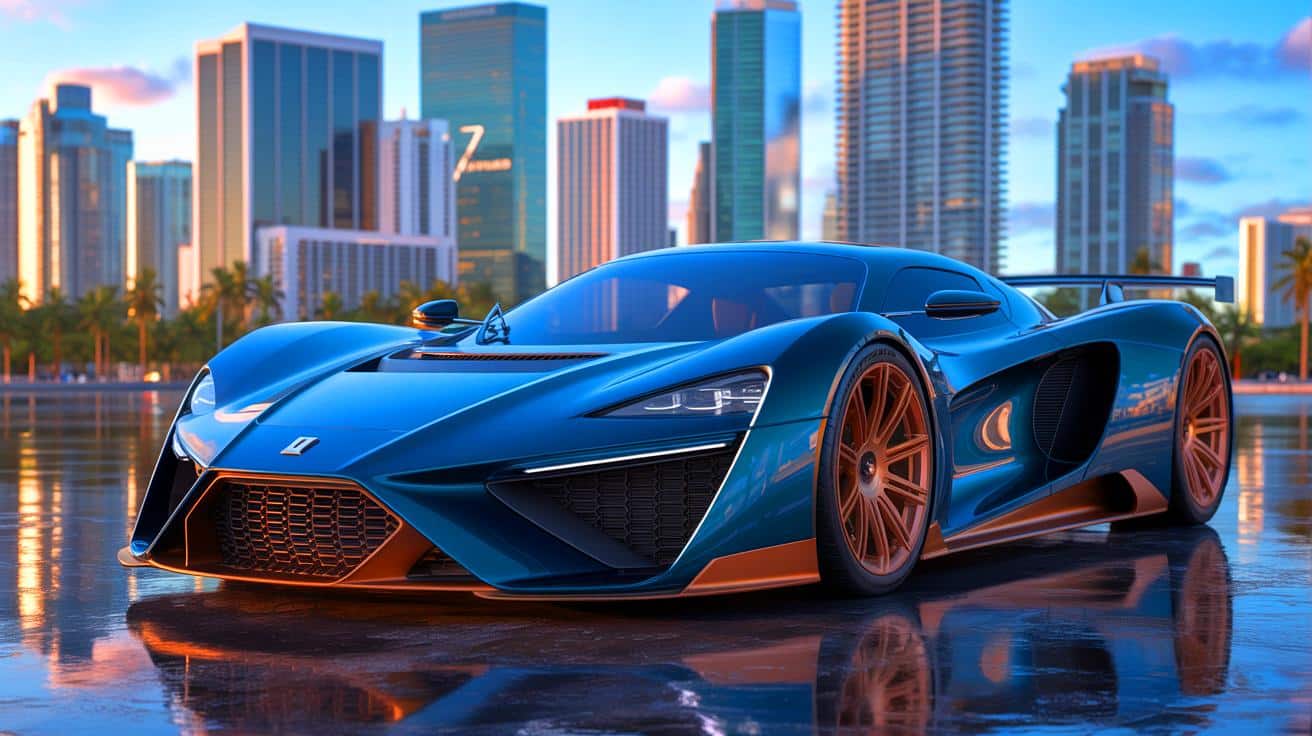
The design of Vittori’s new hypercar is a testament to the harmonious blend of technology and artistry. The vehicle shares design cues with the McLaren GT, featuring a distinctive hexagonal grille and sleek ultra-thin headlights. This design strategy aligns with the modern aesthetic trends in high-performance vehicles, marrying form with function.
The rear of the car echoes the dramatic flair often seen in hypercars, with angular taillights and a prominent diffuser. Bronze accents complement the deep blue paint, offering a visual contrast that highlights the car’s contours. Inside, the influence of McLaren persists with a vertically oriented touchscreen and a digital dashboard. This interior design not only enhances driver engagement but also reflects a modern approach to luxury and performance.
Performance and Technical Specifications
The heart of Vittori’s hypercar lies in its impressive powertrain. Developed in collaboration with Italtecnica, the vehicle boasts a 6.8-liter hybrid V-12 engine. This is paired with an electric motor on the front axle, producing a combined output of 1,110 horsepower. Such specifications place the hypercar in direct competition with elite models like the Ferrari 849 Testarossa and Koenigsegg Jesko.
The hypercar’s performance metrics are equally striking. It accelerates from 0 to 60 mph in approximately 2.5 seconds, a benchmark that underscores its capabilities. While the top speed has not been disclosed, Vittori assures potential buyers that it will meet hypercar standards. This blend of hybrid technology and raw power demonstrates the potential of AI-assisted design to achieve remarkable feats in automotive engineering.
Vittori’s Vision and Market Impact
Vittori’s foray into AI-enhanced automotive design is as much about ambition as it is about innovation. Carlos Cruz, the founder and CEO of Vittori, articulated a vision of creating a vehicle that transcends traditional supercar paradigms. Their aim is to evoke emotions and a sense of connection through a combination of performance, beauty, and control. The hypercar is intended to be more than a machine; it is envisioned as a work of art.
The production of this limited-edition hypercar, capped at 50 units globally, is set to begin next year in Italy. Although pricing details are pending, the market anticipates a cost exceeding $1 million. This exclusivity not only positions Vittori within the luxury car segment but also sets a precedent for future AI-assisted designs. As the automotive industry watches closely, the implications of Vittori’s venture could shape the trajectory of car design in the years to come.
The advent of AI in automotive design, as demonstrated by Vittori’s hypercar, raises intriguing questions about the future of the industry. Will AI become a staple in car design, or will it remain a tool for select applications? As we ponder the potential of AI to revolutionize automotive engineering, the balance between technology and human creativity continues to be at the forefront of this evolving narrative. How will the industry adapt to these technological advancements while maintaining the artistry that defines automotive design?