
“Coca-Cola Ditched Gas Forever”: Company Deploys 5,000 Electric Rickshaws While Your Delivery Trucks Become Obsolete Overnight
 By
Avi Cohen
By
Avi Cohen
| IN A NUTSHELL |
|
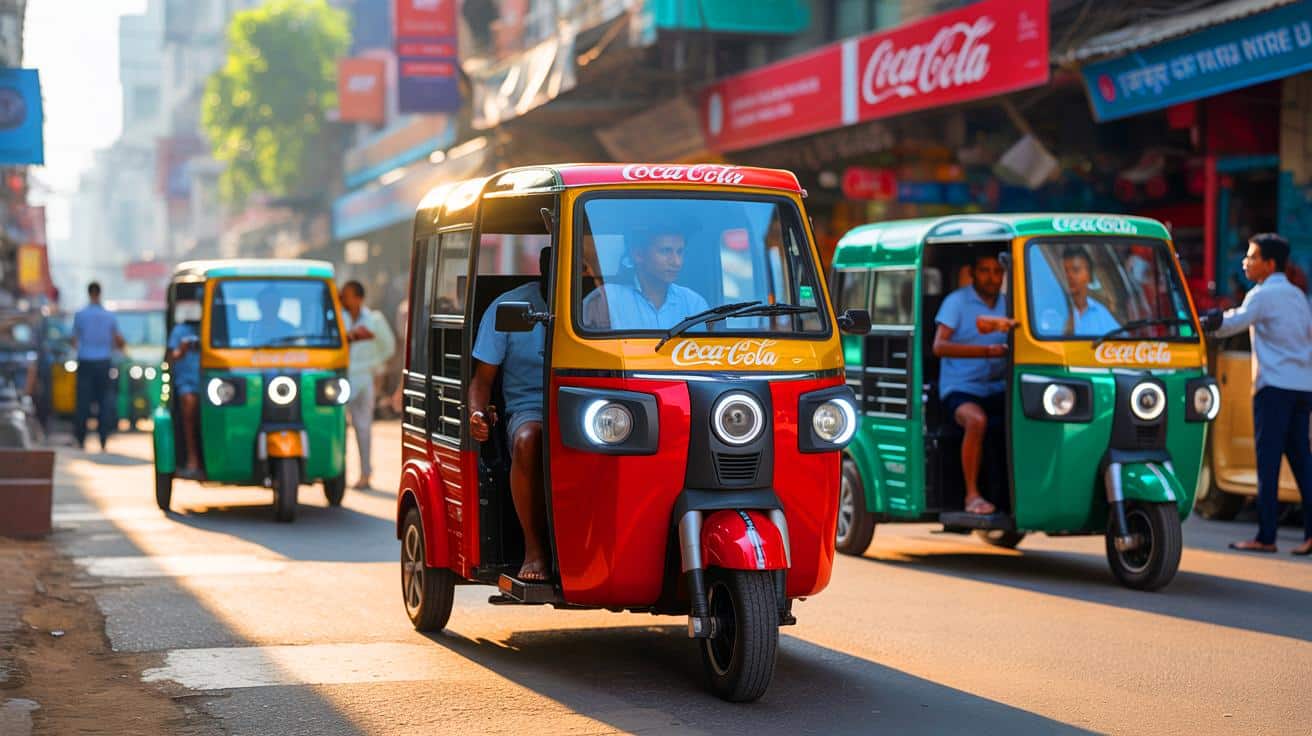
As global corporations seek sustainable solutions to reduce their carbon footprints, Coca-Cola’s recent move to expand its electric delivery fleet in India stands out. The beverage giant is integrating thousands of electric three-wheeled vehicles, also known as e-rickshaws, into its delivery operations. These compact and efficient electric vehicles are already a staple on Indian roads, serving various roles from passenger transport to last-mile cargo deliveries. This initiative, part of Coca-Cola’s “Vividhta ka Uphaar” or “a gift of diversity,” aims to enhance sustainability and community welfare by reducing emissions and noise pollution while cutting operational costs.
India’s Growing Electric Revolution
India has been at the forefront of adopting electric three-wheelers, commonly referred to as e-rickshaws, as part of its urban mobility solutions. These vehicles have become an integral component of the country’s transportation landscape, offering an affordable and eco-friendly alternative to traditional fossil-fuel vehicles. Major cities like Ahmedabad, Bhubaneswar, and Bhopal are witnessing an increase in the deployment of these electric vehicles, thanks to initiatives like Coca-Cola’s recent expansion.
With over 5,000 electric three-wheelers already operational in Coca-Cola’s fleet, the initiative represents a significant step forward in the company’s sustainability goals. These vehicles are especially suitable for the dense urban environments of Indian cities, where maneuverability and efficiency are crucial. By reducing tailpipe emissions and noise, the e-rickshaws not only benefit the environment but also improve the quality of life for city residents.
Other multinational corporations, including IKEA, Amazon, and Flipkart, are following suit by investing in similar technologies to enhance their delivery operations. This trend signifies a broader shift towards sustainable logistics solutions in Asia, where traffic congestion and pollution remain critical challenges.
The Strategic Appeal of Electric Three-Wheelers
Electric three-wheelers offer several advantages that make them an attractive option for companies aiming to streamline their operations. One of the most compelling benefits is their cost-effectiveness. Compared to traditional vehicles, e-rickshaws have lower operating costs due to their electric drivetrains, which require less maintenance and have fewer parts that can wear out.
Additionally, the small size and lightweight nature of these vehicles make them ideal for navigating the narrow and crowded streets of many Asian cities. Their compact design allows them to reach areas that larger vehicles cannot, making them perfect for last-mile deliveries. Despite their size, these vehicles can carry significant loads, often comparable to much larger delivery trucks.
The electric drivetrains used in these vehicles are more akin to those found in electric bicycles than in traditional electric trucks. With motors ranging from 2 to 4 kilowatts and battery capacities of 3 to 5 kilowatt-hours, they provide ample power for urban deliveries while maintaining high energy efficiency.
The Global Context of Electric Delivery Fleets
While electric three-wheelers are gaining traction in Asia, the global focus on electric vehicles tends to highlight four-wheeled electric trucks and vans, particularly in North America and Europe. However, the success of e-rickshaws in countries like India showcases the versatility and potential of these vehicles as an integral part of sustainable urban logistics.
Electric three-wheelers offer a glimpse into the future of urban transportation in developing regions, where infrastructure and economic constraints make them a more feasible option. Their implementation demonstrates how innovative approaches to transportation can address environmental concerns while supporting economic development.
As global companies continue to explore sustainable delivery solutions, the lessons learned from the deployment of electric three-wheelers in Asia could inform future strategies in other parts of the world. This cross-pollination of ideas and practices underscores the interconnected nature of global efforts to combat climate change.
Volkswagen Unleashes Its Own Epic Gymkhana Video: A Thrilling Ride!
Implications for Urban Mobility and Sustainability
The deployment of electric three-wheelers by companies like Coca-Cola represents a significant shift towards more sustainable and efficient urban mobility solutions. These vehicles not only reduce emissions but also contribute to quieter and cleaner cities. The move aligns with broader efforts to promote sustainability and environmental stewardship in corporate operations.
As cities worldwide grapple with the challenges of urbanization and climate change, electric three-wheelers offer a promising solution for reducing the environmental impact of transportation. Their success in India could inspire similar initiatives in other regions, fostering a more sustainable approach to urban logistics.
Ultimately, the adoption of electric three-wheelers highlights the importance of innovation in addressing the complex challenges of modern urban living. As more companies embrace these technologies, the potential for transformative change in urban transportation becomes increasingly apparent.
As the global push for sustainability continues, the role of electric three-wheelers in urban logistics may expand beyond Asia, influencing transportation strategies worldwide. What other innovative solutions can companies explore to further reduce their carbon footprints and enhance urban mobility?