


How to drive safely in bad weather conditions
 By
Ethan Kowalczyk
By
Ethan Kowalczyk
|
IN A NUTSHELL |
|
Weather is not a background detail in road safety; it is a decisive factor that transforms routine trips into hazardous tests of judgment and equipment. Recent data show roughly 750,000 weather-related crashes each year in the United States, with thousands of fatalities and many more injuries, underscoring that bad weather is a public-safety crisis as much as an inconvenience. Certain conditions (freezing rain, heavy snow, dense fog and powerful high winds) are repeatedly implicated in the worst outcomes because they erode traction, conceal hazards like black ice, and sharply reduce visibility. The argument is simple: drivers who adapt their behavior and equipment can markedly reduce risk. That means preparing in advance (investing in winter tires, carrying an emergency kit, and keeping vehicles in sound repair) and adjusting on the road by choosing to slow down, increase following distance, use low-beam headlights, and keep both hands on the wheel. Above all, common sense must prevail: when conditions exceed your comfort or capability, the safest option is to pull over until it’s prudent to continue.
Driving in freezing rain and black ice
Freezing rain is the hazard most drivers underestimate. When rain freezes on contact it produces a glassy, invisible surface (black ice) that turns perfectly ordinary roads into treacherous traps. Statistics show weather-related collisions are a major threat on U.S. roads, and freezing rain ranks among the deadliest contributors. That reality demands decisive action: you must assume wet looks can be frozen when temperatures approach 32°F (0°C), and drive accordingly.
Do not treat a road that looks merely wet as safe when air temperatures are near freezing. Slow speeds and increased following distances are not optional; they are the difference between stopping in time and becoming part of the accident statistics. Abrupt braking is a common cause of loss-of-control incidents on ice, if you begin to skid, the correct response is counterintuitive to many drivers: gently release the accelerator and steer into the direction of the skid to regain traction. Never slam the brakes, and avoid sudden steering inputs that destabilize the vehicle.
Practical preparation matters. Use winter-graded tires where freezing precipitation is common, consider chains or studs when conditions are extreme, and keep an eye on your vehicle’s external temperature gauge. Bridges, overpasses, and shaded stretches freeze first and longest; treat them as high-risk zones. For more technical tips and a breakdown of risky weather types, authoritative resources such as AAA’s guide and practical defensive-driving resources like CarSafetyZone are invaluable.
When freezing rain or ice is present, the safest option is often to delay travel. If you must drive, reduce speed, increase your following distance dramatically, and avoid untreated secondary roads. These are the circumstances in which judgement and restraint outperform speed and bravado every time.
Handling heavy snowfall and winter road conditions
Heavy snow presents a dual threat: it reduces traction and visibility while potentially immobilizing vehicles. Piled snow can render a route impassable, and even light, persistent snowfall hides pockets of black ice. The only defensible response is to treat snowy travel as a controlled, deliberate endeavor. That means equipping your vehicle properly and adjusting your driving style to the environment.
Winter tires are not a luxury where snow is common; they are an essential safety investment. Their specialized rubber compounds and tread designs preserve traction at low temperatures and in slush. If your region sees recurring snow, the small cost of winter tires pays for itself in reduced risk. Practice basic maneuvers (gentle acceleration, progressive braking, and controlled steering) in a safe area before you face traffic. Avoid aggressive throttle inputs that induce wheel spin; if you get stuck, straighten the wheels and accelerate gradually while using traction aids like sand or traction mats under the drive wheels.
Visibility management is equally critical. Remove snow and ice from every window, mirror and roof before moving; flying chunks of snow endanger other drivers and may be unlawful in many states. Keep a full-sized windshield scraper and a proper de-icing solution on hand. When encountering snowplows, stay well back and never attempt to pass a plow, plow operators deliberately use variable spacing and their vehicles obscure hazards.
For step-by-step winter preparation and maintenance guidance, consult manufacturer and specialty resources such as LeftLaneNews’ winter prep guide and broader driving-safety compilations at WeatherWego. Treat snow season like a planned campaign rather than a series of improvisations. Planning your route, checking forecasts, and allowing extra travel time turn winter commutes from high-risk gambles into manageable trips.
Navigating fog, rain, and reduced visibility
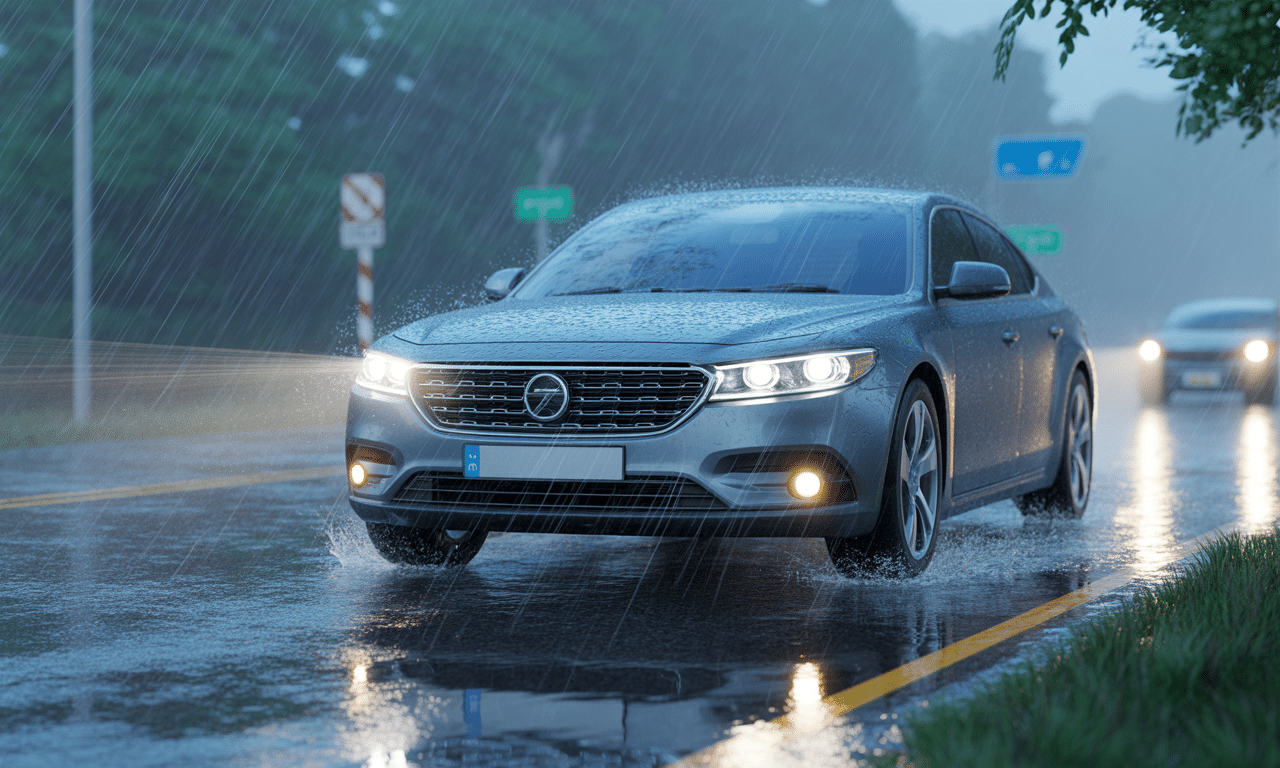
Fog and heavy rain compress your visual field and compress your reaction window. When visibility drops, the fundamental rule is to reduce speed and increase the cushion between you and other vehicles. High beams are counterproductive in fog (they reflect back and worsen your sightline) so use low beams and fog lamps where available. Focus on lane markings and road edges to maintain lateral position without becoming fixated on distant objects you can’t reliably see.
Simple mechanical readiness (working wipers, clean glass, and a functioning defroster) yields disproportionate safety returns in low-visibility conditions. Replace wiper blades every six to twelve months to ensure even contact and clear streak-free visibility in sustained rain. Turn on headlights whenever your wipers are active; many states legally require this and it noticeably improves conspicuity.
Passing in limited visibility is reckless. Maintain a conservative following distance and use signals early and deliberately. If visibility falls below a safe threshold, find a secure place to stop off the roadway, turn on emergency flashers, and wait. Avoid stopping in travel lanes. For rain-specific tactics, keep cruise control off to preserve manual control, and do not attempt to drive through flooded sections, this is a common cause of entrapment and serious accidents.
Defensive-driving resources such as Defensive Drivers Institute and consumer safety articles like those at Fuel and Tire Saver provide practical drills and checklists. Visibility impairment is not a test of bravery; it is a cue to change plans. Staying conservative in fog and rain prevents minor incidents from escalating into catastrophic ones.
Managing high winds, dust storms and debris
High winds and airborne hazards create sudden lateral forces and unpredictable debris impacts. When gusts exceed roughly 30 mph, you should treat the roadway as a dynamic environment where your vehicle can be shoved off course without warning. High-profile vehicles (RVs, trailers, and tall trucks) are most vulnerable and may need to be grounded until winds subside. The correct response follows from a simple premise: reduce exposure and increase control.
Keep both hands on the wheel and expect abrupt lateral movement. That double-handed grip and alert posture give you the leverage to correct quick yawing and to maneuver around debris. Leave extra spacing around other vehicles; if a gust pushes a vehicle sideways, that space buys reaction time and reduces collision risk. If you are towing or carrying rooftop cargo, reassess the trip, large surface areas catch wind like sails and magnify instability.
Dust storms are a separate but related hazard: they suddenly drop visibility to near zero and can contaminate air intakes and mechanical components. If dust engulfs your path, pull well off the road and stop downwind of the travel lanes; remain inside the vehicle with lights and hazard flashers on and engine running only if ventilation is needed. Use centerlines and road edges cautiously as guides if you must proceed slowly. For commercial drivers, the risks are amplified, rollovers and cargo loss are real threats. Stop when conditions exceed safe operational limits and coordinate with authorities if debris has fallen onto the roadway.
Authoritative coverage of vehicle and infrastructure safety policies, such as road barrier innovations from LeftLaneNews, underscores that engineering and driver behavior must work together. When wind or dust creates an uncertain environment, defensive restraint beats aggressive continuation every time.
Preparing your vehicle and emergency kit
Vehicle readiness is a precondition for safe travel in inclement weather. Routine maintenance (tires, brakes, fluids, battery and lights) cannot be postponed. A neglected system is a liability that turns minor hazards into major events. Check tire tread and pressure regularly; winter and all-season tires behave differently as temperatures change. Replace worn wipers and top up washer fluid with freeze-resistant formulas. Verify there are no open recalls on your vehicle before winter travel; unresolved recalls can compromise safety systems.
Keep an emergency kit tailored to the conditions you are likely to face. Below is a focused checklist that balances compactness and utility. Review and refresh items seasonally and after any significant use.
| Item | Purpose | Check frequency |
|---|---|---|
| High-quality blanket(s) | Warmth if stranded in cold weather | Seasonal |
| Ice scraper and brush | Clear windows and mirrors | Monthly in winter |
| Portable shovel, traction mats | Free vehicle from snow or mud | Before winter travel |
| Flashlight and extra batteries | Visibility and signaling | Quarterly |
| First-aid kit and water | Basic medical aid and hydration | Quarterly |
| Jumper cables and basic tools | Restart battery or perform minor repairs | Annually |
In addition to the kit, carry documentation and key contacts, and know how to call for help. Use reputable guides such as coverage of emerging vehicle tech and practical prep resources like LeftLaneNews’ vehicle rundowns to match your kit and vehicle to expected conditions. Preparedness reduces panic and preserves options when weather turns against you.
Defensive techniques, technology and policy for safer travel
Driving safely in bad weather is as much about technique as it is about tools. Defensive driving (anticipating hazards, managing speed, and preserving space) should be the default mindset. Practice hazard perception and controlled responses; training resources such as CarSafetyZone and Defensive Drivers Institute provide actionable drills. Skillful anticipation turns environmental uncertainty into manageable scenarios.
Technology can augment human judgment but cannot replace it. Advanced driver-assistance systems (ADAS) and vehicle-to-vehicle data networks offer promising safety enhancements, yet they demand understanding and calibration. New developments where cars share road data in real time show potential to warn drivers of slick or obstructed stretches ahead, but drivers must remain engaged and avoid overreliance on automation. For insight into these trends, see reporting on decentralized vehicle networks and industry shifts at LeftLaneNews and innovations in truck efficiency that affect routing and risk at LeftLaneNews.
Policy and infrastructure improvements (from better signage and barrier placement to proactive closures) matter too. Roadway engineering initiatives can reduce exposure to hazards; informed drivers should support and heed those interventions. Driving defensively while leveraging technology and respecting policy is the most robust path to reducing weather-related crashes. For consolidated advice, explore consolidated weather-driving guidance at WeatherWego and practical tip lists at Fuel and Tire Saver.
Driving Safely in Bad Weather
The data is unambiguous: adverse conditions transform routine trips into hazardous ones, and the numbers of weather-related collisions and casualties are too high to ignore. Given that hundreds of thousands of crashes each year stem from inclement weather, drivers must treat forecasts and road conditions as integral parts of trip planning. It is not acceptable to rely on optimism; prudent behavior reduces harm and can save lives.
When faced with freezing rain or suspected black ice, avoidance is the best strategy. If travel is unavoidable, slow down, increase following distance, and refrain from abrupt braking. Skid control demands calm inputs: ease off the accelerator and steer gently into a slide rather than jamming the brakes. Monitor your vehicle’s external temperature and treat any wet-looking pavement near the freezing point as potentially icy.
In snowfall, assume traction will be compromised. Investing in winter tires and routinely removing snow and ice from your vehicle are not optional niceties but safety measures. Test your car’s behavior in a safe area before merging into traffic, accelerate gradually to avoid wheel spin, and give snowplows wide berth, never pass them while they’re working to clear lanes.
Low visibility events like fog and heavy rain demand different habits: use low-beam headlights, rely on road markings, avoid passing, and keep windows clear with defrosters and properly maintained wipers. In heavy rain, disable cruise control and never attempt to cross flooded roadways, depth and current are easy to misjudge and can be deadly.
High winds justify a firm, two-handed grip, slower speeds, and extra space around other vehicles; towing or rooftop cargo becomes a liability in gusty conditions. Above all, carry an emergency kit, keep your vehicle well maintained, check trusted forecasts before departing, and be prepared to pull over if conditions exceed your comfort or control. The argument is simple: proactive preparation and conservative driving choices turn avoidable tragedies into manageable delays.
Q: Why does weather matter so much for driving safety? A: Weather transforms ordinary roads into hazards: estimates show roughly three-quarters of a million weather-related crashes each year in the U.S., resulting in thousands of deaths and hundreds of thousands of injuries. Given those risks, it is unreasonable to treat poor conditions as minor inconveniences, weather should change your plans, speed, and vehicle preparation. Q: What makes freezing rain especially dangerous? A: Freezing rain coats pavement and surfaces with a thin, deceptive layer of ice. Roads can appear merely wet while actually being slick, which is why freezing rain is arguably the most hazardous condition to drive in. Because it hides under a glossy sheen, drivers often underestimate stopping distances and lose control unexpectedly. Q: How should I drive if I encounter freezing rain? A: Avoid travel on untreated roads if possible. If you must drive, slow down, increase following distance, and brake gently to avoid skids. Don’t slam on the brakes; if a skid starts, ease off the accelerator and steer into the skid until you regain control. Watch your exterior temperature gauge, if it hovers near 32°F while it’s raining, treat surfaces as potentially icy and be extra alert for black ice on bridges and shaded spots. Q: What are the key risks with heavy snowfall and light snow? A: Heavy snow can block roads and immobilize vehicles; lighter snow still reduces traction, obscures visibility, and conceals frozen patches. Even treated roads can refreeze after sunset, so complacency is dangerous. Snow also turns into flying projectiles if not removed from your vehicle, creating hazards for others. Q: What practical steps minimize danger in snowy conditions? A: Invest in winter tires if you live where snow is common. Clear all snow and ice from windows, mirrors, and the roof before driving. Slow down, accelerate and brake gently, and practice handling in a safe area to understand traction limits. Give snowplows ample space (do not pass them) and assume turns and stopping will take longer than normal. Q: Why is fog so hazardous, and how should I respond? A: Fog dramatically reduces visible range, effectively creating a mobile blind spot. High beams worsen the problem by reflecting light back. Use low-beam headlights or fog lights, follow road markings, slow down, and avoid passing. If visibility becomes unsafe, pull well off the road and activate your emergency flashers until conditions improve. Q: How do high winds affect vehicle control? A: Strong gusts can push vehicles out of lane, toss debris into traffic, and destabilize high-profile vehicles like RVs, trailers, and large trucks. Crosswinds are particularly dangerous because they can suddenly alter steering forces. Q: What should I do when driving in high winds? A: Keep both hands on the wheel, slow down, and leave extra space around other vehicles. Avoid towing or rooftop cargo that acts like a sail. When possible, choose routes that run with the wind rather than across it, and be ready to reduce speed quickly if a gust or debris appears. Q: What are the most important precautions for driving in heavy rain? A: Turn on windshield wipers and headlights, avoid cruise control to maintain manual speed control, and slow down to reduce the chance of hydroplaning. Never drive through standing water whose depth you cannot judge, flash floods can sweep vehicles away. Q: How should I handle a dust storm while driving? A: Evaluate visibility and, if conditions deteriorate, pull completely off the road away from traffic lanes and remain in your vehicle. If you must continue, reduce speed dramatically, use your lights and hazard flashers, and use road centerlines as guides. Avoid stopping in the travel lane where other drivers may not see you. Q: What belongs in an emergency kit for winter and storm travel? A: Pack essentials that allow you to wait safely or perform basic self-rescue: warm blankets, water, nonperishable snacks, a flashlight, a first-aid kit, a portable charger, a shovel, sand or traction mats, and reflective triangles or flares. A well-stocked kit can be the difference between a minor delay and a life-threatening situation. Q: Are there special considerations for commercial drivers in severe weather? A: Yes, commercial vehicles have higher centers of gravity and larger surface areas, making them more vulnerable to rollovers and wind forces. Drivers should assess conditions before departure, secure cargo, reduce speed, and pull off if cargo shifts or weather becomes unsafe. If debris is on the roadway, stop safely and alert authorities rather than attempting risky cleanup alone. Q: When is it better to avoid driving altogether? A: If forecasts predict freezing rain, heavy accumulations of snow, whiteout fog, or severe wind warnings, the most defensible decision is to postpone travel. You cannot outdrive extreme weather; preventing exposure is the most effective safety measure. Q: What routine maintenance reduces weather-related risks? A: Regularly check tires, brakes, lights, wipers, and your vehicle’s cooling and heating systems. Replace wipers every season, confirm there are no active safety recalls, and keep fuel levels sufficient to avoid being stranded. Proper upkeep is not optional, it’s a proactive safety strategy. Q: How can I prepare mentally and logistically before a trip during uncertain weather? A: Check reliable forecasts and travel advisories, allow extra time, share your route and ETA with someone, and be willing to delay or reroute. An assertive approach (planning for the worst while hoping for the best) keeps you in control and reduces needless risk.FAQ: How to Drive Safely in Bad Weather Conditions