

“Ford Returns To Battle Ferrari”: Blue Oval Enters 2027 Hypercar Wars While Le Mans Crowds Break All Records
 By
Graham Pettigrew
By
Graham Pettigrew
| IN A NUTSHELL |
|
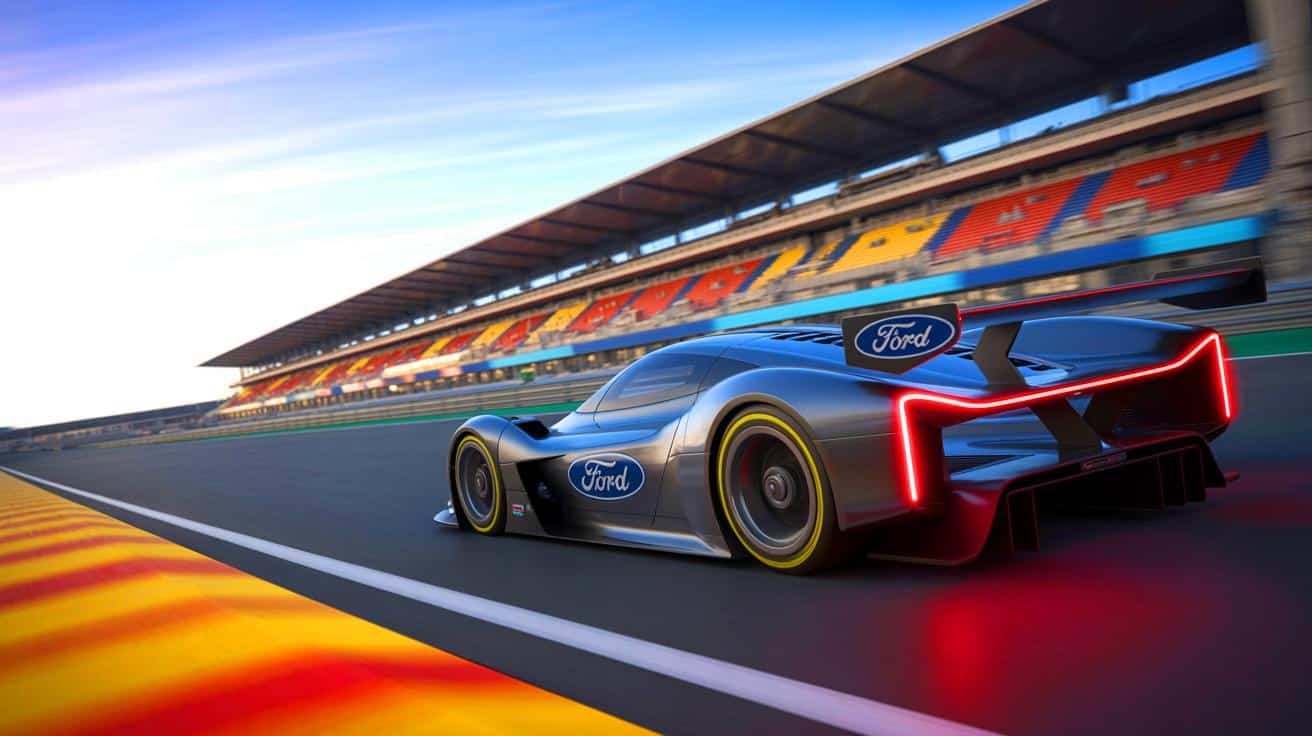
As Formula 1 experiences a resurgence of interest reminiscent of the 1960s, the world of motorsport is seeing a ripple effect. Endurance racing events like the 24 Hours of Le Mans and the Rolex 24 at Daytona are drawing record crowds, driven by the allure of sports prototypes from renowned manufacturers such as Ferrari and Porsche. Now, Ford is making its entry into this competitive arena, joining an elite group of manufacturers in the World Endurance Championship’s Hypercar category. The introduction of Ford to this exclusive list highlights a growing trend and sparks curiosity about the future of endurance racing.
The Evolution of Endurance Racing
Endurance racing has evolved significantly over the years, gaining popularity among motorsport enthusiasts worldwide. The resurgence of interest can be attributed to several factors, including the influence of media and a renewed focus on innovation. Events such as the 24 Hours of Le Mans and the Rolex 24 at Daytona have become iconic, attracting both seasoned fans and newcomers alike.
The participation of high-profile manufacturers like Ferrari and Porsche has elevated the status of these races. Their involvement brings advanced technology and engineering prowess to the forefront, showcasing the pinnacle of automotive innovation. As a result, endurance racing has become a platform for manufacturers to demonstrate their capabilities and compete at a global level.
The introduction of Ford into this realm marks a significant development, promising to add new dynamics to the competition. With the Blue Oval’s announcement to join the Hypercar category in 2027, the landscape of endurance racing is set to undergo further transformation.
Understanding the Hypercar Category
The Hypercar category within the World Endurance Championship represents the highest level of endurance racing. It features purpose-built prototypes designed exclusively for racing, distinct from the road car-derived machines seen in the GT3 category. The Hypercar category is unique in its composition, encompassing a mix of vehicles designed according to two different technical rule sets: LMH and LMDh.
LMH, or Le Mans Hypercar, allows manufacturers greater technical freedom. They can design the entire vehicle, with the option to include or exclude hybrid technology. This flexibility comes at a cost, as LMH vehicles tend to be more expensive to develop. Conversely, LMDh, or Le Mans Daytona h, mandates the use of a carbon-fiber spine from approved race car makers and requires a standardized set of components, including the transmission, hybrid battery, and electric motor.
The balance between technical freedom and cost efficiency is crucial in the Hypercar category. Manufacturers must carefully consider their approach to achieve a competitive advantage. Ford’s entry into this category will undoubtedly bring fresh strategies and innovations to the table.
Ford’s Strategic Move
Ford’s decision to enter the World Endurance Championship’s Hypercar category is a strategic move that aligns with its long-term vision. By participating in endurance racing, Ford aims to showcase its engineering prowess and commitment to innovation. The company’s rich history in motorsport, including its iconic victories at Le Mans in the 1960s, adds an element of nostalgia and excitement to this endeavor.
The Blue Oval’s entry into the Hypercar category is expected to bring significant attention to the championship. Ford’s involvement will likely attract new fans and media coverage, further elevating the profile of endurance racing. Additionally, Ford’s participation may stimulate competition among other manufacturers, leading to advancements in technology and performance.
As Ford prepares to join the Hypercar category in 2027, anticipation is building within the motorsport community. Enthusiasts and industry experts alike are eager to witness how Ford’s entry will impact the dynamics of endurance racing.
https://leftlanenews.com/only-19-people-can-buy-this-monster-zagatos-secret-hypercar-costs-millions-while-regular-supercars-become-worthless-overnight/1403/
The Future of Endurance Racing
The future of endurance racing looks promising, with a growing list of manufacturers entering the fray. The addition of Ford and other upcoming entries, such as Genesis, signals a new era of competition and innovation. This influx of manufacturers is expected to drive advancements in technology, particularly in areas such as hybridization and sustainable racing.
The Hypercar category serves as a testing ground for cutting-edge technologies that may eventually find their way into consumer vehicles. The emphasis on hybrid systems and fuel efficiency aligns with the automotive industry’s broader shift toward sustainability and reduced environmental impact.
As endurance racing continues to evolve, it poses an intriguing question: how will these developments shape the future of motorsport and the automotive industry as a whole? The answers may lie in the continued collaboration and competition among manufacturers, each striving to push the boundaries of what is possible in endurance racing.
As Ford prepares to make its mark in the Hypercar category, the world of endurance racing stands on the brink of transformation. The entry of new manufacturers, coupled with technological advancements, presents exciting possibilities for the future. How will these changes influence the direction of motorsport, and what innovations will emerge from this competitive arena?