

“He Burned Alive Inside”: Xiaomi SU7 Ultra Crash Sparks Outrage After Electronic Doors Jammed During Fire (And Investors Are Panicking)
 By
Avi Cohen
By
Avi Cohen
| IN A NUTSHELL |
|
In a tragic incident that has sent shockwaves through the automotive world, an accident involving a Xiaomi SU7 Ultra electric vehicle has brought significant attention to the safety of modern cars. The accident, which occurred in Chengdu, Sichuan Province, resulted in the death of the driver after the vehicle caught fire, and its electronic doors refused to open. This incident has not only raised questions about the safety features of electric vehicles but has also impacted Xiaomi’s reputation and stock value. The event highlights the growing concerns over the reliability of electronic door systems, which have previously been a point of contention in the industry.
The Tragic Events Unfolded
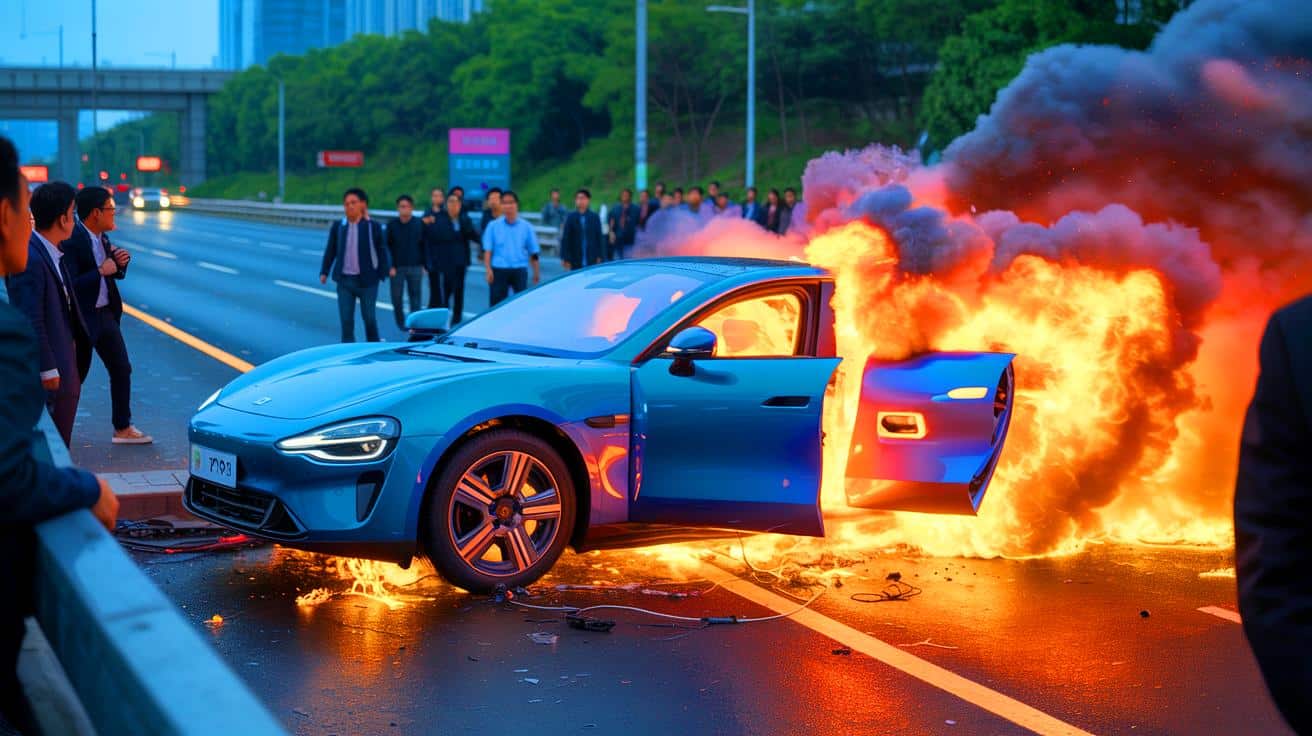
The accident took place in the early hours of October 13 in Chengdu, when a Xiaomi SU7 Ultra collided with another vehicle. The car then crossed the central barrier and burst into flames. Local police identified the driver as a 31-year-old man named Deng, who was reportedly driving under the influence of alcohol. Unfortunately, he died on the scene. Witnesses captured the harrowing moments as bystanders attempted in vain to open the car doors to rescue Deng. Despite their desperate efforts, the electronic handles remained locked.
Firefighters arrived equipped with axes and saws, but by the time they managed to cut through the car’s body, it was too late. The vehicle was completely burned. This incident echoes a similar tragedy in March, where three individuals lost their lives in another Xiaomi SU7. Investigations in that case pointed to issues with the car’s driver assistance system. In response to these incidents, Xiaomi recalled 116,887 SU7 models in September to address a software flaw that could impair the vehicle’s response in critical situations.
Volkswagen Unleashes Its Own Epic Gymkhana Video: A Thrilling Ride!
Industry-Wide Implications
The incident has drawn parallels to similar cases involving other electric vehicle manufacturers. In the United States, Tesla is under federal investigation following complaints about the failure of retractable door handles in certain Model S cars during accidents. This highlights an industry-wide challenge with electronic door mechanisms. Following the recent tragedy, Xiaomi’s stock dropped by 9% in Hong Kong, reflecting investor concerns over the company’s safety measures and the potential for further repercussions.
In the wake of the accident, Huawei, a key competitor in the automotive sector, seized the opportunity to differentiate its products. Richard Yu, head of Huawei’s automotive division, emphasized the importance of safety, stating, “Safety is the greatest luxury. We aim for the highest standards.” Huawei showcased its Aito M8 SUV’s emergency unlocking system, which offers a four-level mechanism to ensure door access even if the vehicle’s power supply fails or a collision module malfunctions. This approach contrasts with the purely electronic systems used by many modern vehicles.
Supercar maintenance: Tips for keeping your ride in top shape
Impact on Consumer Perception
These incidents have sparked a debate about consumer trust in electronic systems in vehicles. While advancements in technology have transformed the automotive industry, they have also introduced new vulnerabilities. The inability to manually override electronic systems in emergency situations poses a significant risk. This has led to calls for manufacturers to implement redundant safety features that guarantee access and control even when electronic systems fail.
Public confidence in Xiaomi’s vehicles has been shaken, as reflected in the market’s reaction. The incident serves as a reminder of the critical importance of safety and reliability in automobile manufacturing. As the industry continues to innovate, balancing cutting-edge technology with fail-safe mechanisms will be essential to maintaining consumer trust and ensuring passenger safety.
Looking Toward the Future
The events surrounding the Xiaomi SU7 Ultra accident have underscored the urgent need for robust safety standards in the electric vehicle industry. As companies strive to push technological boundaries, the focus must remain on ensuring that safety features keep pace with innovation. The tragedy has prompted a reevaluation of electronic door systems and their role in vehicle safety. While technological progress holds the promise of improved efficiency and convenience, it must not come at the cost of human lives.
As the automotive industry navigates these challenges, one question remains: How can manufacturers effectively integrate advanced technology while guaranteeing the highest levels of safety for their customers?