

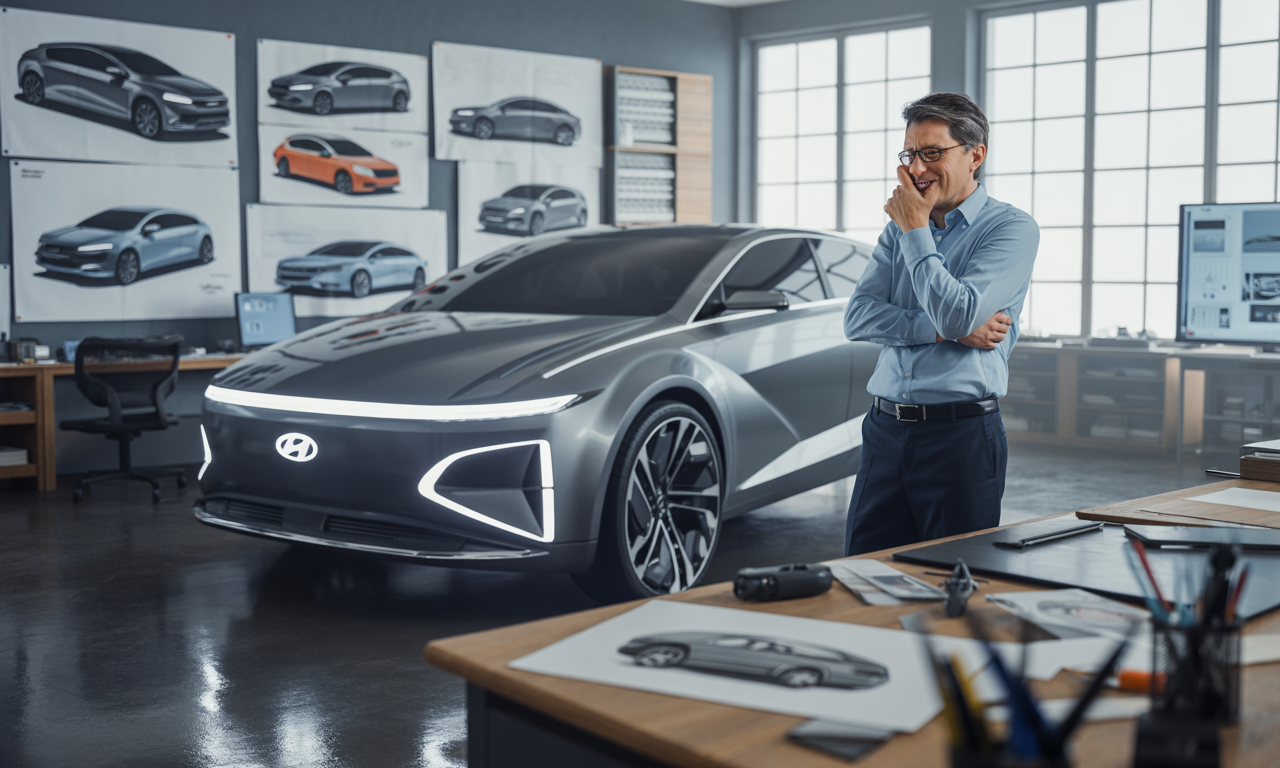
Sliding doors open onto Hyundai’s gleaming design studio, where just a few years ago, the buzz was all about futuristic touches and glowing lines slicing through the dusk of old conventions. Today, however, a new wind blows. Simon Loasby, the creative mind shaping Hyundai’s visual identity, has finally declared a ceasefire on the ever-growing war of light bars. His recent comments to Car Magazine mark a turning point—not just for Hyundai, but for an industry obsessed with signature illumination. As automakers like Kia, Genesis, and even Western giants like Ford, Toyota, Volkswagen, and BMW race to adorn their cars with aggressive LEDs, one question emerges: are we witnessing the twilight of a trend, or just the calm before a new storm of design rebellion?
Hyundai Turns the Page: Design Chief’s Bold Stance Against LED Light Bars
Inside the Korean headquarters, Loasby’s candor was palpable as he voiced what many in design circles had only whispered—light bars might have run their course. “We’ve done it with the Grandeur, Kona, and Sonata, but now I’m like ‘guys, I’ve seen enough’.” The statement, ringing through the corridors of Hyundai, didn’t stop at mere preference. It reflected exhaustion with a motif now as commonplace as chrome trims of yesteryear.
Ironically, just outside his office, models like the Elantra, Ioniq 6, Kona, and Sonata were rolling out with their horizontal illuminations still ablaze. The upcoming Ioniq 9 toys with the familiar template—its lighting elements wrapping seductively around the tailgate, a sign that inertia remains strong even as visionaries plot a new course. Is Hyundai ready to break this luminous cycle, or are consumers still too enamored?
The Ripple Effect: Kia, Genesis and the Global Shift
As the narrative unfolds within Hyundai, it’s impossible to ignore its influence over Kia and Genesis. Both brands, like satellites, have orbited around Hyundai’s design commandments for years. Kia’s recent Sportage and EV6 epitomize the strategy: all-in on visibility, all-in on bar-shaped LEDs. Meanwhile, Genesis, Hyundai’s luxury offshoot, elevates the lighting arms race with ever more elaborate motifs—sometimes two strips, sometimes pixelated arrays.
The market ripple spreads beyond Korea. Tesla’s minimalist daytime signatures, Volkswagen’s ID-series crown strips, and BMW’s evolving laser light patterns echo that universal hunger for night-time distinction on the highway. Yet, Loasby’s weariness is echoed quietly by rivals; when does aesthetic innovation give way to predictability?
| Brand | Key Model(s) with Light Bars | Trend Direction (2025) |
|---|---|---|
| Hyundai | Kona, Ioniq 6, Sonata | Trend-weary, moving on |
| Kia | Sportage, EV6 | Still prominent |
| Genesis | G80, GV70 | Experimental, evolving |
| Toyota | Crown, bZ4X | Subtle adoption |
| Honda | Prologue EV | Minimal use |
| Ford | F-150 Lightning | Signature front and rear |
| Tesla | Cybertruck, Model 3 | Integrated cleanly |
| Volkswagen | ID.4, ID.7 | Front and rear bars |
| Audi | e-tron GT, Q4 e-tron | Distinctive patterns |
| BMW | i7, iX | Innovating on signature |
Concept Three: A Glimpse into Hyundai’s Post-Light Bar Era
A single sketch can change the narrative. When Hyundai revealed its Concept Three, aficionados expected the familiar LED band—but the front end was left strikingly clean, an almost provocative absence. Here, the future took shape: pure surfaces, intricate angles, but no intrusive glow. The message was clear—progress doesn’t always flicker in neon.
Inside the development studio, engineers swapped stories of their own “light bar fatigue,” reminiscing about design meetings dominated by discussions about new patterns, luminosity, and regulatory headaches, especially in key global markets like the United States, Germany, and Japan. Loasby’s comparison to the chrome fever of years past drew knowing nods. Design, he reminded his team, must serve not only logic but emotion—and perhaps these two have started to diverge once more.
The 8-Bit Pixel Legacy: Hyundai’s Impact on Industry Standards
Looking through the rearview mirror, Hyundai’s “8-bit” pixel lights—introduced on the Ioniq 5—reflected the brand’s perennial urge to stand out. Pixels crept across models, becoming not just a Hyundai thing, but an industry-wide rally cry. Even competitors took notes as these retro-inspired points married nostalgia to modernity, influencing electric icons across manufacturers, from Toyota’s bZ4X to BMW’s revamped i7.
Now, with Loasby’s vocal fatigue, does this pixel celebration face extinction? Or will Hyundai, as usual, set the pace for other OEMs to rethink their night-time signatures? Design students and rivals alike await the next move, wondering if lighting will fade into the background or return reincarnated in subtler, smarter forms. It’s a rare moment when a stylistic pause turns into an industry-wide reflection.
| Design Element | Manufacturer Firsts | Current Status (2025) |
|---|---|---|
| LED Light Bar | Hyundai, Audi | Overused, phasing out |
| 8-bit Pixel Lights | Hyundai | Still influential |
| Illuminated Logos | Volkswagen, BMW | Increasing on EVs |
| Split Headlights | Kia, Genesis | Experimenting |
| Matrix Laser Lights | Audi, BMW | Premium models only |
Those peering into the future can track the evolution of key trends here—a resource highlighting ongoing transformations across global models in 2025.
Auto Industry Winds of Change: Lighting, Identity, and the Next Era
Meanwhile, at the dealership—and on digital showfloors—the transition plays out in real time. Customers captivated by Tesla’s stark lines or Volkswagen’s playful luminescence now navigate a showroom where Hyundai and Kia might soon downplay the drama. Market reactions will shape the fate of these bold styling choices. Some say Ford’s F-150 Lightning light bar makes charging at night poetic; others point to Honda’s Prologue, where subtlety wins hearts.
But can old habits disappear overnight? Stories drift out of design labs: suppliers, having invested millions in innovative LEDs, push back against changing tastes. Genesis and Audi teams whisper about new modular technologies, promising personalizable lighting that responds to driver mood or ambient conditions, reanimating the conversation at every auto show and reveal.
On automotive forums and social media, debates rage. Enthusiasts argue fiercely, sometimes referencing recent trend reports as proof of a waning era. The arc of design history bends toward transformation, with 2025 shaping up to be a year where lighting takes a step back—making room for emotion, restraint, and imagination in car design once again.
FAQ: Lighting Design and the Car Industry in 2025
Why did Hyundai’s design chief speak out against light bars?
Simon Loasby expressed frustration with the overuse of light bars, feeling that their time as a key design element has passed for Hyundai. His comments suggest a pivot toward exploring new and more emotionally resonant features.
Are other manufacturers like Kia and Genesis following Hyundai’s lead?
Kia and Genesis have adopted similar illumination strategies, but both are closely watching Hyundai’s next moves. As Hyundai steers away from light bars, these brands may also start charting new paths in lighting design.
Which competitors still embrace the light bar trend?
Brands such as Tesla, Ford, Volkswagen, and Audi continue to use light bars as a core feature of their vehicle identities, especially for their electric lineups in 2025.
What might replace light bars in future vehicle design?
Designers suggest a move toward personalized, smarter lighting—like customizable LEDs responding to ambient conditions—or a return to cleaner surfaces and unique textures for brand distinction.
Where can I track ongoing changes in auto design trends?
Comprehensive updates and industry insights on evolving car design—including lighting—are available from sources like LeftLane News and current trend analyses on vehicle innovation.
Did you like it? 4.5/5 (23)