
Hyundai Prepares Santa Fe EREV for U.S. Launch in 2027
Hyundai plans to introduce a Santa Fe EREV in the United States in the first half of 2027, combining electric motors with a smaller battery and a stated range target of more than 600 miles.
 By
Ethan Kowalczyk
By
Ethan Kowalczyk
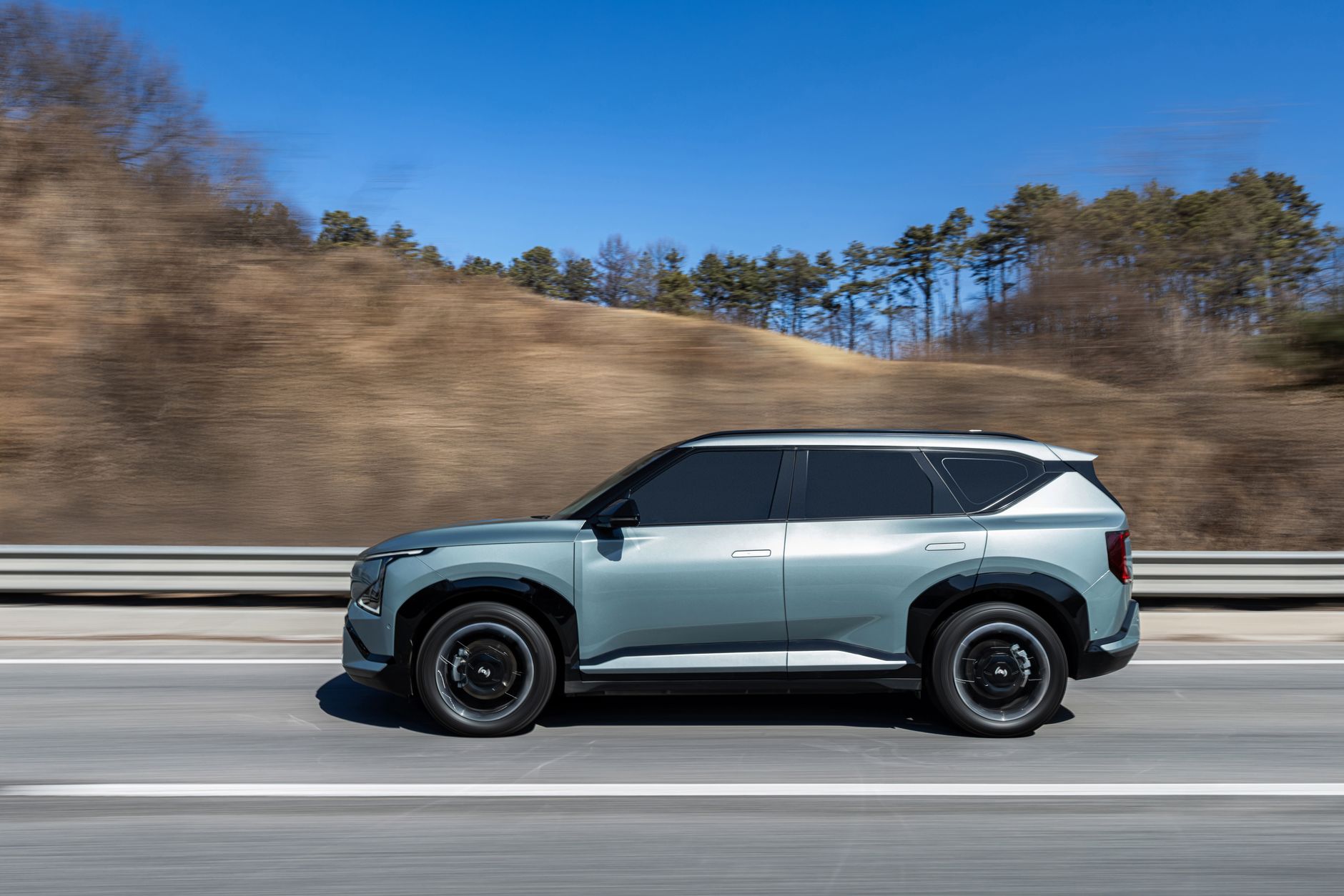
Hyundai is preparing to bring an extended-range electric Santa Fe to the United States in the first half of 2027. The planned Santa Fe EREV will add another powertrain to the brand’s lineup, placing it alongside battery-electric vehicles and hybrids as Hyundai develops products for markets moving toward electrification at different speeds.
In brief
- Hyundai plans to introduce extended-range electric vehicles across its market segments.
- The Santa Fe EREV is scheduled to reach the United States in the first half of 2027 and be assembled in Alabama.
- Hyundai says the Santa Fe EREV will target more than 600 miles of range with a battery of less than half the capacity planned for an equivalent full EV.
- Genesis is targeting more than 640 miles of range for its first extended-range electric vehicle.
The Santa Fe will be assembled at Hyundai’s Alabama plant, where regular versions of the midsize SUV are already produced. In reporting on Hyundai and Genesis extended-range EV plans, Hyundai’s stated target for the Santa Fe EREV is more than 600 miles of range, or 965 kilometers. That figure remains a manufacturer target ahead of the vehicle’s arrival.
What Hyundai has outlined for the Santa Fe EREV
Hyundai says the Santa Fe EREV will use two electric motors and is intended to provide an EV-like driving experience and acceleration. The available details do not provide full production specifications, but the electric motors are central to the planned vehicle’s driving system.
The battery is another notable element of Hyundai’s proposal. The company says the Santa Fe EREV will use a battery with less than half the capacity planned for an equivalent fully electric Santa Fe. This distinguishes the vehicle from an all-electric SUV using a larger battery pack, while leaving several production details to be confirmed.

Final information on battery capacity, efficiency, pricing and certified range has not been provided in the announced plans. Those details will matter when the production model reaches the market, particularly for buyers comparing the Santa Fe EREV with conventional hybrids and battery-electric SUVs.
The announcement comes as range remains an important point of comparison among electric SUVs. The 2026 Subaru Solterra update has also placed attention on range and pricing in the electric-vehicle market.
An extended-range strategy across the lineup
Hyundai has said it plans to introduce extended-range electric vehicles across all market segments. The Santa Fe is therefore positioned as part of a wider product direction rather than as an isolated model. Hyundai’s stated approach combines EVs, hybrids and EREVs, reflecting different rates of electrification across global markets.

That broader plan also includes a substantial product program. Coverage of Hyundai’s U.S. expansion and 2030 roadmap identifies the Santa Fe EREV as the brand’s first U.S. model using extended-range electric technology and reports that Hyundai plans to launch or renew more than 100 vehicles globally by 2030.
For Hyundai, the Santa Fe EREV will offer an early indication of how this technology fits within a mainstream SUV range. The company has announced the launch timing, assembly location, range target and dual-motor layout, but the final ownership picture will depend on the specifications released for the production vehicle.
Genesis has a longer-range target
Hyundai’s premium brand, Genesis, is also preparing its first extended-range electric vehicle. Genesis is targeting more than 640 miles of range, or 1,030 kilometers, for that model. The target places the Genesis vehicle above the stated range objective for the Santa Fe EREV.
Together, the two planned vehicles show Hyundai applying extended-range electric technology to both its mainstream and premium brands. The strategy does not establish how the vehicles will perform in everyday use, nor does it settle questions around final cost or efficiency. It does, however, show Hyundai preparing a broader mix of powertrains as its global lineup evolves toward 2030.
Featured image. Source: Pexels. Credit: Hyundai Motor Group. License: Pexels License.