

“It Spins Itself”: This New ‘Self-Rotating’ Engine Could Outrun Electric Cars and Rewrite the Future of Sustainable Driving
 By
Renée Castellano
By
Renée Castellano
| IN A NUTSHELL |
|
The rapid pace of innovation in the automotive industry is reshaping the way we think about transportation. As environmental concerns mount, the push to develop more sustainable engine technologies has never been more urgent. Over the last decade, efforts have increasingly focused on moving away from internal combustion engines towards alternative solutions like electric and hydrogen fuel-cell engines. Now, a new player in the field is set to contribute to these transformative developments, potentially marking a significant milestone in the quest for sustainable transportation.
The Road Towards Sustainable Engine Technology
As we face pressing sustainability challenges, the environmental impact of internal combustion engines has come under intense scrutiny. These engines are known for releasing significant carbon emissions, contributing to climate change. Consequently, the transportation industry is actively seeking ways to reduce its reliance on fossil fuels. Alternative engine solutions have emerged as a promising answer to these challenges.
Among these innovations, the electric engine stands out as a dominant force. Pioneers like Tesla have pushed the envelope with advanced battery technology, making electric engines a popular choice for passenger vehicles. Hybrid-electric engines, which combine traditional and electric power sources, have also gained traction as a practical stepping stone toward a fully electric future.
In addition to electric vehicles, hydrogen fuel-cell engines are gaining attention. Companies like Toyota and Hyundai have championed this technology, offering a path toward carbon neutrality. While electric engines dominate passenger vehicles, hydrogen fuel cells present a viable option for sectors where battery technology falls short, such as aviation.
New Transformative ‘Self-Rotating’ Engine
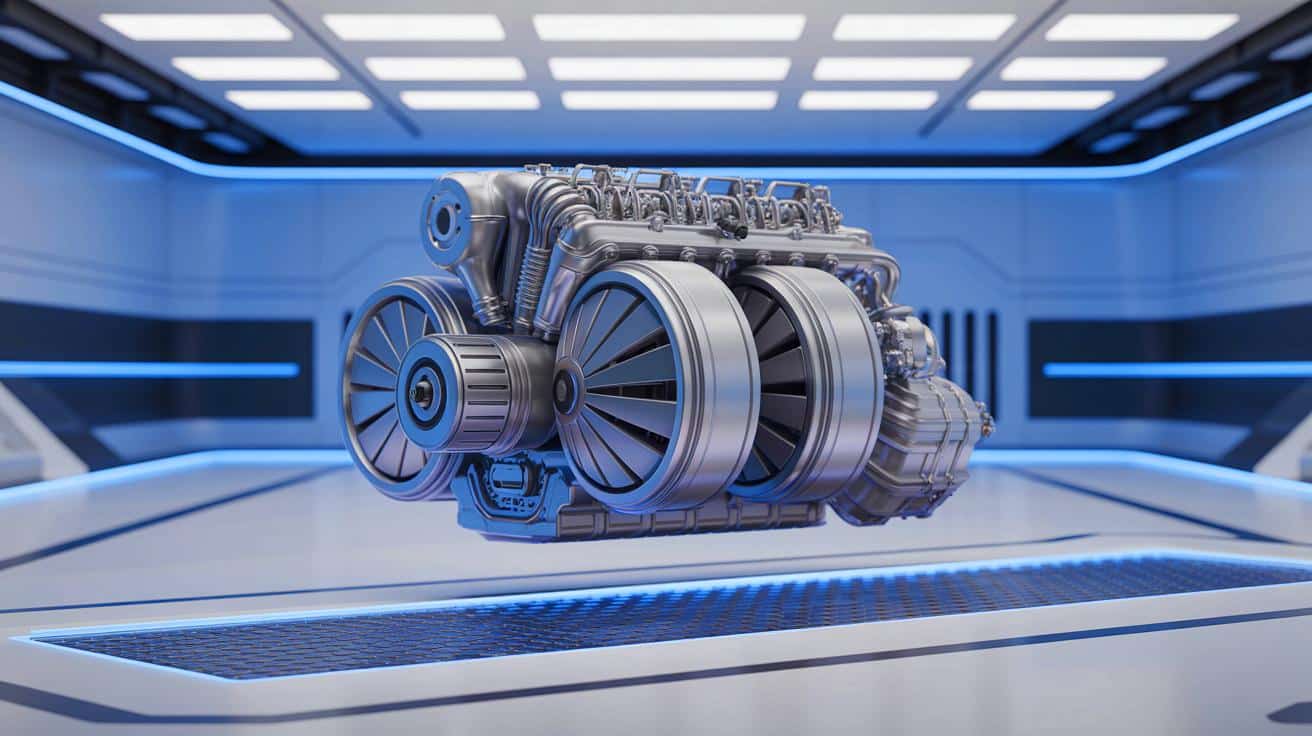
Adding another layer to the electric vehicle landscape, Indian automaker Avadi has developed a groundbreaking ‘self-rotating’ engine. This innovation reimagines the rotary engine by incorporating a rotating piston, potentially enhancing efficiency and reducing emissions.
“…two connecting rods and their corresponding pinion gears reside in what we call a ‘halfshaft.’… the halfshaft can be likened to the heart of the Avadi design, it is essentially the housing where up-and-down piston motion is translated to rotational motion,” describes Avadi on their website.
Though still a prototype, this engine has been in development for years, and Avadi hopes it will push the boundaries of electric engines. By offering a more efficient internal combustion engine, the technology could serve as a bridge while the industry transitions to fully sustainable solutions. If successful, it might attract interest from major automakers like General Motors and Ford, particularly if it reaches mass production.
Working on Increasing More Renewable Solutions
As time becomes a critical factor, the development of reimagined internal combustion engines like Avadi’s highlights the need to bridge the gap between traditional and alternative engine technologies. This transition is essential to help consumers choose more renewable options while stakeholders work on building the necessary infrastructure beyond the transportation industry.
Globally, other automakers are also expanding their alternative engine developments, aiming to reach a wider audience. Competition remains fierce as companies strive to dominate this emerging sector and encourage more sustainable adoption. For example, South Korean automaker KIA plans to introduce its electric compact SUV, the E3, to American roads soon. This move will see KIA competing with established U.S. brands like Ford, which remain popular among consumers.
Disclaimer: Our coverage of events affecting companies is purely informative and descriptive. Under no circumstances does it seek to promote an opinion or create a trend, nor can it be taken as investment advice or a recommendation of any kind.
Supercar maintenance: Tips for keeping your ride in top shape
Challenges and Opportunities for Future Development
While the automotive industry is rapidly evolving, challenges remain in achieving widespread adoption of alternative engine technologies. The cost of new technologies, infrastructure limitations, and consumer acceptance are significant hurdles. However, these challenges also present opportunities for innovation and collaboration among industry stakeholders. As more companies invest in research and development, the potential for breakthroughs increases.
Partnerships between governments, automakers, and technology companies could accelerate the transition to a more sustainable transportation system. Incentives such as tax credits, grants, and infrastructure investments can promote the adoption of alternative engines. Additionally, educating consumers about the benefits of sustainable engines and making them accessible and affordable will be crucial for widespread acceptance.
The automotive industry stands at a crossroads, with sustainability as its guiding principle. As new technologies emerge, the potential to transform transportation and reduce environmental impact is within reach. The question remains: How will stakeholders collaborate to overcome challenges and drive the future of sustainable transportation forward?
Continue reading