

How 3D printing is revolutionizing supercar manufacturing
 By
Graham Pettigrew
By
Graham Pettigrew
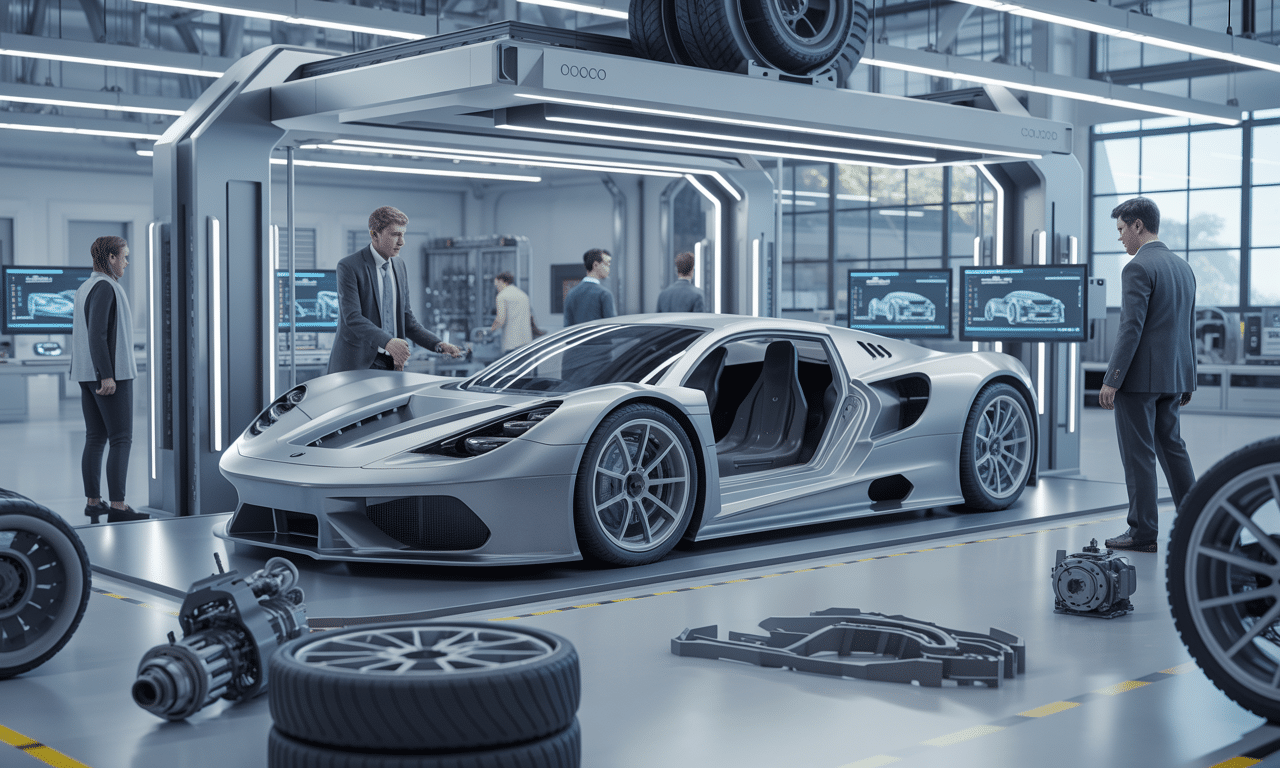
On the bustling streets of Maranello, whispers surrounded the unveiling of Ferrari’s F80 (a machine that didn’t just push the boundaries of speed, but redefined what supercars could be in the era of digital fabrication. Across the globe, titans like Bugatti, McLaren, Koenigsegg, and Porsche quietly observed, each chasing the same elusive goal: unmatched performance fused with peerless engineering. Now, thanks to 3D printing technologies, the rules of supercar manufacturing are being rewritten before our eyes. From bespoke geometries in suspension arms to unprecedented weight savings in critical structural components, additive manufacturing is rapidly shifting from boutique laboratories to mainstream production lines. Iconic brands, once hesitant, are now harnessing the power of AM for feats believed impossible just a decade ago. Even Audi, BMW, Lamborghini, Aston Martin, and Pagani are accelerating investment) each captivated by the promise of agility, sustainability, and design freedom this revolution delivers. This is not just evolution; it is a seismic leap that is reshaping what it means to design, build, and drive the world’s most coveted cars.
3D Printing Ushers in a New Age for Supercar Manufacturing
When Ferrari revealed the F80, the automotive world felt the tremor. The transition from using 3D printing in the high-stakes atmosphere of Formula 1 to the trembling excitement of a road-going marvel signaled a turning point. A 3.0-liter twin-turbocharged V6 merged harmoniously with three electric motors, producing a formidable 1,200 horsepower. Yet, it was more than the sheer numbers (it was the means by which they were accomplished. Additive manufacturing enabled Ferrari to slash weight from crucial structural elements, like the actively controlled upper wishbones. The result? Lightning-fast acceleration) 0 to 62 mph in a mere 2.15 seconds, dialed in by lighter components that remained impossibly strong. Companies like Koenigsegg and McLaren have also embraced AM, channeling the flexibility of layer-by-layer construction to pressure-test complex shapes and reduce material waste. In the heart of every lightweight, intricately shaped part now lies a tale of innovation once reserved for the racetrack, now roaring down city boulevards.
| Brand | 3D Printed Component | Performance Advantage |
|---|---|---|
| Ferrari | Upper wishbones, structural parts | Reduced unsprung mass, improved handling |
| Bugatti | Suspension linkages, control arms | 30% lighter than cast, organic geometry |
| Porsche | Performance piston prototypes | Up to 20% lighter pistons, +30 hp output |
| Aston Martin | Rear subframe | Enhanced rigidity, lighter construction |
| Koenigsegg | Engine components | Bespoke geometries for optimal power-to-weight |
Hybrid Powertrains Meet Additive Manufacturing Ingenuity
The race to mix sustainability with speed has always faced hard constraints. Traditionally, packing prodigious electric motors onto a compact chassis invited heavy compromises on weight and balance. Yet with 3D printing, solutions emerge: thinner, more robust, and artfully directed structures deliver the stiffness and flexibility required by modern hybrid systems. The F80 embodies this philosophy, boasting next-gen hybrid technology where each ounce saved multiplies potential. Lamborghini and BMW, watching closely, are infusing their future models with 3D printed mounts and brackets, speeding prototyping and enabling new architectures once blocked by tooling limitations. For supercar artisans and giants alike, the message is clear, these methods are not fads, but accelerants for tomorrow’s powertrains and green values.
Technical Milestones: From the Racetrack to the Road
There’s poetry in watching motorsport innovations trickle into everyday machines. Ferrari’s use of 3D printed metal upper wishbones (directly inspired by their Formula 1 dominance) refines the F80’s behavior at blistering speeds and grand touring comfort. Bugatti’s work on the Tourbillon’s organic suspension arms reveals the nearly alien forms allowed by additive manufacturing, nearly 30% lighter than any cast counterpart, with package-efficient designs impossible via traditional routes. Czinger, a Southern California name now closely tied with both Bugatti and the evolution of AM, helped birth these new approaches, sharing techniques and workflows with legacy brands. Even Porsche’s forays into 3D printed pistons for the 911 GT2 RS demonstrate measurable power gains and weight-saving benefits. As these methods proliferate, automakers like Audi and Pagani (who once prized handcrafted tradition) now harness digital tooling for components both visible and hidden, striking a new balance between old-world artistry and bleeding-edge technology.
| Manufacturer | Technology Adopted | Notable Application |
|---|---|---|
| Divergent Technologies | Automated additive workflow | Aston Martin rear subframe |
| Ferrari | PBF-LB (Powder Bed Fusion, Laser Beam) | Upper suspension wishbones, F80 |
| Porsche | Experimental AM pistons | 911 GT2 RS prototype, GT3 RS seat buckets |
| BMW | Full integration into automated lines | Thousands of structural/bracket components per model |
Lightweighting and Aerodynamics: The Design Freedom of AM
Every ounce shaved from a supercar’s frame multiplies its agility. Yet, traditional casting and machining enforced geometric compromises. The artistry of 3D printing is not only in reducing mass, but in generating complex, airflow-optimized forms. McLaren leverages AM to sculpt rear wings and internal ducts that enhance downforce without extra drag, while Pagani’s experiments yielded otherworldly fluid dynamics unobtainable any other way. The net benefit? Superior ride quality, enhanced cornering, and new visual signatures that make each car feel like a unique sculpture in motion. This advanced approach is now chronicled on leading platforms, where in-depth explorations like this analysis of 3D-printed car manufacturing shed light on the ongoing transformation.
Accelerating the Shift: Supercars Leading the 3D-Printing Revolution
What started in low-volume hypercars (where cost is eclipsed by the demand for innovation) has now leaped into broader adoption. Volkswagen, for example, targets 100,000 3D-printed parts annually, while BMW runs fully automated assembly lines with thousands of additively manufactured components. Aston Martin’s Valhalla benefited from new-generation lightweighting, improving both power-to-weight and ride comfort for demanding drivers. General Motors, faced with late-stage redesigns, turned to 3D printing for rapid solutions, illuminating how mainstream and luxury makers alike are converging on this frontier. For drivers, the result is a faster, lighter, and more personal vehicle, whether you’re piloting an Audi or maintaining a cherished classic, as detailed in thoughtful guides like these supercar maintenance strategies.
Automation and the Rise of Digital Tooling in Automotive
At the edge of Los Angeles, Divergent Technologies orchestrates a symphony of robots and printers fashioning supercar chassis and aircraft parts. Their workflow (design, print, assemble) was first proven with Aston Martin’s innovative subframe, reducing labor, tooling costs, and environmental impact simultaneously. Across the globe, BMW, Audi, and Lamborghini have entered similar partnerships, blending robotics with proprietary AM processes. Even restomod artisans like Icon now print custom hand tools, merging machine precision with human touch. These advances increasingly define tomorrow’s affordable vehicles as well, a story chronicled in outlooks like the 2025 future cars forecast.
Challenges, Trade-offs, and the Road Ahead for Additive Manufacturing in Supercars
For all the fanfare around 3D printing, some caution is warranted. While it lowers preproduction costs, individual parts can still be pricier than forged or cast siblings, and achieving the same fit and finish remains an ongoing challenge. Boutique automakers, from Bugatti to Pagani, revel in the exotic options AM provides, but even they face costly post-processing and quality assurance hurdles. However, for custom runs and last-minute design changes (think GM printing 60,000 Tahoe trim pieces in five weeks) there’s simply no rival in speed or adaptability. The hybrid approach emerges as the new norm: printers handle the intricate and novel, while human artisans and traditional machines tackle robustness and longevity. For McLaren, Lamborghini, and the rest, finding this balance is key to sustaining craftsmanship in an era increasingly defined by algorithms and lasers. Car connectivity and the rise of automotive IoT, detailed in platforms like connected vehicles news, further ties these digital threads together as cars become smart, printable, and perpetually evolving.
| Challenge | Traditional Manufacturing | Additive Manufacturing |
|---|---|---|
| Upfront Costs | High tooling investment | Lower for custom/short runs |
| Complex Geometry | Limited, requires multiple processes | Freeform, intricate, single-step |
| Production Volume | Efficient at scale | Best for low/medium volumes currently |
| Material Waste | High, with excess machining | Minimal, near net-shape |
| Customization | Time and cost intensive | Rapid, cost-effective |
Frequently Asked Questions
How does 3D printing improve supercar performance compared to traditional manufacturing?
By enabling complex geometries and lightweight structures, 3D printing delivers stronger, stiffer parts with less mass, directly improving handling, acceleration, and efficiency. This is especially notable in models from Ferrari, Bugatti, and Koenigsegg, where every gram counts on the road and track.
Which car manufacturers have adopted 3D printing for their road cars?
A growing roster that includes Bugatti, Ferrari, McLaren, Koenigsegg, Porsche, Lamborghini, Aston Martin, BMW, Pagani, and Audi. Each has integrated additive manufacturing for unique components, from suspension elements to complex intake manifolds.
Are 3D printed car parts as durable as traditionally manufactured ones?
For critical components, rigorous testing and post-processing can yield parts that meet or exceed the durability of traditional cast or forged equivalents. Leading brands, such as Bugatti and Porsche, have subjected AM parts to extreme conditions, ensuring reliability for high-performance use.
What are the current limitations of 3D printing in automotive manufacturing?
Despite rapid advances, the technology still faces higher per-part costs for large production volumes, occasional surface-finish issues, and a need for post-processing. Improvements in speed and resolution are gradually closing these gaps year after year.
Will 3D printing make supercars more affordable and customizable in the future?
Absolutely. As additive manufacturing matures, expect greater design flexibility, shorter lead times, and reduced costs in both performance-focused and mainstream vehicles. Industry watchers anticipate broader adoption and mass-market impact as outlined in emerging car technology reports and expert analyses.