

“Six Inches Away From Revolutionary”: Porsche Unveils Wireless EV Charging That Automatically Activates Without Any Cables
 By
Graham Pettigrew
By
Graham Pettigrew
| IN A NUTSHELL |
|
At the Internationale Automobil Ausstellung (IAA) Mobility event, Porsche made headlines by unveiling a prototype featuring groundbreaking inductive electric vehicle (EV) charging technology. This innovation is a significant leap forward in the realm of electric mobility, as it promises to simplify the charging process for future Porsche EV owners. Set to debut in the all-electric version of the Porsche Cayenne, this system is anticipated to roll out in 2026, starting in Europe. By eliminating the need for cumbersome cables, Porsche’s new technology could make EV ownership more convenient and appealing, potentially accelerating the global shift towards electrified transportation.
Pioneering Inductive Charging Technology
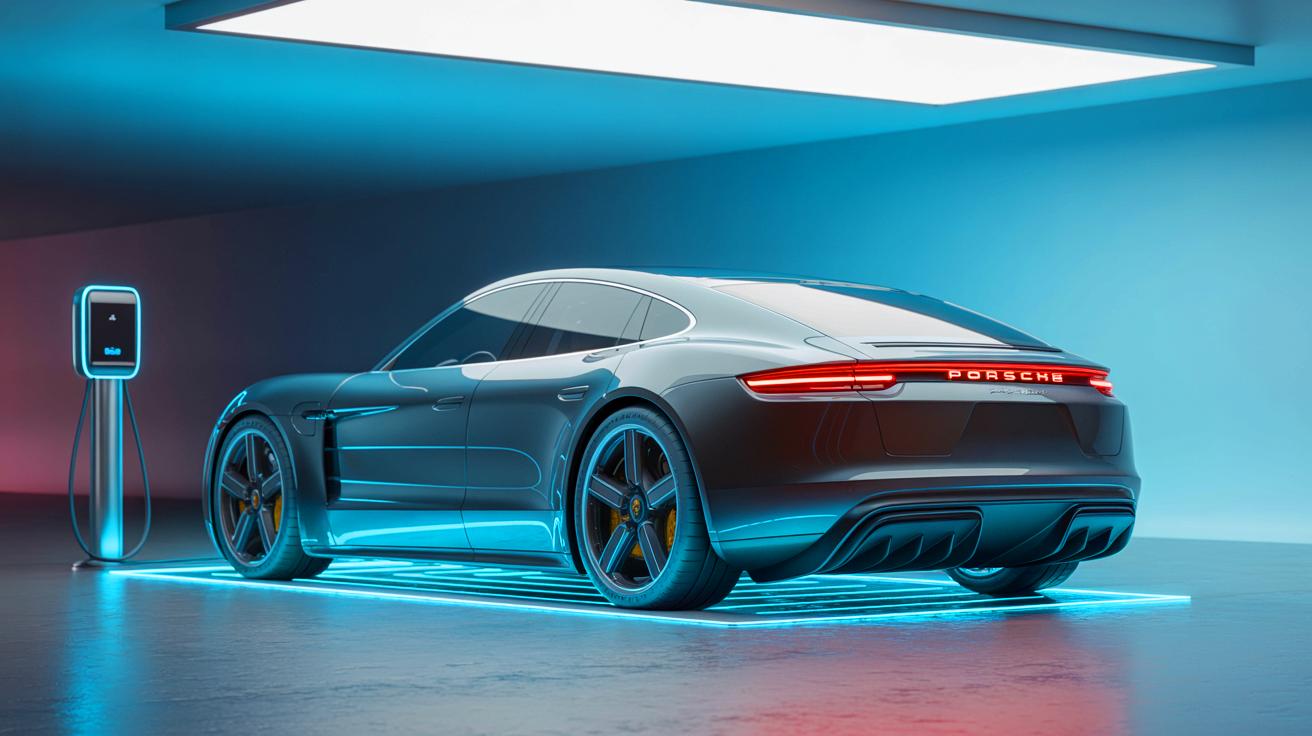
Porsche’s latest innovation centers around a wireless charging system that eliminates the traditional plug-in method. This inductive charging technology involves a receiver unit located underneath the vehicle, positioned between the front wheels. It pairs with an 11-kW charging base plate that resides in a parking space, typically within the owner’s garage. The simplicity of this system is underscored by its minimal installation requirements. The One-Box base unit is self-contained and requires only a power supply cable, with no additional mounting hardware necessary.
Safety has been a key consideration in the design of this system. The charging base plate includes a motion detector and foreign object detection, ensuring that pets or misplaced items are not exposed to the electromagnetic field. This attention to detail reflects Porsche’s commitment to integrating cutting-edge technology with practical everyday use, enhancing both safety and convenience for users.
Seamless User Experience
The user experience of Porsche’s inductive charging system is designed to be intuitive and seamless. As the Cayenne is maneuvered over the charging plate, a surround-view camera system guides the driver to the optimal parking position. Once the vehicle is in place, the charging process is automatic. The vehicle lowers itself to an optimal distance of about six inches from the charging plate, initiating the charging process without any further input from the driver.
This system integrates with the My Porsche app, allowing users to control and monitor the charging process remotely. The app also offers vehicle preconditioning features, similar to those available with standard plug-in AC charging. This level of control and convenience is expected to appeal to tech-savvy consumers who value ease of use and flexibility in their vehicle charging routines.
Future Prospects and Expansion
Porsche plans to extend the inductive charging technology beyond the Cayenne EV to other models in its lineup. This strategic move indicates the company’s confidence in the technology and its potential to revolutionize the EV market. By offering a wireless charging option, Porsche aims to enhance the appeal of its electric vehicles and position itself as a leader in the industry.
The rollout of this technology is expected to begin in Europe in 2026, followed by a global expansion. As the automotive industry increasingly shifts towards electric mobility, innovations like Porsche’s inductive charging system could play a crucial role in overcoming one of the main hurdles in EV adoption: the inconvenience of charging. By making the process as straightforward as possible, Porsche’s system could encourage more consumers to make the switch to electric vehicles.
Technical Considerations and Challenges
While the potential benefits of Porsche’s inductive charging system are clear, there are technical considerations and challenges that must be addressed. The efficiency of wireless charging systems is often less than that of traditional plug-in methods, which could impact the overall appeal. However, the convenience factor may outweigh these concerns for many users.
Additionally, the cost of integrating this technology into vehicles and the necessary infrastructure could be significant. Porsche will need to navigate these challenges effectively to ensure the widespread adoption of its inductive charging system. The company’s success in this endeavor could set a new standard in the automotive industry, prompting other manufacturers to follow suit and invest in similar technologies.
Porsche’s introduction of inductive EV charging at the IAA Mobility event marks a significant milestone in the evolution of electric vehicles. By simplifying the charging process, this innovation has the potential to accelerate the transition to electric mobility. As Porsche prepares to expand this technology across its lineup, one must wonder how this advancement will shape the future of the automotive industry. Will other manufacturers adopt similar technologies, and what impact will this have on the global push towards sustainable transportation?