

“They’re Hiding 5,000 Horsepower Engines”: Secret Car Companies Build Motors That Destroy Every Vehicle You Own Today
 By
Renée Castellano
By
Renée Castellano
| IN A NUTSHELL |
|
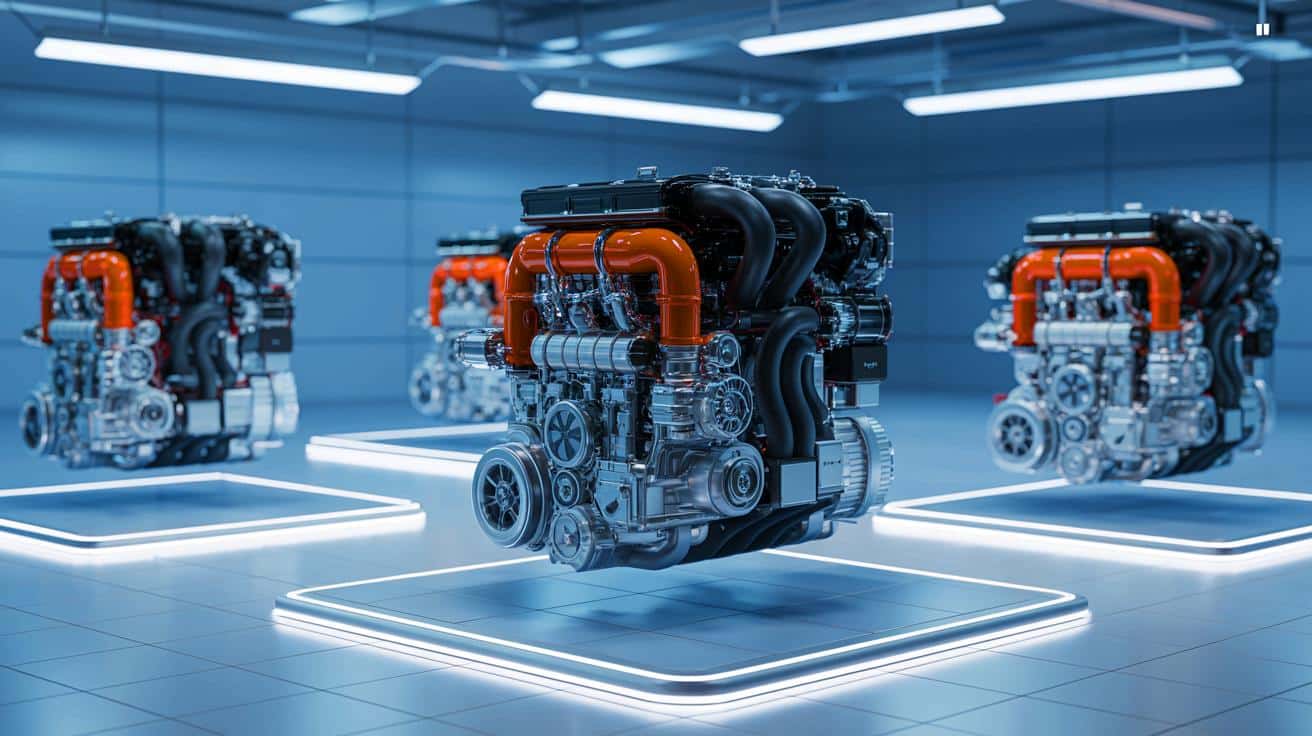
As the automotive industry continues to evolve, 2025 stands out as a landmark year in the journey toward more powerful and innovative car engines. The push for higher performance has led to a remarkable fusion of traditional combustion engines with cutting-edge electric and hybrid systems. This year, manufacturers from around the world have unveiled engines that redefine what’s possible, featuring unprecedented horsepower and efficiency. The shift towards electric and hybrid powertrains is unmistakable, yet there remains a place for traditional combustion engines, which continue to push the boundaries of engineering excellence.
Devel Sixteen: An Engineering Marvel
The Devel Sixteen, originating from the United Arab Emirates, is a testament to human ambition and engineering prowess. Boasting an extraordinary 5,007 horsepower from its 12.3-liter quad-turbocharged V16 engine, it represents the pinnacle of internal combustion technology. Despite its eye-watering power figures, the Devel Sixteen’s production readiness remains a topic of debate. Reports suggest that some delivered vehicles may not fully utilize the touted V16 configuration, leading to skepticism about its real-world capabilities.
Yet, the Devel Sixteen remains an emblematic figure in automotive engineering. It challenges the conventional limits of what a combustion engine can achieve. The project has been in development for almost two decades, illustrating the dedication and vision needed to conceive such an ambitious vehicle. As a symbol of engineering ambition, it provokes discussions about the future of internal combustion engines in a world increasingly dominated by electric powertrains.
Koenigsegg Germa: Blending Power and Practicality
Koenigsegg's Germa HV8 ushers in a new era of high-performance hybrid vehicles. As the world's first four-seater hypercar, it combines a potent V8 engine with advanced electric technology to produce a staggering 2,300 horsepower. The Germa HV8's powertrain features turbochargers strategically placed between the engine banks and an innovative electric motor known as Dark Matter, which delivers 800 horsepower from just 86 pounds of hardware.
This hypercar doesn't just focus on raw power; it also offers practicality uncommon in vehicles of its class. With luggage space and eight cup holders, it proves that high-performance cars can be both thrilling and functional. The Germa HV8's design showcases Koenigsegg's commitment to pushing the boundaries of what's possible in automotive engineering. By merging electrification with traditional engine power, it sets a new standard for hybrid hypercars.
Rimac Nevera: Croatia's Electrifying Innovation
The Rimac Nevera R is a shining example of how electrification can transform high-performance vehicles. With 2,107 horsepower generated by four independent electric motors, this Croatian marvel delivers unmatched torque and precision. It showcases the unique advantages of electric powertrains, including instantaneous torque and advanced torque vectoring capabilities.
Founded by Mate Rimac, the company started with humble beginnings as a garage project. Today, it partners with major automotive manufacturers like Porsche and supplies cutting-edge technology worldwide. The Nevera R not only highlights Rimac's technological prowess but also positions Croatia as a formidable player in the high-performance automotive industry. As electrification continues to reshape the automotive landscape, Rimac is poised to lead the charge with its innovative approach to electric propulsion.
Volkswagen Unleashes Its Own Epic Gymkhana Video: A Thrilling Ride!
Lotus Evija: Embracing Electric Power
Lotus's foray into electric propulsion with the Evija represents a significant departure from its traditional lightweight combustion roots. This electric hypercar features a quad-motor setup that generates 1,972 horsepower, allowing for precise torque distribution and exceptional handling.
Despite its shift to electrification, the Evija maintains Lotus's core principle of agility and driver control. By employing four independent wheel-mounted motors, the Evija achieves a balance between power and weight that few rivals can match. This transition marks a new chapter for Lotus, blending its storied history with the future of automotive technology. The Evija exemplifies how electric powertrains can offer both performance and efficiency, heralding a new era for the iconic British manufacturer.
The innovations showcased in these engines highlight the diverse approaches manufacturers are taking to achieve automotive excellence. As technology advances, the interplay between traditional combustion engines and cutting-edge electric systems will continue to shape the industry's future. With manufacturers pushing the limits of what's possible, one wonders how the ongoing evolution of car engines will influence the vehicles we drive in the coming years. What new benchmarks will be set as we move further into an era of unprecedented automotive innovation?
Continue reading