
“We Can’t Tell Cars From Space Rocks Anymore”: Starman’s Roadster Classified As Dangerous NEO While Earth’s Detection Systems Fail
 By
Avi Cohen
By
Avi Cohen
| IN A NUTSHELL |
|
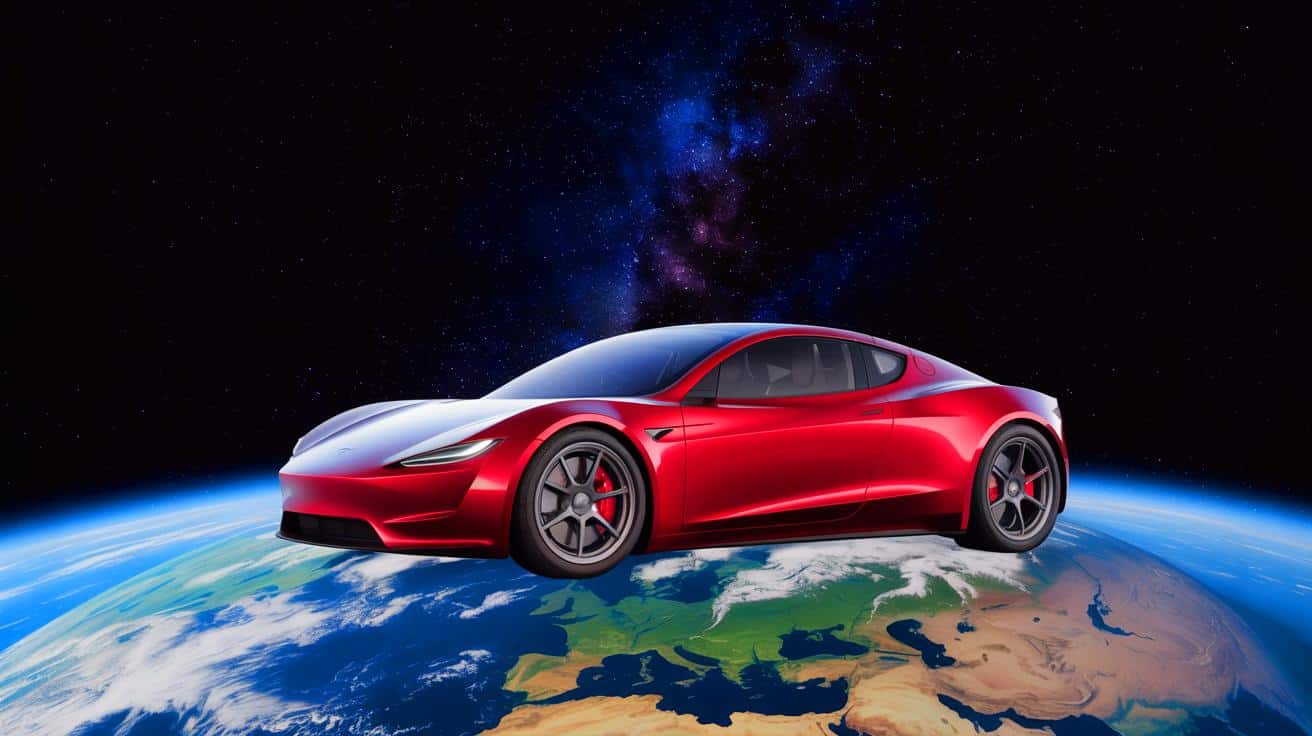
In an unexpected turn of events, astronomers studying telescope data identified what they initially thought was a newly discovered asteroid. The object, labeled 2018 CN41, was classified as a Near-Earth Object (NEO), which are celestial bodies capable of approaching Earth closely. However, the object was later revealed to be Elon Musk’s Tesla Roadster, launched into space in 2018 aboard SpaceX’s Falcon Heavy rocket. This peculiar discovery underscores the challenges of monitoring Near-Earth Objects and highlights the intriguing journey of this unique spacecraft.
The Misidentified Asteroid
When astronomers first detected 2018 CN41, they categorized it as a Near-Earth Object. Such objects require meticulous monitoring as they have the potential to come close to Earth, sometimes posing a threat. The initial classification of the Tesla Roadster as an asteroid highlights the complexities and occasional errors in identifying these space phenomena. The Roadster’s unusual orbit and reflective surface likely contributed to its initial misidentification.
The incident reveals how human-made objects can sometimes mimic natural celestial bodies in space. As more items are launched into orbit, the risk of misidentification increases. This occurrence not only emphasizes the need for advanced tracking technology but also calls for improved methods of distinguishing between artificial and natural objects in our solar system. As we continue to explore space, the distinction between human-made and natural objects will become increasingly critical.
A Journey Into the Cosmos
Elon Musk's Tesla Roadster has captivated the imagination of space enthusiasts since its launch. As the first car sent into space, it serves as a symbol of human ingenuity and ambition. The Roadster's journey has taken it millions of miles from Earth, traveling through space with a mannequin named "Starman" seated in the driver's seat, dressed in a SpaceX spacesuit. This voyage has provided a unique opportunity to study the effects of space conditions on vehicles and materials.
Over the years, the Roadster has traveled an elliptical orbit around the Sun, coming close to both Mars and Earth. Its path is a testament to the possibilities of space travel and exploration. The car's journey raises intriguing questions about the future of space tourism and the potential for new forms of space travel. As technology advances, the concept of sending vehicles or even individuals into space may become more commonplace.
“$15,000 Down the Drain”: Tesla Customers Furious as Full Self-Driving Remains Stuck at Level 2
Challenges of Tracking Near-Earth Objects
Monitoring Near-Earth Objects is a crucial aspect of space science, as these objects can pose significant threats to Earth. The identification of the Tesla Roadster as an asteroid highlights the difficulties faced by astronomers in distinguishing between different types of objects. The vastness of space and the sheer number of objects in orbit make tracking a formidable task.
Advanced technology and international collaboration are essential for accurately identifying and tracking NEOs. As more countries and private companies launch objects into space, the need for a coordinated global effort becomes evident. The Roadster's misclassification demonstrates the importance of refining our tracking systems and methodologies. Improving these systems will help ensure the safety of our planet and the success of future space missions.
The Future of Space Exploration
The discovery of the Tesla Roadster as a misidentified asteroid offers valuable insights into the future of space exploration. As private companies like SpaceX continue to push the boundaries of what is possible, the lines between scientific research, commercial ventures, and human curiosity blur. The Roadster's journey is a reminder of the vast potential that lies beyond our planet.
Space exploration is no longer limited to government agencies. Private companies are playing an increasingly significant role in advancing our understanding of the cosmos. The Roadster's journey symbolizes the new era of space exploration, where innovation and entrepreneurship drive progress. As we look to the future, the possibilities for exploration and discovery seem boundless. What new frontiers will humanity explore next, and how will these ventures shape our understanding of the universe?
The remarkable journey of Elon Musk's Tesla Roadster serves as both a cautionary tale and an inspiring glimpse into the future of space exploration. It highlights the challenges and opportunities presented by the increasing presence of human-made objects in space. As we continue to innovate and explore, what measures will we take to ensure the safe and successful pursuit of our cosmic ambitions?