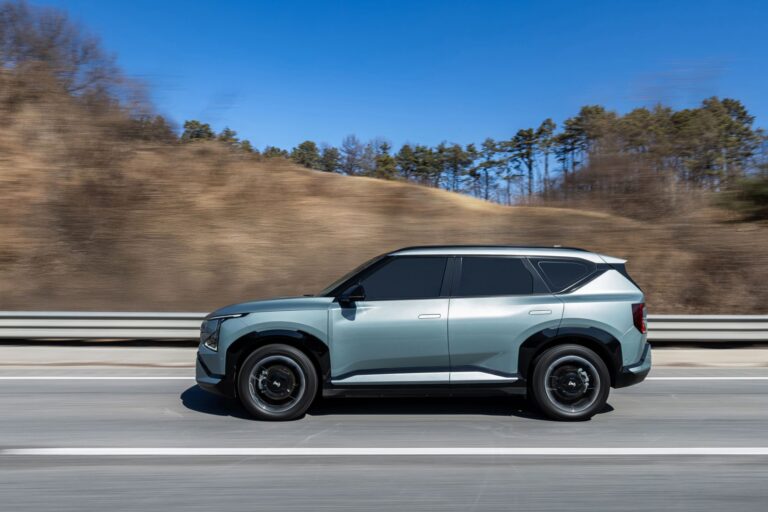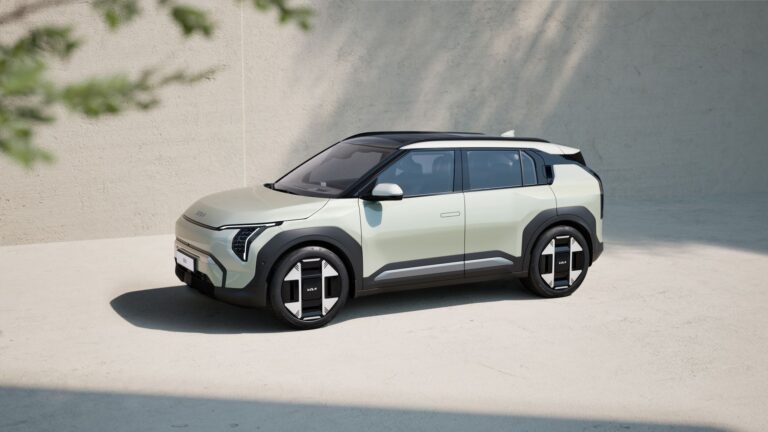


The 2027 Kia EV3 costs $31,385 delivered, but the base model goes 100 miles less than the longest-range trim
The entry model costs $31,385 after destination and travels 221 EPA-rated miles. Reaching the EV3’s maximum range or adding a second motor requires a larger budget.
 By
Keisha Holloway
By
Keisha Holloway
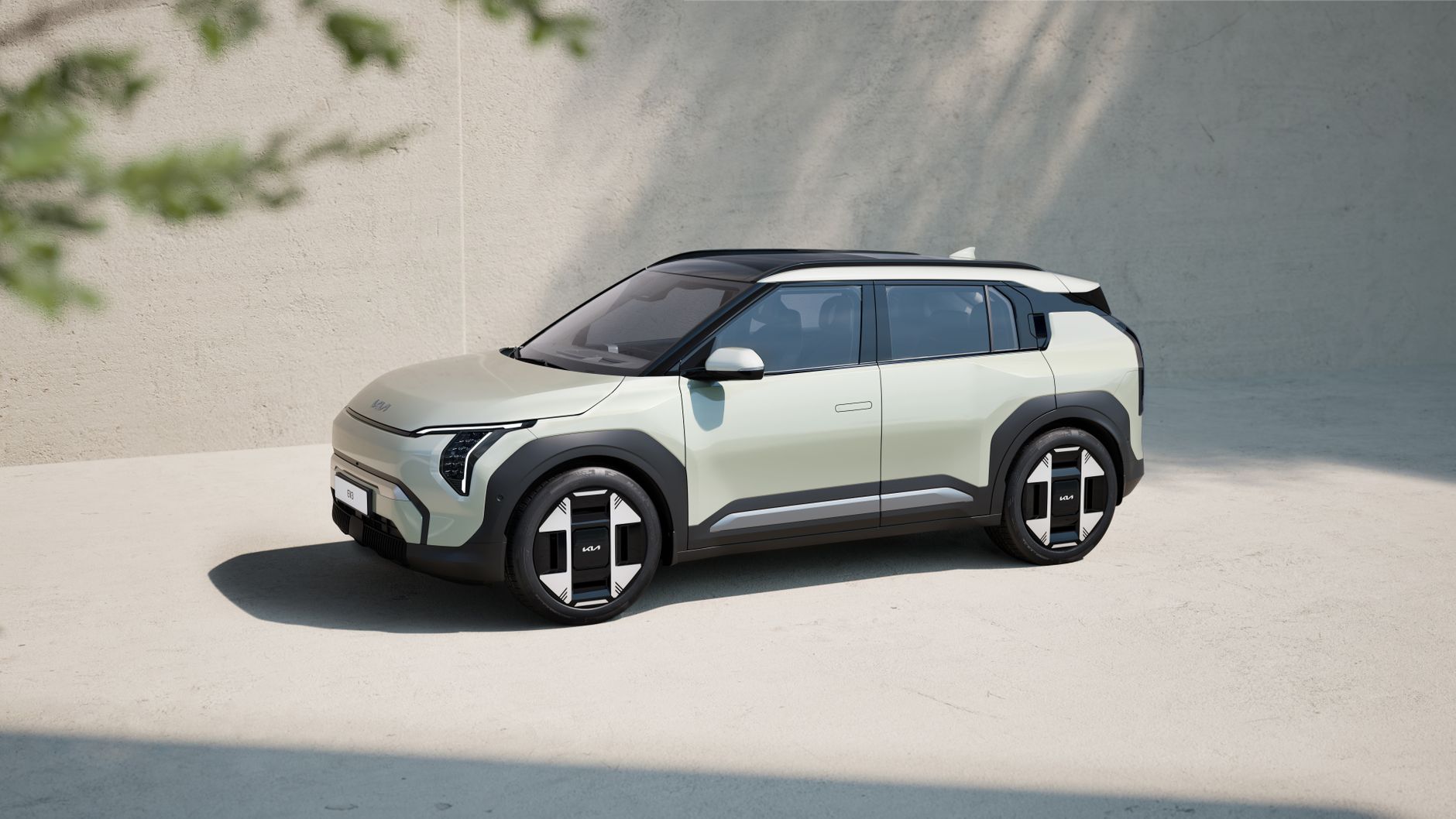
The 2027 Kia EV3 brings a sub-$30,000 starting price to the US market, although its mandatory delivery charge lifts the base model above that threshold.
What the $29,890 EV3 includes
Kia’s advertised starting figure applies to the Light FWD, which pairs front-wheel drive with the smaller of two available batteries. The pack has 58.3 kWh of capacity, and the EPA rates this configuration at 221 miles of range.
The $29,890 figure excludes a $1,495 destination charge, according to Electrek. That puts the least expensive EV3 at $31,385 including destination, before taxes, registration, optional equipment or any dealer-added charges. The destination fee is unavoidable, so the sub-$30,000 number is useful for comparing advertised base prices but not as the amount a buyer will pay to take delivery.
The base model also does not provide the headline 321-mile range. That maximum belongs to an EV3 fitted with the larger 81.4-kWh battery. Buyers weighing affordability against road-trip flexibility therefore face an immediate trade-off: the lowest price brings 100 fewer rated miles than the longest-range configuration.
Battery and drivetrain choices reshape the EV3
The EV3 offers more configuration flexibility than a single price and range figure can show. Along with its two battery capacities, the lineup includes front-wheel drive and all-wheel drive. The latter adds a second motor, raises output to 261 horsepower and reduces range relative to the most efficient version with the large battery. The performance-focused GT uses a 288-hp dual-motor system.
| Configuration | Battery | Drivetrain | Output | Range |
|---|---|---|---|---|
| Light FWD | 58.3 kWh | Front-wheel drive | Not specified in the supplied data | 221 miles, EPA |
| Long-range FWD | 81.4 kWh | Front-wheel drive | Not specified in the supplied data | Up to 321 miles |
| Dual-motor AWD | 81.4 kWh | All-wheel drive | 261 hp | 280 miles for the cited AWD configuration |
| GT | 81.4 kWh | All-wheel drive | 288 hp | Not specified in the supplied data |
The table also shows why the 321-mile claim cannot be applied across the range. Battery capacity, motor count and drivetrain all affect what the EV can deliver. Shoppers interested in all-wheel drive gain traction from a second motor and substantially more output, but they do not retain the maximum range.
This range of configurations gives the EV3 a different proposition from an Electric vehicle sold with only one drivetrain. It can serve as a relatively inexpensive front-drive commuter, a longer-range model or a more powerful AWD vehicle, but not at the same price. Kia’s broader US electric expansion provides additional context for the model’s arrival, including the company’s previously reported US EV expansion plans.

Higher trims move well beyond the base price
The Wind FWD is the first representative step toward the EV3’s maximum-range specification. At $34,990 before destination, it costs $5,100 more than the Light FWD. Moving to the GT-Line AWD produces a much larger gap, while the GT approaches $46,000 before the same mandatory delivery charge.
| Trim | Price before destination | Price including $1,495 destination | Increase over base with destination |
|---|---|---|---|
| Light FWD | $29,890 | $31,385 | Base |
| Wind FWD | $34,990 | $36,485 | $5,100 |
| GT-Line AWD | $43,490 | $44,985 | $13,600 |
| GT | $45,890 | $47,385 | $16,000 |
These totals use the listed trim prices reported by Electrek and add the same destination fee. They do not include taxes, registration or dealer charges. They demonstrate how quickly the value calculation changes: the GT costs $16,000 more than the Light FWD, even before other purchase costs enter the equation.
Car and Driver characterizes the upper EV3 trims as more expensive than competing models and identifies AWD pricing as another disadvantage against rivals. That assessment does not erase the base model’s relatively low entry point, but it makes trim selection central to any comparison. A shopper attracted by AWD, greater power or a higher equipment grade is evaluating a vehicle in a different price bracket from the $29,890 headline model.
Highway range and charging reveal the road-trip compromise
EPA ratings provide a standardized comparison, but steady high-speed driving can produce a different result. In Car and Driver’s 75-mph highway test, a GT-Line AWD traveled 250 miles. Its EPA rating is 280 miles, making the tested result 30 miles lower, or about 11 percent short of the rating.
That result applies to the tested GT-Line AWD, not every EV3. It should not be substituted for the Light FWD’s 221-mile rating or the large-battery front-drive model’s 321-mile maximum. It does, however, give AWD buyers a more concrete planning number for sustained highway use than the lineup’s best-case range claim.
Charging also requires realistic expectations. In the same outlet’s DC fast-charging test, the EV3 took 47 minutes to move from 10 to 90 percent. The measurement covers an 80-percentage-point window, rather than the shorter 10-to-80-percent interval often used in charging claims. Even so, it indicates that an AWD road trip may involve stops approaching three-quarters of an hour when charging through that broader window.
The EV3’s strongest affordability case is consequently the Light FWD at $31,385 delivered, provided 221 miles suits the buyer’s routine. The 81.4-kWh front-drive version exchanges a higher purchase price for as much as 321 miles, while AWD adds output and traction at the cost of both range and substantially more money. The tested charging time and 250-mile highway result make those distinctions more important for buyers who expect frequent long-distance travel.
Featured image. Source: Pexels. Credit: Hyundai Motor Group. License: Pexels License.