

“500 Miles In 12 Minutes”: Scientists Crack Lithium-Metal Battery Code With Dendrite-Free Design And Game-Changing EV Potential
 By
Avi Cohen
By
Avi Cohen
| IN A NUTSHELL |
|
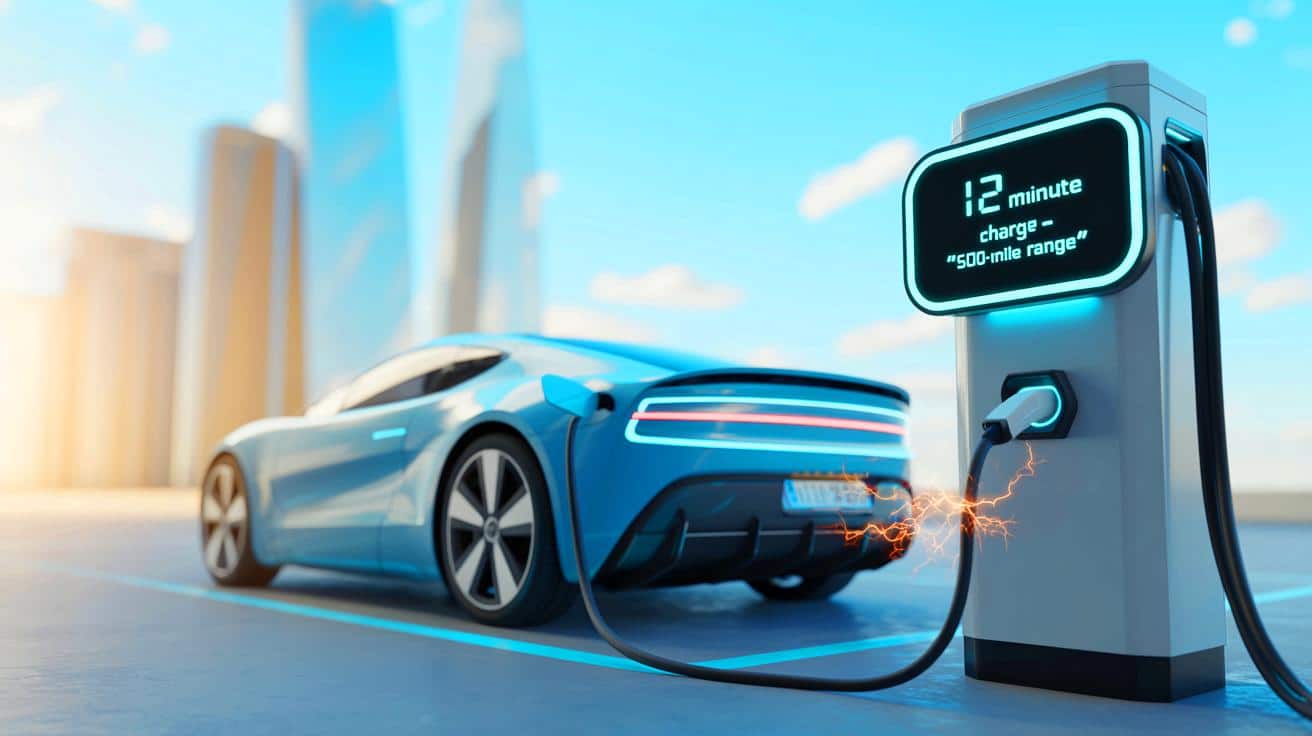
In a pivotal advancement for the electric vehicle (EV) industry, scientists have developed a breakthrough in battery technology that could redefine how we perceive electric mobility. Utilizing an innovative chemistry approach, researchers have created a lithium-metal battery capable of powering a vehicle for 500 miles on a mere 12-minute charge. This cutting-edge development addresses a significant limitation of current batteries, promising not only faster charging times but also extended driving ranges. As the demand for cleaner energy solutions grows, this innovation could serve as a catalyst for the widespread adoption of EVs.
The Science Behind Lithium-Metal Batteries
Lithium-metal batteries represent a significant upgrade from the traditional lithium-ion batteries currently powering most electric vehicles. The primary distinction lies in the replacement of the graphite anode with lithium metal. This change results in a much higher energy density, allowing for more energy storage relative to the battery’s weight or volume. For EV drivers, this means batteries that charge faster and enable longer travel distances per charge.
However, a notable challenge with lithium-metal batteries has been the formation of dendrites. This branching, crystalline substance grows on the anode during charging, degrading battery performance over time and increasing the risk of short-circuits. These issues are exacerbated during rapid charging, making it difficult to create a viable commercial product until now.
Overcoming Dendrite Formation
In recent studies, scientists have identified the underlying cause of dendrite formation: non-uniform interfacial cohesion on the lithium metal surface. Essentially, lithium ions do not deposit evenly during charging, creating weak spots that promote dendrite growth. To combat this, the researchers developed a new type of liquid electrolyte with "cohesion-inhibiting" properties.
This innovative liquid electrolyte ensures a more uniform distribution of lithium ions across the anode, significantly reducing the likelihood of dendrite formation. As a result, the battery's rapid-charging capabilities are enhanced, and its lifespan is extended to over 185,000 miles. This technological advancement could be pivotal in making lithium-metal batteries a practical option for electric vehicles.
Laboratory Success and Future Implications
In controlled laboratory settings, the new battery technology demonstrated remarkable performance. The batteries charged from 5% to 70% in just 12 minutes and maintained this efficiency over 350 cycles. A higher-capacity version achieved 80% charge in 17 minutes over 180 cycles. These results indicate that the new electrolyte not only improves charging speed but also enhances the battery's longevity.
According to Professor Hee Tak Kim, a co-author of the study, this research forms a critical foundation for overcoming the technical challenges associated with lithium-metal batteries. By understanding the interfacial structure, the team has addressed the primary barrier to the introduction of these batteries in electric vehicles. This breakthrough is a significant step toward realizing a future where long-range, fast-charging EVs are commonplace.
Why trucks remain essential for small businesses in the modern era
Potential Impact on the Electric Vehicle Market
This advancement in battery technology could have profound implications for the EV market. As consumers demand more efficient and longer-lasting vehicles, the ability to charge quickly and travel farther on a single charge becomes increasingly attractive. This could lead to a surge in EV adoption, reducing reliance on fossil fuels and decreasing overall carbon emissions.
Furthermore, with the ongoing development of infrastructure to support electric vehicles, the adoption of such advanced batteries could accelerate the transition to a more sustainable transportation model. As governments and industries worldwide push for cleaner energy solutions, innovations like these become crucial in meeting future energy demands.
As we look toward the future, the question remains: How will these advancements in battery technology reshape the landscape of electric vehicles and, consequently, our approach to sustainable energy solutions?