

“They Just Made Plugging In Obsolete”: Porsche’s New Wireless Charging System Lets the Cayenne Charge Itself
 By
Ethan Kowalczyk
By
Ethan Kowalczyk
| IN A NUTSHELL |
|
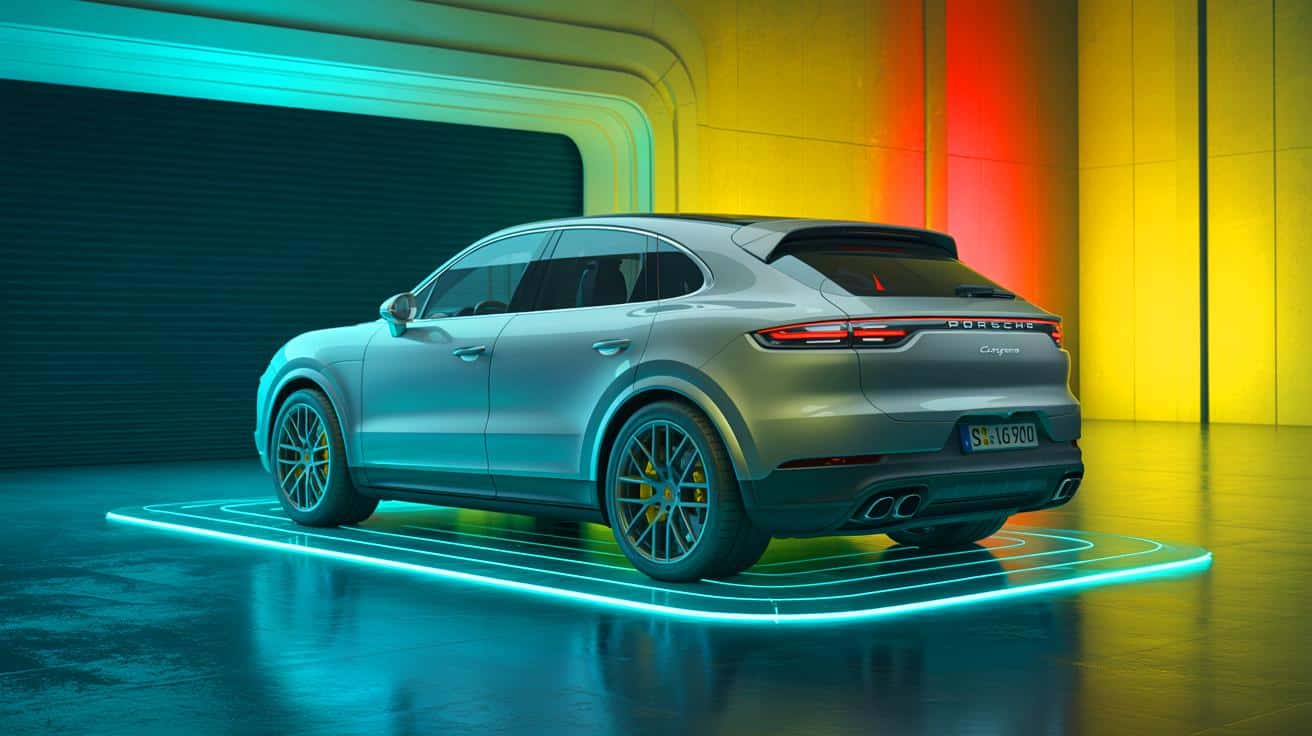
Porsche has unveiled a groundbreaking innovation at the Internationale Automobil Ausstellung (IAA) Mobility show, introducing a prototype of its inductive electric vehicle (EV) charging system. This cutting-edge technology will debut as an option for the all-electric Porsche Cayenne, set to launch in 2025 as a 2026 model. The wireless charging feature promises convenience and efficiency, eliminating the need for physical cables and plugs. Initially, this system will be available in European markets in 2026, with a global rollout to follow. Porsche’s advancement in EV technology is a significant step towards a more seamless and user-friendly electric driving experience.
Porsche’s Inductive Charging System: A Closer Look
At the core of Porsche’s new offering is a wireless charging receiver positioned beneath the vehicle, strategically placed between the front wheels. This receiver works in conjunction with an 11-kW charging base plate, typically installed in the owner’s garage. The base unit, named the One-Box, is self-contained and requires only a power supply cable to function. This design eliminates the need for additional mounting hardware, simplifying installation and use.
Safety is a priority in Porsche’s design. The base plate is equipped with a motion detector and foreign object detection, ensuring that any wandering pets or misplaced items are not exposed to the electromagnetic field. This feature enhances the system’s safety, making it suitable for home use. The One-Box begins communication with the vehicle as soon as they are in close proximity, allowing for an efficient and automated charging process.
The Charging Process: Seamless and User-Friendly
The charging process is designed to be intuitive and user-friendly. As the driver navigates the Cayenne into the parking space, a surround-view camera system integrated into the car’s infotainment system assists in positioning the vehicle correctly over the charging plate. Once the vehicle is parked, the system takes over, lowering the car to an optimal distance of approximately six inches for charging.
This automated approach not only simplifies the charging process but also ensures optimal efficiency. The My Porsche app further enhances the user experience, allowing owners to monitor and control the charging process remotely. This app also offers features such as vehicle preconditioning, providing a seamless integration with the vehicle’s existing systems and user interfaces.
Future Prospects: Expanding Porsche’s EV Lineup
Porsche’s commitment to innovation extends beyond the Cayenne. The company plans to incorporate this inductive charging technology into other electric vehicles in its lineup, signaling a broader shift towards wireless convenience in EVs. This move aligns with the automotive industry’s trend towards more sustainable and user-friendly electric solutions.
The introduction of wireless charging is expected to set a new standard in the luxury EV market. By eliminating the need for physical connectors, Porsche is not only enhancing the aesthetic appeal of its vehicles but also addressing practical challenges associated with traditional charging methods. This technological leap could potentially influence other manufacturers to explore similar solutions.
Supercar maintenance: Tips for keeping your ride in top shape
Global Rollout: Challenges and Opportunities
While the initial rollout is planned for Europe, the global expansion of Porsche’s wireless charging system presents both challenges and opportunities. Regulatory approvals, infrastructure readiness, and consumer acceptance are key factors that will influence the speed and success of this rollout. However, the potential benefits are significant, offering a glimpse into a future where EV charging is as simple as parking the car.
Porsche’s innovation could also spur advancements in public charging infrastructure, encouraging the installation of wireless charging stations in public and commercial spaces. This could further accelerate the adoption of electric vehicles by reducing one of the main barriers to EV ownership: convenient and accessible charging options.
As Porsche pushes forward with its inductive charging technology, the automotive industry watches closely. This development raises intriguing questions about the future of EV infrastructure and consumer expectations. Will wireless charging become the norm, and how will it reshape our approach to electric mobility?