


“They Said Batteries Couldn’t Go Further”: A US Startup Just Unveiled a Design That Extends EV Range by 50% Without Adding Size (and it’s a game changer)
 By
Owen Fairbrother
By
Owen Fairbrother
| IN A NUTSHELL |
|
In a significant stride toward advancing electric vehicle technology, 24M Technologies has introduced a revolutionary battery design that promises to extend the range of electric vehicles by up to 50% without increasing the battery size. This innovation, known as the “cell-less” Electrode-to-Pack (ETOP) technology, marks a profound shift in how batteries are constructed and utilized. By focusing on maximizing the volume of energy-storing materials, 24M offers a compelling solution for manufacturers aiming to enhance performance and reduce costs. As the global demand for electric vehicles accelerates, innovations like ETOP could play a crucial role in shaping the future of transportation.
Revolutionizing Battery Construction
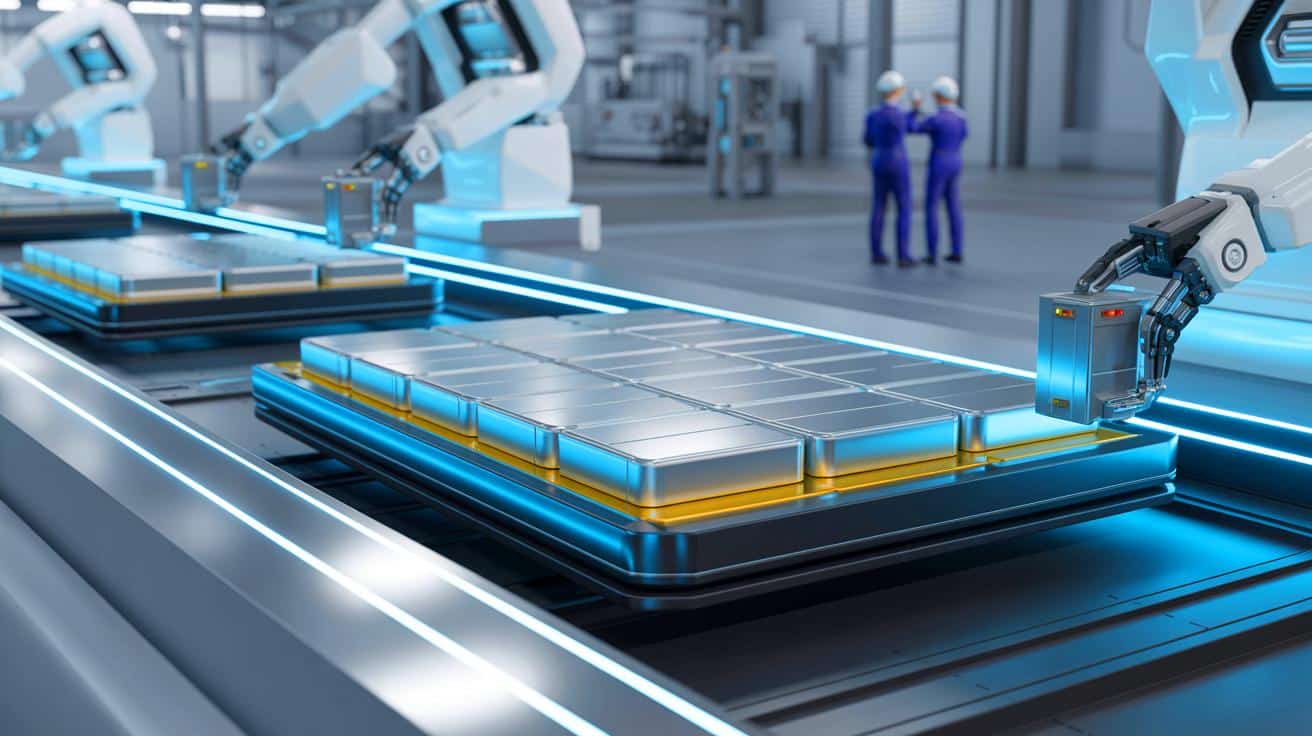
The core of 24M’s innovation lies in its approach to battery construction. Traditional batteries consist of individual cell casings that house electrodes, which are then bundled into modules. This conventional setup includes a significant amount of non-energy-storing materials, contributing to unnecessary weight and volume. 24M’s ETOP technology eliminates these inefficiencies by creating sealed anode and cathode pairs stacked directly into the battery pack. This streamlined design not only reduces weight but also increases the energy-storing capacity of the battery pack.
By integrating sealed electrodes directly into the pack, the ETOP system bypasses the need for individual cells and modules. This reduces manufacturing complexity and allows for a more straightforward production process. Companies can begin production with lower capital expenditures, integrating the entire process—sealing, stacking, wiring, and closing the battery pack—into an efficient assembly line. This approach not only enhances energy density but also offers manufacturers much-needed design flexibility and cost-effectiveness.
Supercar maintenance: Tips for keeping your ride in top shape
Enhancing U.S. Battery Innovation
The push for battery innovation in the United States has become increasingly vital as global competition intensifies. According to Naoki Ota, President and CEO of 24M, American industries must focus on advancing battery technology rather than merely scaling production to catch up with overseas competitors. The ETOP platform provides U.S. manufacturers with the tools needed to surpass Asian counterparts by delivering industry-leading energy density and innovative design flexibility.
With proprietary technologies like the Impervio separator for enhanced safety and the Eternalyte electrolyte for better performance in extreme temperatures, 24M claims its technology could produce battery packs capable of delivering up to 1,000 miles per charge. This capability promises to overcome significant barriers that have hindered the development of next-generation battery designs. By focusing on innovation, 24M aims to position the U.S. at the forefront of the global battery industry.
Global Research and Development Efforts
As the electric vehicle market continues to expand, research efforts worldwide are focused on improving battery efficiency. At the Massachusetts Institute of Technology (MIT), researchers have developed the Coupled Ion-Electron Transfer (CIET) model to advance lithium-ion batteries. This new model redefines the chemical reaction known as intercalation, potentially leading to more powerful and faster-charging lithium-ion batteries.
Similarly, international collaborations like the study from Kiel University have outlined a roadmap for lithium-sulfur batteries (LSBs). These batteries could enable rapid charge times of under 30 minutes, with some achieving as low as 12 minutes, while offering higher energy density and improved safety. Meanwhile, Chinese tech giant Xiaomi has patented a layered electrode design capable of delivering a range of over 745 miles and supporting fast charging that adds 500 miles of range in just 10 minutes. Such advancements highlight the global commitment to advancing battery technology and its critical role in the future of electric vehicles.
How supercars are changing the face of automotive technology
Potential Impact on the Electric Vehicle Market
The implications of 24M's ETOP technology for the electric vehicle market are profound. By offering a solution that extends vehicle range without increasing battery size, 24M addresses one of the primary challenges facing electric vehicle adoption: range anxiety. This innovation could significantly influence consumer confidence, making electric vehicles a more viable option for a broader audience.
Moreover, the cost-effectiveness and ease of manufacturing associated with the ETOP system could encourage more manufacturers to transition toward electric vehicle production. As manufacturers adopt these technologies, we may witness a surge in electric vehicle availability and a reduction in prices, further driving the adoption of sustainable transportation solutions. However, the success of these technologies will depend on their ability to integrate seamlessly into existing manufacturing processes and meet consumer expectations for performance and reliability.
As 24M’s ETOP technology and other global advancements continue to evolve, the electric vehicle industry stands on the brink of a transformative era. The potential for extended range, reduced costs, and enhanced performance presents exciting opportunities for manufacturers and consumers alike. How will these innovations shape the future of transportation, and what further breakthroughs can we expect as the demand for sustainable energy solutions continues to grow?