

“They Swapped 145,000 Car Batteries in One Day”: Nio’s Record-Breaking Feat Is Changing Everything About Electric Vehicles
 By
Renée Castellano
By
Renée Castellano
| IN A NUTSHELL |
|
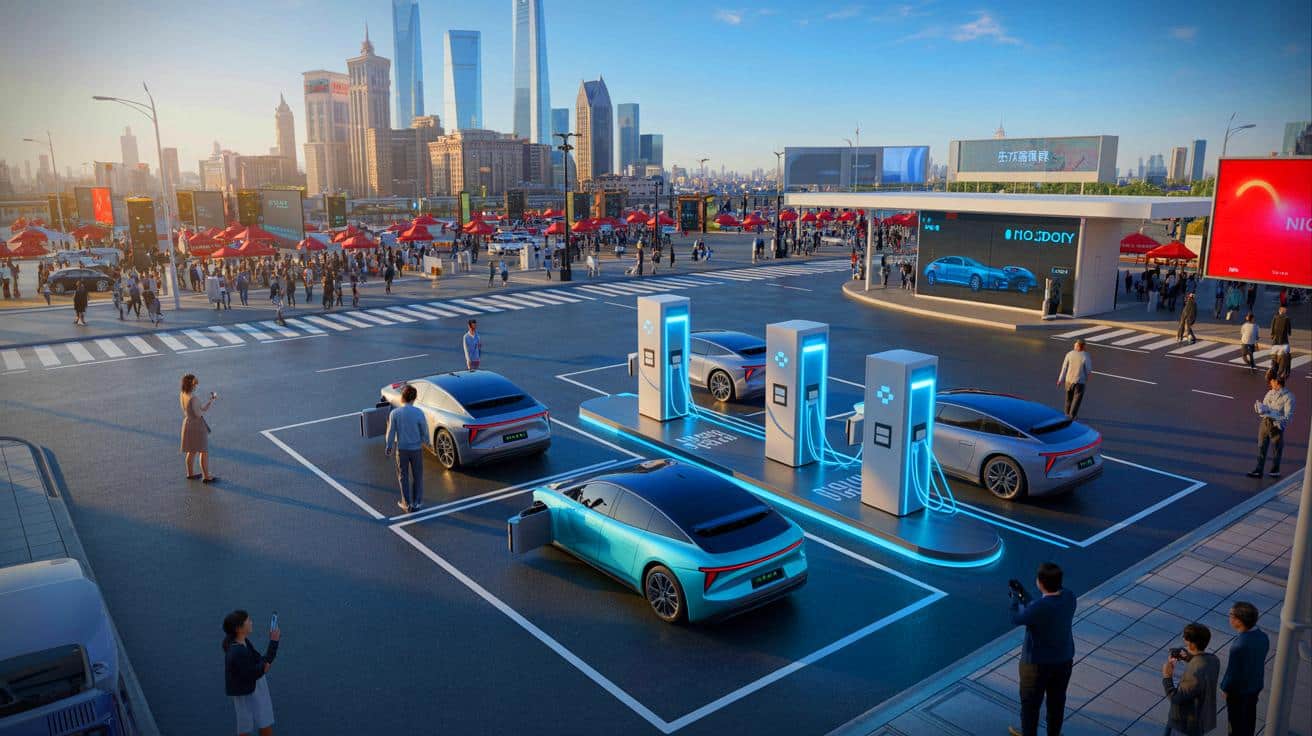
China’s electric vehicle market continues to evolve at an impressive pace, with innovative technologies and infrastructure developments leading the way. A standout example of this progress is Nio, a prominent EV manufacturer that has recently set a remarkable record for battery swaps in a single day. As millions of Chinese drivers traveled during the National Day “Golden Week” holiday, Nio executed over 145,000 battery swaps, showcasing the efficiency and convenience of its system. This achievement not only highlights the growing adoption of electric vehicles in China but also underscores the significance of battery-swapping technology in meeting the rising energy demands of EV users.
Battery-Swap Infrastructure Expands With Growing EV Demand
This year, Nio has made significant strides in expanding its battery-swap infrastructure, opening 525 new stations across China. The company now operates over 3,500 swap stations nationwide and maintains a growing presence in Europe with 61 stations. On October 1, the network handled an impressive 7,545 swaps per hour, illustrating the system’s efficiency during peak travel times.
China’s Golden Week, a period known for increased travel, has traditionally led to heightened energy demands for vehicles. For Nio, this period underlines the strategic advantage of its automated swap system, capable of replacing a depleted battery in less than three minutes. This convenience is a key factor driving the rapid adoption of Nio’s technology among Chinese EV owners.
Cumulative Swaps: 87,404,759
Past 24h: 145,395
Top 3 cities: Shanghai: 9,670, Beijing: 4,892, Hangzhou: 3,983
Despite its record-breaking performance, Nio has faced challenges in meeting its ambitious target for swap station expansion. The company initially aimed to install 2,000 new stations this year but has revised this goal to 1,800-2,000. By early September, only 488 sites had been completed, representing about 27% of the target. This slowdown is partly due to the company’s shift in focus toward developing its fifth-generation swap stations, which will support multiple battery sizes and offer enhanced capabilities.
Preparing for Multi-Brand Growth and Higher Delivery Goals
Nio’s diverse lineup now includes seven different battery capacities, ranging from 42.1 kWh to 150 kWh. While this offers consumers greater flexibility, it also adds complexity to the company’s swap infrastructure. In response, Nio has filed patents for modular swap stations designed to expand capacity in high-demand areas, with plans for larger battery hubs in major cities like Beijing, Shanghai, and Shenzhen.
The automaker has also achieved a new milestone in vehicle deliveries. In September, Nio delivered 34,749 units across its brands, including Nio, Onvo, and Firefly. By the end of September, Nio had delivered a total of 201,221 vehicles for the year, leaving approximately half of its annual target unmet. The company aims to deliver 150,000 vehicles in the final quarter, which would bring the total to 351,000 vehicles, falling short of its target by roughly 90,000 units.
The Challenge of Meeting Expansion Targets
Nio’s ambitious expansion plans have encountered obstacles, primarily due to the need for a new generation of swap stations. The current fourth-generation stations, capable of storing up to 23 battery packs and completing 480 swaps daily, are not adaptable to the newer battery sizes. Nio’s CEO, William Li, acknowledged the need for a complete redesign to accommodate this diversity.
Why trucks remain essential for small businesses in the modern era
The planned fifth-generation stations, expected to launch in early 2026, promise greater flexibility, higher capacity, and faster performance. They are designed to support multiple battery sizes, catering not only to Nio vehicles but also to its sub-brands, Onvo and Firefly. This development marks a significant step in Nio’s strategy to enhance its infrastructure and support its growing user base.
Global Expansion and Future Prospects
Nio’s global ambitions are evident in its expanding network of swap stations in Europe. With 61 stations already operational, the company is poised to further its reach beyond China’s borders. As the global demand for electric vehicles continues to rise, Nio’s innovative battery-swapping technology could play a crucial role in meeting the energy needs of EV owners worldwide.
The company’s focus on technological advancement and infrastructure expansion reflects its commitment to staying at the forefront of the electric vehicle industry. As Nio prepares to launch its fifth-generation swap stations, it stands to gain a competitive edge in the market. However, the company’s ability to achieve its ambitious goals will depend on its capacity to adapt to evolving consumer demands and technological challenges.
Nio’s recent achievements in battery-swapping technology demonstrate significant progress in the electric vehicle sector. As the company continues to expand its infrastructure and adapt to new challenges, it remains a key player in the global shift toward sustainable transportation. How will Nio’s innovations influence the future of electric vehicles, and what impact will they have on the broader automotive industry?