



“They’re Building 1,500,000 Cars In Secret”: Hyundai Plant Produces Vehicle Every Ten Seconds While Shipping To Two Hundred Countries
 By
Avi Cohen
By
Avi Cohen
| IN A NUTSHELL |
|
In the bustling heart of South Korea, an automotive plant has set a remarkable benchmark in industrial efficiency. Producing a car every 10 seconds, this factory churns out an astonishing 1.5 million vehicles annually. Nestled in the city of Ulsan, this facility is not just about manufacturing cars; it’s a testament to logistic perfection. The seamless integration of automation and human expertise ensures that each vehicle meets stringent quality standards before it embarks on its international journey. This model of efficiency raises intriguing questions about the future of the automotive industry and the role of logistical innovations in shaping it.
Mastering the Art of Production
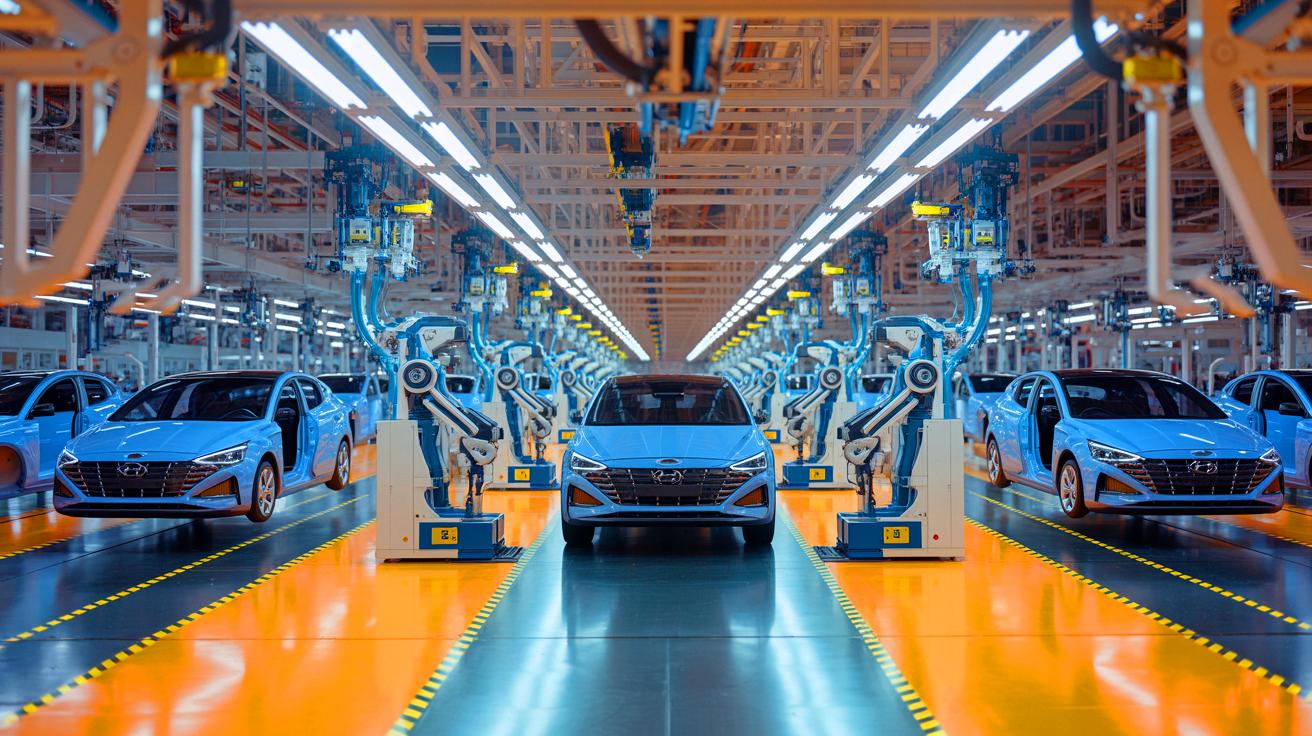
The Ulsan plant is more than a factory; it is a sprawling industrial ecosystem. Operating six facilities for 18 hours a day, it manufactures 17 different models, ranging from the Hyundai Santa Fe to the electric Genesis model. This impressive production cadence results from meticulous planning and optimal resource utilization. Robots integrated into assembly lines, alongside human workers tasked with specific roles, ensure exceptional quality levels.
Each vehicle undergoes rigorous quality checks before shipment. Once inspections are complete, experts drive the cars to a vast parking area adjacent to the port, ready for loading onto freight vessels. This operation is crucial, ensuring that each model meets the highest standards before reaching international markets. Once at sea, cars take about 13 days to reach destinations such as the United States, Spain, and the United Kingdom.
This integrated production and logistics approach allows Hyundai to maintain a competitive edge in an increasingly challenging automotive market. With a production volume exceeding many other plants worldwide, Ulsan stands as a leader in the industry. By combining high technology with human expertise, this facility perfectly illustrates the future of automotive manufacturing.
A City Shaped by Industry
The phenomenon of Ulsan extends beyond mere car production. The entire city seems to revolve around the factory's activity, with roads, schools, and services bearing the Hyundai name. This synergy between the company and the local community is a model to follow, illustrating how an industry can transform a region's dynamics. Thus, Ulsan has become an example of economic development driven by innovation and collaboration.
The presence of Hyundai has also significantly impacted local employment. With thousands of jobs created both directly and indirectly, the plant has allowed generations of families to thrive. Investments in infrastructure, such as the development of modern roads and schools, testify to the company's commitment to the community. This raises questions about corporate social responsibility in an increasingly globalized world.
Furthermore, the Ulsan plant represents a model of sustainability. With the increasing production of electric vehicles, Hyundai is committed to reducing its carbon footprint while maintaining efficient production. This transition to more eco-friendly models is crucial for the automotive industry's future, which must face increasingly strict environmental regulations.
Volkswagen Unleashes Its Own Epic Gymkhana Video: A Thrilling Ride!
A Revolutionary Logistic Model
What truly sets Ulsan apart is its integrated logistics. The fact that this plant has its own port is a major asset. It not only speeds up the shipping process but also reduces logistical costs associated with transporting vehicles. Freight ships depart around the clock, ensuring that cars arrive quickly at their destinations, an essential element to satisfy growing consumer demands.
The plant's shipping capacity is impressive. Each year, about 75% of its production is exported to over 200 countries. This not only demonstrates Hyundai's competitiveness in the global market but also consumers' trust in the quality of the vehicles produced. Logistics thus becomes a central element of the company's business strategy, allowing it to effectively meet market needs.
The Ulsan plant perfectly illustrates how successful integration between production and logistics can transform a company into a global leader. Future challenges will require continuous adaptation, but with this approach, Hyundai is well-positioned to navigate an ever-evolving economic environment.
Toward a Sustainable Future
In sum, Hyundai's Ulsan plant is not just a model of automotive production but a true logistics revolution. With an annual production of 1.5 million vehicles and an integrated shipping system, it redefines industry standards. Looking ahead, the challenge will be to maintain this excellence while incorporating sustainable practices in a world increasingly demanding that companies consider their environmental impact.
Innovations in technology, commitment to the community, and optimized logistics are the pillars on which Hyundai relies to continue its growth. As the automotive industry evolves, could Ulsan become the model for manufacturers worldwide?