
“This Electric Beast Just Made History”: Ford’s 1,400-HP F-150 Lightning SuperTruck Shatters Nürburgring Records and Redefines EV Power
 By
Owen Fairbrother
By
Owen Fairbrother
| IN A NUTSHELL |
|
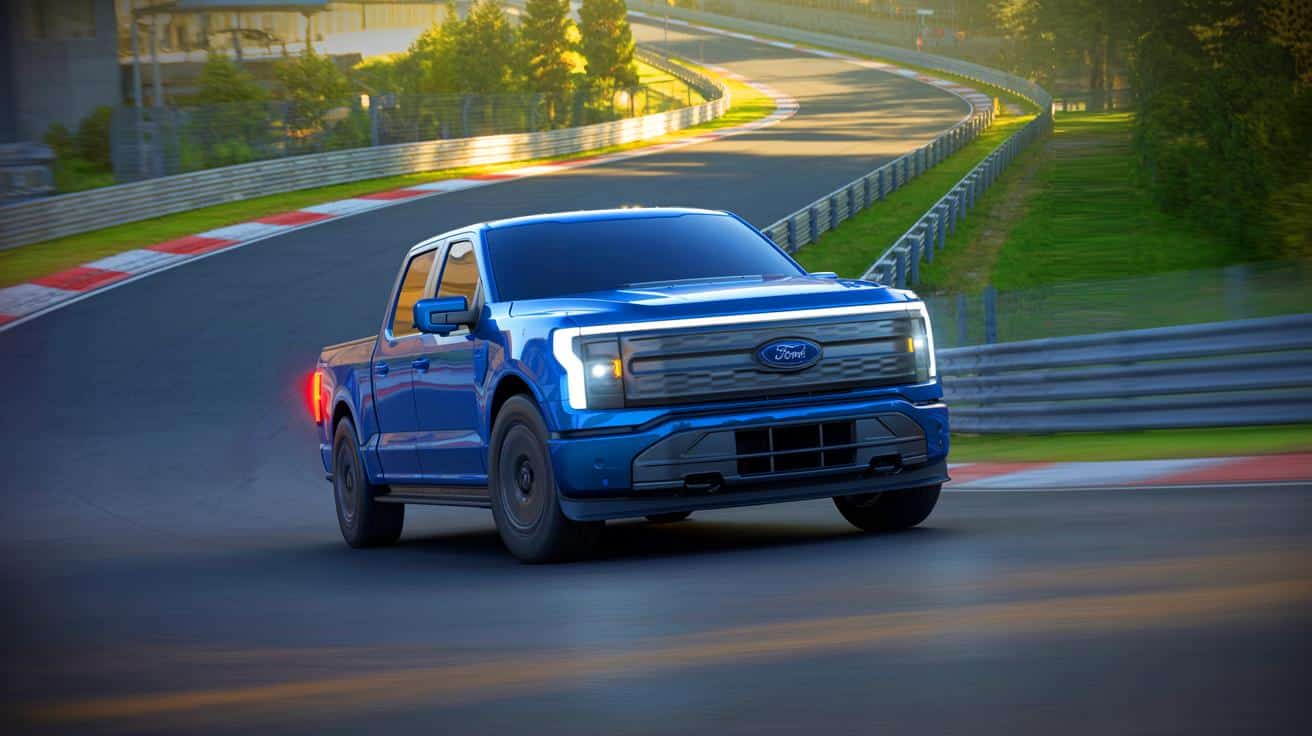
The Ford F-150 Lightning SuperTruck has recently captured attention with its remarkable performance on one of the world’s most challenging race tracks, the Nürburgring. Achieving a lap time of 6:43.482 minutes, this prototype has recorded the fifth fastest time in history for such vehicles on this infamous circuit. Beyond speed, Ford sees this achievement as a testing ground for the future of electric mobility. The Nürburgring, a 12.9-mile track with 73 demanding corners, serves as a proving ground for innovations that will eventually find their way into everyday vehicles, showcasing Ford’s commitment to transitioning their technological advancements from track to road.
The Challenge of the Nürburgring
Revered as one of the toughest circuits in the world, the Nürburgring is a true test of automotive endurance and innovation. Spanning 12.9 miles and comprising 73 grueling turns, this track places extreme demands on vehicles, separating the innovative from the inadequate. Success here is a testament to a vehicle’s durability and performance, qualities that are essential for everyday driving. Ford leverages the insights gained from high-speed laps to enhance its consumer vehicles, with aerodynamic optimizations aimed at increasing highway efficiency. Moreover, the battery management systems tested under intense conditions are designed to perform seamlessly in routine situations, such as traffic jams in sweltering heat.
Ford’s philosophy of utilizing real-world data rather than solely relying on laboratory conditions is emphasized by Mark Rushbrook, the director of Ford Performance. This approach ensures that the technologies developed are robust enough for everyday consumer use. The Nürburgring tests provide Ford with the assurance that their vehicles can withstand rigorous conditions, which ultimately translates to reliability and efficiency in daily scenarios.
Innovative Electric Performance
The Ford F-150 Lightning SuperTruck is not just a record chaser; it is a mobile laboratory for the next generation of electric utility vehicles. Armed with a tri-motor system that delivers over 1,400 horsepower, and reportedly up to 2,200 horsepower during tests, this vehicle possesses power far beyond what is typically demanded, even in racing. Such capabilities highlight the potential for electric vehicles to exceed traditional performance benchmarks.
To harness this power effectively, the SuperTruck is equipped with a comprehensive aerodynamic package. This includes a three-piece front splitter, air intakes on the headlights and hood, side diffusers, a large rear diffuser, and a multi-part rear wing system. These features generate a downforce of approximately 5,950 pounds at speeds around 150 mph, which is vital for maintaining speed through corners. The vehicle's chassis is designed as a fully individual inboard system, tailored for extreme precision and stress endurance, underscoring the meticulous engineering behind its creation.
Advanced Engineering for Everyday Use
The engineering prowess of the Ford F-150 Lightning SuperTruck extends beyond its power and speed. Equipped with forged magnesium wheels and Pirelli P Zero slick tires, the vehicle ensures maximum grip, while carbon ceramic brakes handle the significant deceleration demands. Inside the cockpit, the driver experiences a minimalist setup, with a carbon fiber cell, a single seat, and essential monitoring screens, prioritizing functionality and focus.
The vehicle's battery, with a capacity of approximately 50 kilowatt-hours, is another marvel of engineering. During a full charge lap, it discharges up to 60%, a testament to its endurance under extreme conditions. To maintain performance, a specially designed dry ice cooling system stabilizes temperatures between races, ensuring consistent operation. When combined with the aerodynamic and tri-motor system, the SuperTruck achieves lateral acceleration values of up to 1.43 g on test tracks, demonstrating the impressive capabilities of Ford's engineering.
Ford's Vision for the Future
Ford's endeavors at the Nürburgring are not merely about setting records; they represent a commitment to translating high-performance advancements into practical, everyday applications. The F-150 Lightning SuperTruck stands as a testament to Ford's dedication to pioneering robust, reliable, and high-performing electric vehicles. This vehicle embodies a promise of performance, reliability, and innovation in the electric era. As Ford continues to develop and refine its technologies, the company aims to seamlessly integrate these advancements into their consumer offerings, ensuring that the future of mobility is both exciting and dependable.
With such significant strides in electric vehicle technology, one cannot help but wonder: how will these innovations shape the future of transportation, and what impact will they have on our daily lives as consumers?