

“It Got Pulled Over With No Driver Inside”: Waymo’s Self-Driving Car Sparks Safety Fears After Illegal Maneuver (and Police Couldn’t Ticket It)
 By
Avi Cohen
By
Avi Cohen
| IN A NUTSHELL |
|
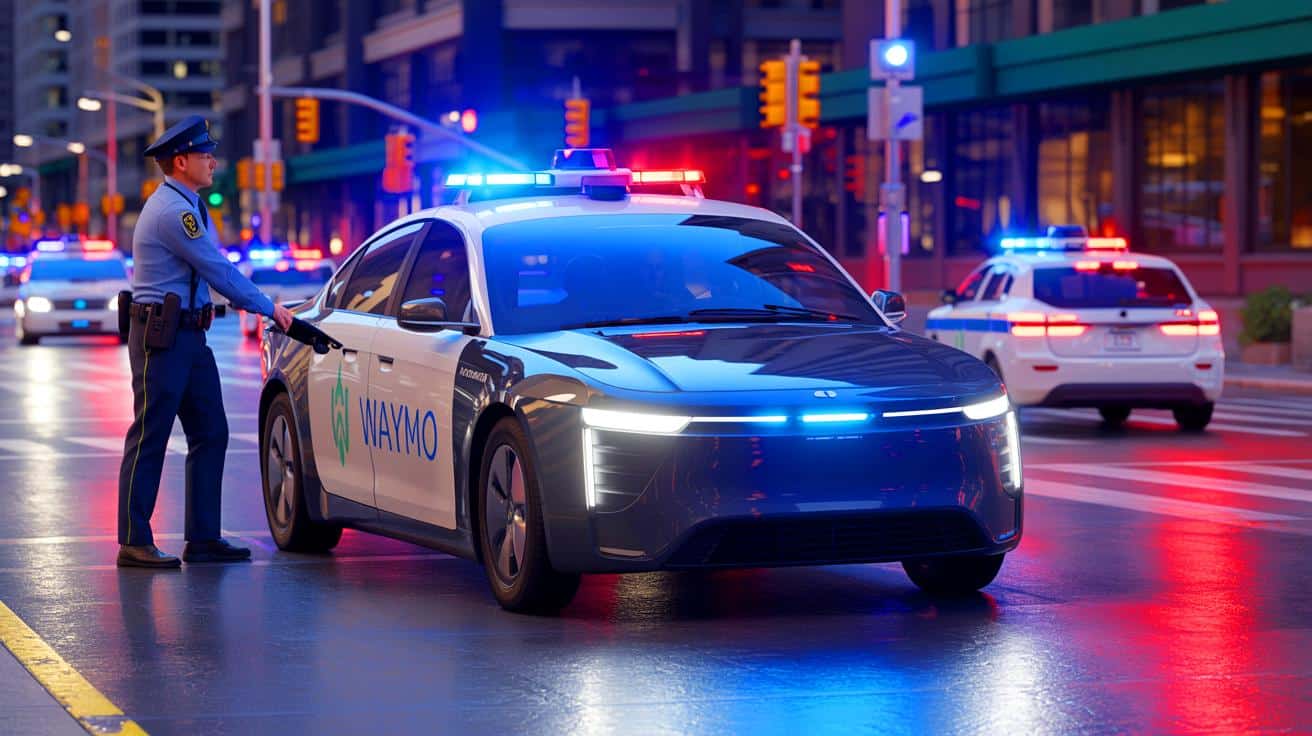
Autonomous vehicles are becoming a common sight on American roads, signaling a shift in transportation paradigms. Waymo, one of the pioneers in this field, recently made headlines when one of its driverless taxis was pulled over by police in San Bruno, California. The incident raises questions about the current state of self-driving technology and its integration into everyday life. While these cars are designed to mimic human driving behaviors for safety, their actions sometimes mirror human errors as well. This development adds a new layer of complexity to discussions around autonomous vehicle safety and regulation.
Waymo’s Human-Like Driving Behaviors
Recent observations have highlighted that Waymo’s autonomous vehicles are adopting more human-like driving behaviors. These include honking at drivers who cut them off and rolling forward slightly while waiting for pedestrians. Waymo posits that these behaviors enhance safety by making the vehicles’ actions more predictable to human drivers. However, these changes have also led to situations where the cars imitate less desirable human driving traits, such as performing illegal U-turns.
Despite the company’s assurance that these behaviors improve road safety, incidents like the San Bruno traffic stop suggest that the technology still has room for improvement. The police, unable to issue a citation due to the lack of a human driver, contacted Waymo’s parent company, Google, to address the issue. This incident underlines the challenges law enforcement faces in adapting to autonomous vehicles.
Supercar maintenance: Tips for keeping your ride in top shape
Previous Run-Ins With the Law
This is not the first time Waymo’s autonomous vehicles have encountered legal difficulties. In Phoenix, a Waymo car was pulled over after it veered into oncoming traffic and ran a red light. Such incidents highlight the complexities involved in programming vehicles to navigate unpredictable human environments safely. While the technology has advanced significantly, these events suggest that it may not yet be foolproof.
Law enforcement agencies are still adapting to the presence of driverless cars on the roads. The lack of established protocols for dealing with autonomous vehicles means that incidents like these can result in confusion. This underscores the need for new regulatory frameworks tailored to the unique challenges posed by self-driving technology.
Strange and Dangerous Behaviors
Apart from traffic violations, Waymo’s vehicles have exhibited other unusual behaviors. Some have been reported to drive in circles endlessly or congregate in parking lots without apparent reason. These actions can disrupt traffic and confuse other road users. More concerning are instances where Waymo vehicles have caused accidents, such as running over a dog or hitting a bicyclist, resulting in severe injuries.
The unpredictability of these vehicles has led some residents to take drastic measures, such as blocking their streets to prevent Waymo cars from entering their neighborhoods. Such actions reflect growing public frustration and concern over the safety of autonomous vehicles, particularly when they demonstrate behaviors that can lead to accidents.
Public Perception and Future Implications
The public’s reaction to autonomous vehicles is mixed. While some embrace the potential for increased convenience and safety, others are wary of the technology’s limitations. Incidents like the one in San Bruno contribute to skepticism and distrust among residents, who worry about the implications of sharing the road with driverless cars.
As autonomous technology continues to evolve, it is crucial for companies like Waymo to address public concerns and improve the reliability of their systems. Balancing innovative development with safety and transparency will be key to gaining public trust and ensuring the successful integration of autonomous vehicles into the transportation ecosystem.
The future of autonomous vehicles hinges on overcoming current challenges and refining technology to ensure safety and reliability. How can companies and regulators work together to address these issues and foster public confidence in driverless cars?