

“It Trapped Them Inside”: Tesla Cybertruck Crash Sparks Lawsuits and Federal Probe Into Deadly Door Design
 By
Owen Fairbrother
By
Owen Fairbrother
| IN A NUTSHELL |
|
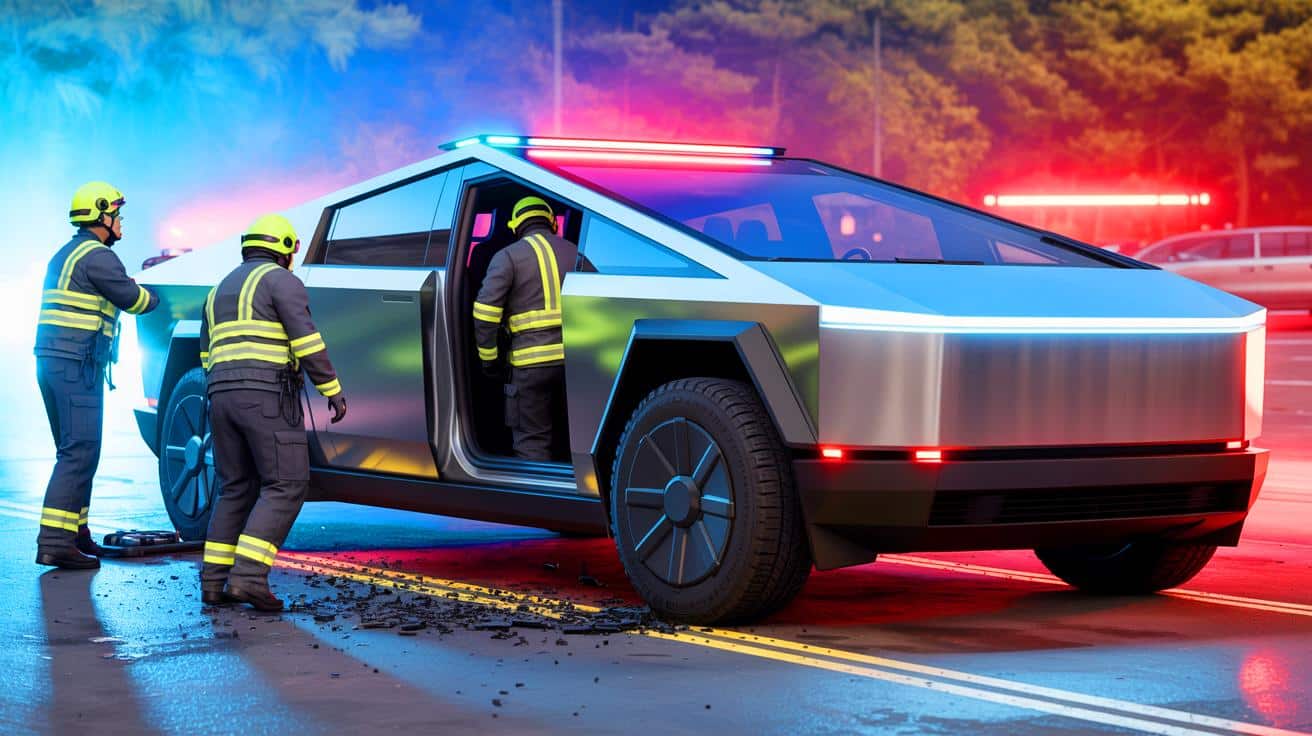
Tesla’s Cybertruck, a symbol of cutting-edge technology and design, is currently under intense scrutiny following a tragic accident that claimed the lives of three college students. The incident has ignited legal battles and raised questions about the safety of Tesla’s unique door mechanisms. The crash, which took place in California on Thanksgiving Eve 2024, involved the Cybertruck hitting a tree and a wall, resulting in a fire that trapped the passengers inside. This incident underscores the potential consequences of relying heavily on electronic systems in critical safety scenarios, and it has prompted discussions about the balance between innovation and safety in the automotive industry.
Understanding Tesla’s Door Mechanism
Tesla vehicles are renowned for their futuristic design, which includes the use of electronic door releases. These doors are flush-mounted, aligning seamlessly with the vehicle’s body to enhance aerodynamics and aesthetics. However, this design choice has sparked controversy, particularly in emergency situations. When power is lost, as in the case of a crash, these electronic releases can fail, forcing occupants to rely on often hard-to-find mechanical backups.
In the case of the Cybertruck involved in the fatal crash, the hidden manual release was reportedly difficult to locate, contributing to the tragedy. The complexity of these designs, while innovative, has raised concerns among safety experts and consumers alike. Each Tesla model presents a unique version of the door handle, which can lead to confusion even for seasoned drivers. In emergencies, this could make a life-saving difference.
The incident in Piedmont highlights the potential risks associated with over-reliance on electronic systems for safety-critical functions. As technology in vehicles continues to advance, the challenge remains to ensure that these innovations do not compromise the fundamental safety needs of users.
Legal Repercussions and Lawsuits
The aftermath of the crash has led to significant legal action against Tesla. The families of the victims, Krysta Tsukahara, Jack Nelson, and Soren Dixon, have filed lawsuits alleging that the Cybertruck’s flawed door system played a critical role in their loved ones’ deaths. These lawsuits have brought to light the potential dangers of the vehicle’s door mechanisms, emphasizing the need for accessible and reliable emergency exits.
The Tsukaharas updated their wrongful death case to include Tesla, while the Nelsons filed a new suit. These legal actions coincide with an investigation by the National Highway Traffic Safety Administration (NHTSA) into the safety of Tesla’s door handles. The probe seeks to determine whether these handles present an unreasonable risk to safety, particularly in emergency scenarios.
Attorneys representing the victims’ families argue that the inability to escape the vehicle due to the electronic door system significantly contributed to the fatalities. They claim that an externally operable handle could have allowed bystanders to assist in rescuing the trapped passengers, potentially saving lives.
Implications for Tesla and the Automotive Industry
The ongoing legal battles and safety investigations place Tesla in a challenging position. The company, known for its pioneering spirit and technological advancements, now faces critical questions about the safety of its design choices. The incident serves as a cautionary tale for the broader automotive industry, highlighting the importance of balancing innovation with safety.
Tesla has often been at the forefront of automotive technology, pushing boundaries with features like Autopilot and Full Self-Driving. However, these advancements have not been without controversy, as evidenced by previous lawsuits linked to accidents involving these systems. The current situation adds another layer of complexity to Tesla’s safety narrative.
As the industry continues to evolve, manufacturers must ensure that their innovations do not overshadow essential safety considerations. The integration of advanced technology in vehicles should be accompanied by robust safety mechanisms that protect passengers in all scenarios, including emergencies.
Future of Vehicle Safety
The tragic accident involving the Tesla Cybertruck has sparked a broader conversation about the future of vehicle safety. As technology becomes increasingly integrated into automotive design, the industry must address the potential risks associated with electronic systems. The challenge lies in creating designs that maintain the aesthetic and functional benefits of technology while ensuring that safety remains paramount.
This incident also underscores the importance of regulatory oversight in the automotive sector. Organizations like the NHTSA play a crucial role in evaluating the safety of new technologies and ensuring that manufacturers adhere to stringent safety standards. As vehicles become more technologically advanced, regulators must adapt to these changes and provide clear guidelines to protect consumers.
The ongoing discussions and legal proceedings surrounding Tesla’s Cybertruck highlight the need for continuous assessment and improvement in vehicle safety features. As the industry navigates these challenges, the question remains: how can automakers effectively balance innovation and safety to meet the needs of modern consumers?
The aftermath of the Cybertruck crash has left many questioning the future direction of automotive safety and design. As legal battles unfold and investigations continue, the automotive industry stands at a crossroads. How will manufacturers respond to these challenges to ensure that technological advancements do not compromise passenger safety in unforeseen circumstances?