

“They Want It, But Can’t Afford It”: Tesla’s $71,000 Model Y Hits India With Huge Tariffs and Tough Rivals (and Musk Has No Easy Fix)
 By
Ethan Kowalczyk
By
Ethan Kowalczyk
| IN A NUTSHELL |
|
As the global electric vehicle (EV) market continues to evolve, Tesla is facing a myriad of challenges, notably in its attempt to break into the Indian market. With a hefty price tag attached to its vehicles and steep competition from established brands, Tesla’s entry into India is fraught with hurdles. Despite India being one of the most promising emerging markets, the dynamics of local tariffs and competitive pricing from rivals like BMW, Mercedes-Benz, and BYD pose significant obstacles. Elon Musk, Tesla’s CEO, is striving to navigate these complexities in hopes of capturing a share of India’s burgeoning demand for modern vehicles.
Pricing Tesla’s Ambitious Push
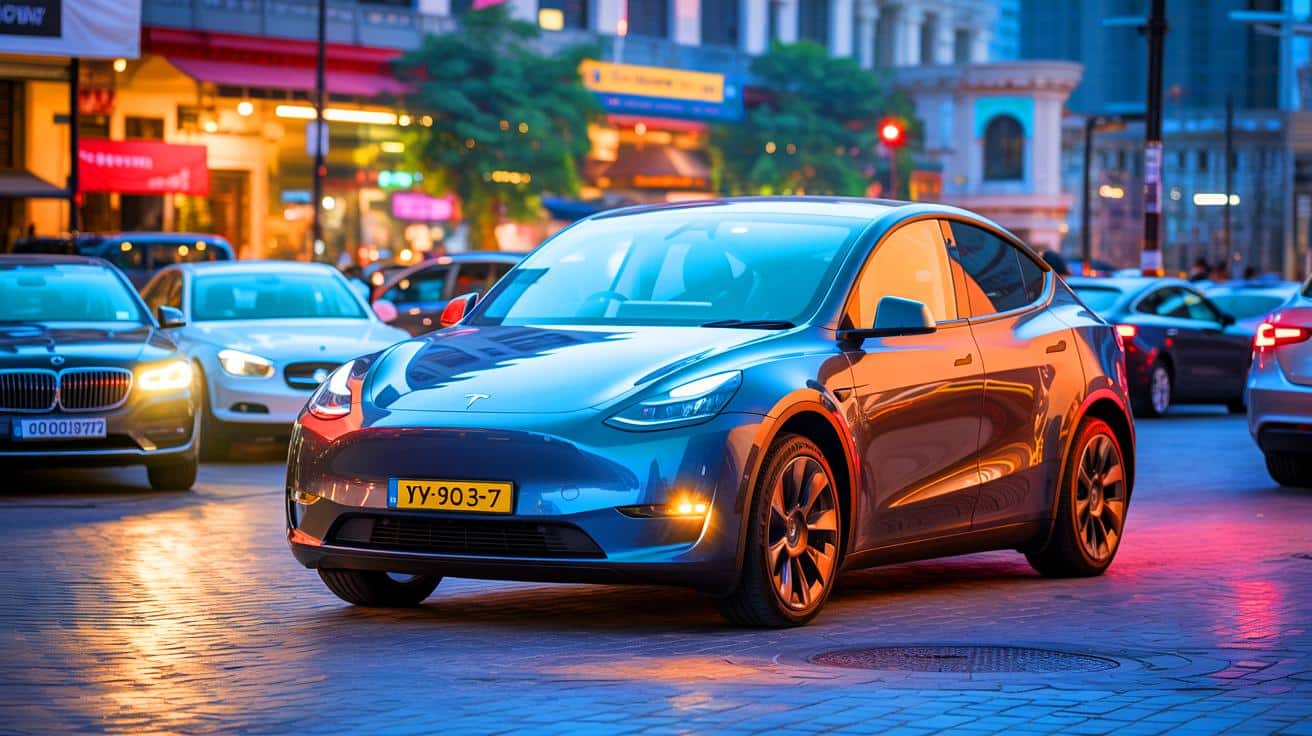
On paper, India presents a tantalizing opportunity for Tesla. The nation boasts a population of over 1.4 billion people and a rapidly expanding middle class eager for new technology and advanced automobiles. Yet, the reality is not as straightforward. Tesla’s Model Y, its latest offering in India, comes with a price tag of nearly $71,000. This is significantly higher than its price in the United States, where it retails for about $45,000, and can be further reduced with tax credits.
The stark price difference is primarily due to India’s high import tariffs on foreign vehicles. These tariffs can nearly double the cost of imported cars, positioning the Model Y firmly within the luxury segment, accessible only to India’s wealthiest consumers. This creates a substantial challenge for Tesla as it seeks to justify the substantial entry costs by generating enough demand.
A Market Dominated by Luxury
Tesla’s entry into the Indian market is further complicated by the presence of established luxury brands like BMW and Mercedes-Benz. These companies already have a foothold in the high-end EV sector and are strong contenders for the affluence of India’s elite consumers. Additionally, Tesla faces rising competition from BYD, a Chinese automaker making significant inroads in the EV market with competitively priced vehicles.
BYD’s ability to offer competitive pricing could undermine Tesla’s efforts to build a substantial customer base in India. With the cost-conscious middle class searching for more affordable options, Tesla’s high prices may become a barrier to entry. As a result, Tesla must navigate this competitive landscape while maintaining its brand value and appeal.
The Hurdle of Import Tariffs and Local Production
One of the major barriers to Tesla’s success in India is the country’s protective tariffs on imported vehicles. These tariffs contribute to the significant price discrepancy between Tesla’s vehicles in the U.S. and Indian markets. While Tesla executives have expressed a desire for lower tariffs, progress on this front has been limited.
Currently, Tesla’s options are constrained. Elon Musk has ruled out the possibility of establishing a manufacturing plant in India, despite lucrative incentives offered by the Indian government for local production facilities. Without such a plant, Tesla remains subject to high import taxes, limiting its ability to appeal to a broader segment of the Indian market.
Can Tesla Adapt Fast Enough?
Despite the challenges, Tesla still has a window of opportunity in India. The Indian automotive market ranks as the third-largest globally, following China and the United States. However, it remains largely untapped for electric vehicles, offering potential for Tesla to establish a presence. Yet, the company faces declining global sales and increasing competition from both established brands and new entrants.
Tesla’s strategy in India may involve a dual approach: negotiating lower tariffs or eventually setting up a local manufacturing plant. Both options carry their own risks, but Elon Musk and his team must determine the right combination to make Tesla a lasting player in India’s automotive sector. The question remains whether Tesla can adapt quickly enough to capitalize on the opportunities in this rapidly evolving market.
As Tesla navigates the complexities of entering the Indian market, the company is confronted with both challenges and opportunities. Will Tesla be able to overcome these obstacles and establish a foothold in one of the world’s most promising EV markets? This remains an open question as the dynamics of global competition and local regulations continue to evolve.