
“Tesla’s Self-Driving Promise Crashes”: Two Influencers’ Coast-to-Coast Dream Ends In Wreck Just 60 Miles After Elon’s Failed 2017 Prediction
 By
Avi Cohen
By
Avi Cohen
| IN A NUTSHELL |
|
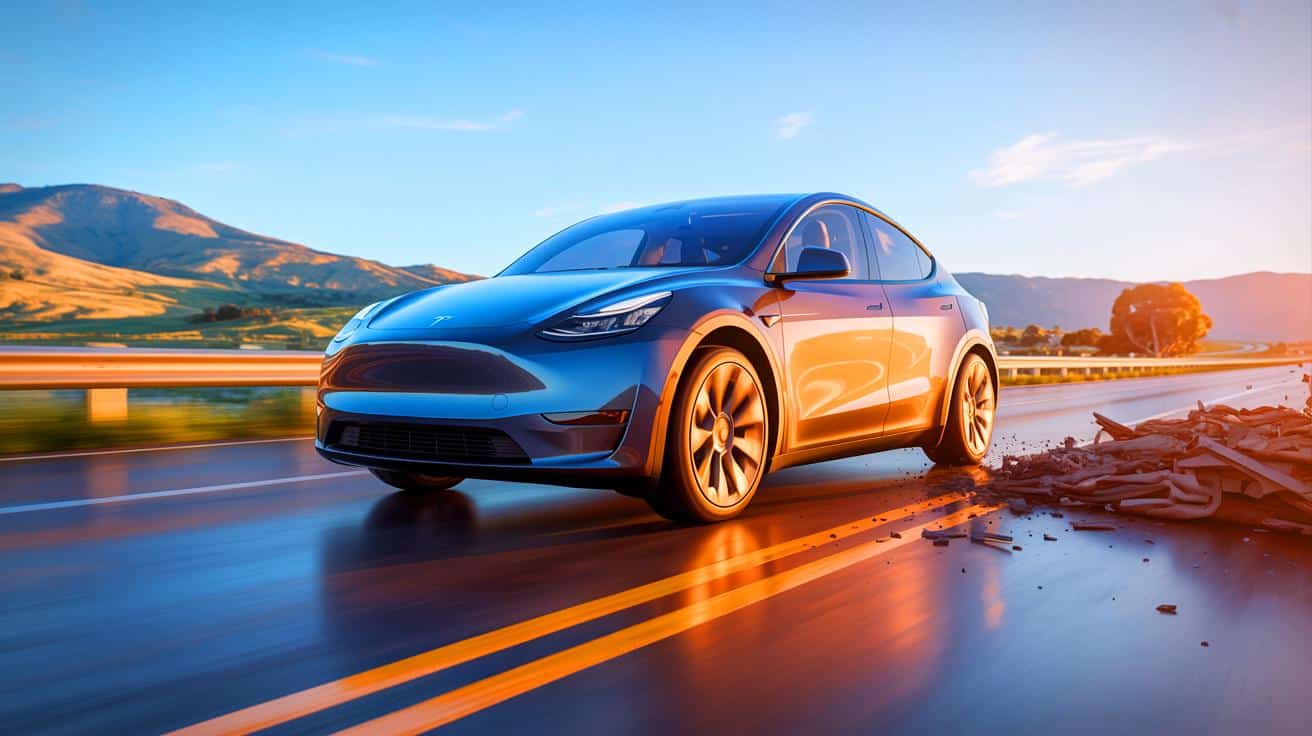
In the ever-evolving landscape of autonomous driving, Tesla’s ambitions have often been a focal point of discussion. Back in 2016, CEO Elon Musk made a bold prediction: Tesla would achieve a fully autonomous coast-to-coast drive by the end of 2017. Fast forward to 2025, and this vision remains unfulfilled, highlighting the challenges and complexities of developing unsupervised self-driving technology. Recently, two Tesla influencers attempted to complete this ambitious journey in a Tesla Model Y equipped with the latest Full Self-Driving (FSD) software. However, they encountered a serious setback, crashing just 60 miles into their trip. This incident underscores the ongoing hurdles in achieving true autonomy while raising questions about Tesla’s progress and future in autonomous driving.
The Coast-to-Coast Dream Deferred
In 2016, Elon Musk’s declaration that Tesla would accomplish a fully autonomous coast-to-coast drive captured the imagination of many. The idea was to livestream the entire journey, showcasing the vehicle’s ability to drive itself from Los Angeles to New York without human intervention. Despite the ambitious goal, Tesla has yet to realize this vision. The recent attempt by two Tesla influencers to recreate this drive ended prematurely in California, casting a spotlight on the challenges still facing the company.
The influencers set out from San Diego with high hopes, equipped with Tesla’s latest FSD software. However, their journey was abruptly halted when they collided with road debris, damaging the vehicle significantly. This incident highlights the critical gap between Tesla’s promises and the current capabilities of its autonomous systems. While the company’s FSD technology has seen improvements, it remains a Level 2 driver assist system, requiring constant driver attention and intervention.
Challenges in Achieving Full Autonomy
Tesla's journey towards full autonomy has been fraught with obstacles. The recent crash involving the Tesla Model Y underscores the difficulties of navigating real-world scenarios. Despite years of development, Tesla's FSD system struggles with unpredictable situations, such as debris on the road. Elon Musk himself has acknowledged the complexity of achieving true autonomy, famously describing the "march of the 9s", the need to achieve 99.999999999% reliability for practical self-driving technology.
This incident is not isolated. Other drivers have reported similar experiences where their vehicles failed to react appropriately to road hazards. The unpredictability of real-world conditions presents a significant challenge to autonomous systems, which must not only detect obstacles but also respond in a timely and safe manner. As Tesla continues to refine its technology, these incidents serve as stark reminders of the hurdles that remain in the path to full autonomy.
Competition and Market Pressure
While Tesla grapples with its autonomous driving challenges, competitors like Waymo are making significant strides. Waymo began its own "march of the 9s" several years ago and has made notable progress in developing reliable autonomous systems. Tesla's recent setbacks highlight the competitive pressures the company faces in the race for self-driving supremacy.
Market dynamics add another layer of complexity to Tesla's pursuit of autonomy. With its electric vehicle business experiencing fluctuations and stock prices heavily reliant on the promise of self-driving technology, Tesla faces mounting pressure to deliver results. The recent crash serves as a cautionary tale, illustrating the risks of overpromising and underdelivering in a highly competitive field.
Personal Experiences and Broader Implications
The challenges of autonomous driving are not just theoretical; they have real-world implications for drivers and consumers. The recent incident with the Tesla Model Y echoes the experience of others who have encountered similar situations. One driver recounted a comparable accident involving a Tesla Model 3, where a blown-out tire forced a difficult decision between crashing into a ditch or another vehicle. Such incidents highlight the importance of driver vigilance, even with advanced driver-assist systems.
The broader implications of these incidents extend beyond individual drivers. They raise essential questions about the readiness of autonomous technology and the timeline for achieving full autonomy. As Tesla and other companies continue to innovate, the path forward remains uncertain. The stakes are high, and the pursuit of truly autonomous vehicles will require ongoing advancements in technology, safety, and regulation.
As Tesla navigates the complex terrain of autonomous driving, the recent crash serves as a sobering reminder of the challenges ahead. While progress has been made, the journey to full autonomy is far from over. What steps will Tesla and its competitors take to overcome these hurdles and achieve the long-promised vision of self-driving cars? The answer remains to be seen, but the pursuit of this technological frontier continues to captivate and challenge the industry.