
“They Told Drowsy Drivers to Let the Car Drive”: Tesla’s Full Self-Driving Warning Sparks Outrage Over Safety and Misleading Autonomy Claims
 By
Renée Castellano
By
Renée Castellano
| IN A NUTSHELL |
|
In recent developments, Tesla’s approach to autonomous driving technology has raised significant concerns among safety experts and regulatory authorities. The company, led by CEO Elon Musk, continues to market its advanced driving mode under the controversial label “Full Self-Driving” (FSD). This name implies a level of autonomy that the technology does not actually support without constant human oversight. Despite this, Tesla has been reported to encourage drowsy drivers to switch to FSD mode, a move that critics argue could lead to potentially dangerous situations. This approach reflects broader issues within the realm of driver assistance technologies and the responsibilities of automakers in ensuring the safety of their innovations.
Understanding Tesla’s Full Self-Driving Mode
Tesla’s Full Self-Driving (FSD) mode is a highly advanced driver-assistance system that the company claims can handle most driving tasks. However, it is crucial to understand that FSD is not an autonomous driving feature. The system requires constant human supervision to ensure safety. The technology has been marketed in a way that has led many users to believe it can operate independently, despite the numerous disclaimers and warnings.
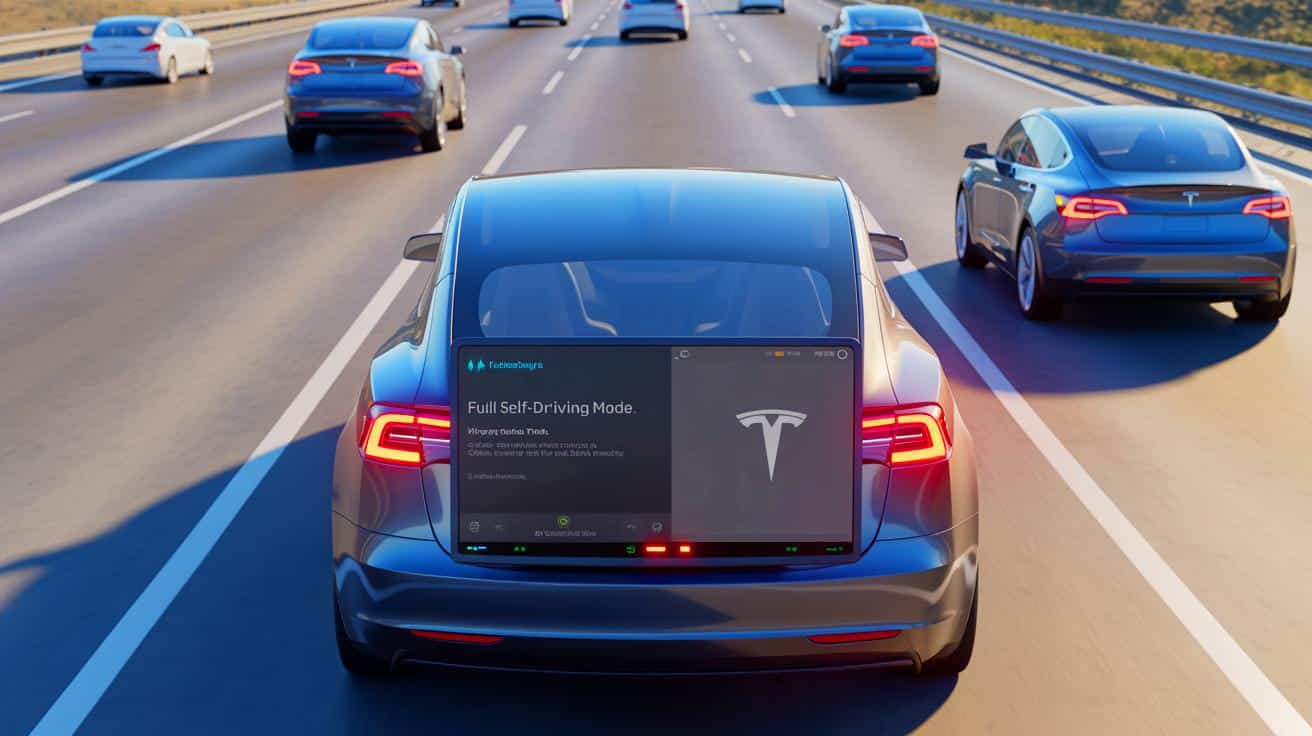
Recent reports indicate that Tesla vehicles have begun displaying messages encouraging drivers to switch to FSD if signs of drowsiness or lane drifting are detected. Such messages, appearing on the vehicle’s infotainment screen, include prompts like “Lane drift detected. Let FSD assist so you can stay focused.” While these notifications aim to prevent accidents caused by driver fatigue, they also paradoxically suggest relying on a system that demands continuous attention, creating a conflicting message for drivers.
Risks of Promoting Autonomous Features to Drowsy Drivers
The decision to promote FSD to drowsy drivers poses significant safety risks. Experts argue that suggesting reliance on an imperfect autonomous system to individuals already struggling with alertness is counterproductive. The fundamental issue with advanced driver-assistance systems is their tendency to make users complacent. When technology performs most tasks, drivers may become less vigilant, potentially reducing their ability to intervene during critical situations.
In the aviation industry, this is known as the “out-of-the-loop performance problem,” where pilots may become too reliant on automated systems. This analogy highlights the potential dangers of overconfidence in technology, especially when users, unlike trained pilots, may lack the necessary expertise to manage unexpected challenges. Encouraging drivers to depend on FSD while fatigued undermines the system’s requirement for active supervision, raising serious ethical and safety concerns.
Legal and Regulatory Challenges Facing Tesla
Tesla’s marketing practices and the functionality of its driving technologies have not escaped scrutiny from legal and regulatory bodies. Recently, the company faced a substantial financial penalty in a lawsuit after a fatal accident involving its earlier Autopilot system. This incident underscores the potential consequences of over-reliance on driver assistance features.
Moreover, the federal government has launched an investigation following multiple reports of crashes involving Tesla vehicles in FSD mode. These incidents have drawn attention to the challenges in developing reliable autonomous driving technology and the importance of clear communication about its limitations. In California, the Department of Motor Vehicles has filed a lawsuit against Tesla for misleading advertising related to FSD, further highlighting the legal ramifications of its marketing strategies.
The Future of Autonomous Driving and Public Safety
The ongoing controversy surrounding Tesla’s FSD mode raises broader questions about the future of autonomous driving technology and public safety. As automakers strive to innovate, they must balance technological advancement with the ethical responsibility to protect users. The incidents involving Tesla highlight the need for stringent safety standards and transparent communication to prevent misunderstandings about the capabilities of autonomous systems.
Developing effective regulations and ensuring that companies adhere to them will be crucial in shaping the future landscape of autonomous vehicles. Public trust in these technologies depends on their proven reliability and the accountability of the manufacturers. As the industry evolves, it is imperative to address these issues to foster a safe and sustainable transportation ecosystem.
The controversy surrounding Tesla’s Full Self-Driving technology serves as a reminder of the complexities involved in advancing autonomous driving systems. As the automotive industry continues to innovate, how will regulators and companies ensure that safety and transparency remain at the forefront of these technological developments?