
“This Is Tesla’s Wildest Idea Yet”: The Cybertruck’s Inflatable Add-On Promises to Fix Its Biggest Flaw (and It Actually Might Work)
 By
Owen Fairbrother
By
Owen Fairbrother
| IN A NUTSHELL |
|
Tesla’s new patent for an inflatable aerodynamic deflector aims to address the significant challenge of towing efficiency faced by the Cybertruck. Towing reduces a vehicle’s aerodynamic efficiency, which in turn cuts down the driving range, a major concern for electric vehicles. The proposed system, designed to deploy from the truck’s bed, uses an inflatable mechanism to streamline airflow between the truck and the trailer it is towing. This innovation could be a game-changer for electric pickup trucks, which struggle with prolonged charging times compared to their combustion-engine counterparts. Here’s a closer look at the specifics of this intriguing development.
Innovative Aerodynamic Solution
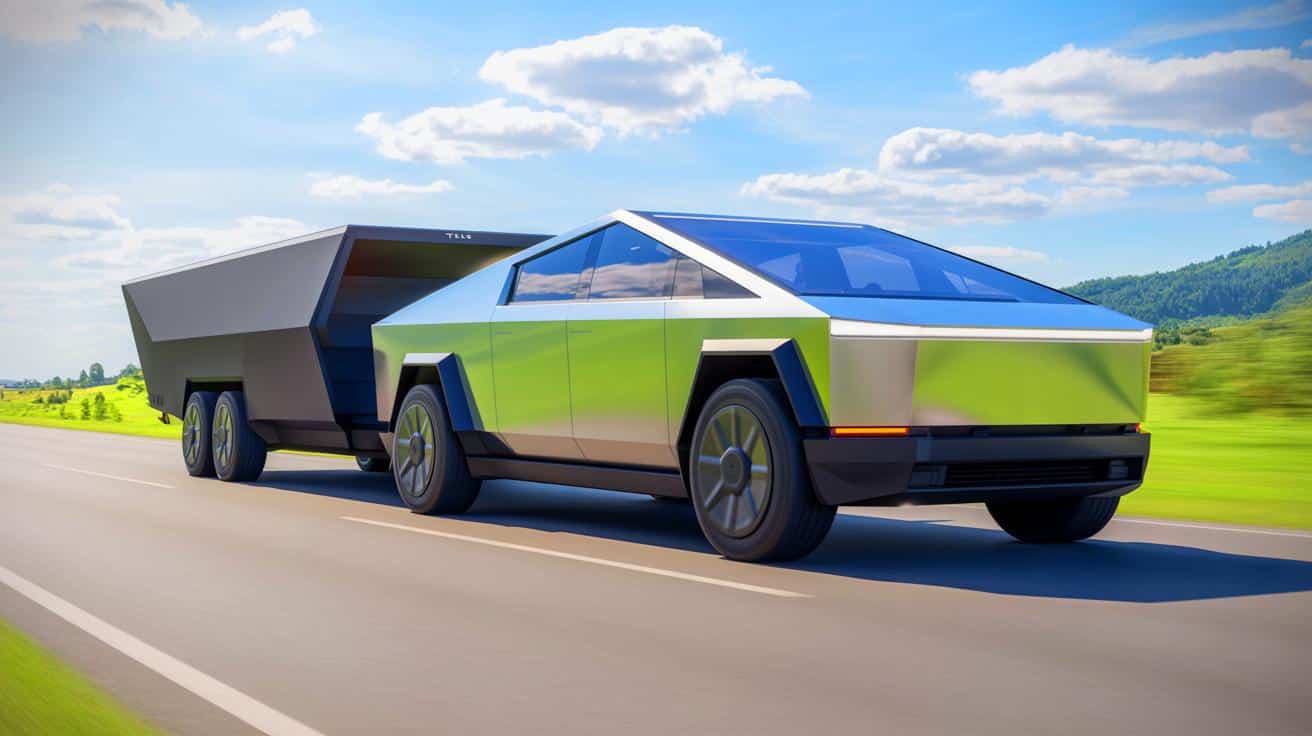
Tesla has filed a U.S. patent for an inflatable aerodynamic deflector, which is essentially a rear spoiler aimed at improving the Cybertruck’s towing performance. Constructed from drop-stitch fabric similar to that used in paddle boards and life jackets, this deflector sits deflated in the truck bed until it is needed. Once deployed, it inflates into a rigid, wedge-shaped structure that extends the vehicle’s profile. This structure channels air smoothly over trailers, significantly reducing turbulence and drag, a persistent issue for pickup trucks.
The system offers a range of attachment options, including rail mounts, magnetic fasteners, and quick-disconnect clips. It also features a pressure-regulating mechanism to maintain stability. By spanning the gap between the Cybertruck and its load, the deflector optimizes airflow, potentially increasing efficiency during long hauls. This inflatable design is both inventive and practical, deploying only when aerodynamic aid is necessary and maintaining the truck’s unique angular shape when stowed away.
The inflatable aerodynamic deflector could make towing more energy-efficient and less aerodynamically penalizing, enhancing the Cybertruck’s reputation for innovation.
The Towing Challenge for Electric Vehicles
Towing poses a significant challenge for electric pickups, and the Cybertruck is not immune. Attaching a trailer creates a considerable aerodynamic drag, turning the vehicle into a giant parachute. This results in a dramatic reduction in driving range, often cutting it by half. While conventional gas and diesel trucks face similar inefficiencies, they have the advantage of quick and inexpensive refueling. In contrast, electric vehicles have to deal with longer charging times and higher on-road costs.
Tesla’s newly patented deflector offers a solution to mitigate these challenges. By closing the air gap between the truck and trailer, the device channels airflow smoothly across both, reducing drag and conserving battery power. The concept draws inspiration from traditional trucking methods, where bolt-on fairings and side skirts are used to improve fuel efficiency. However, Tesla’s approach is more lightweight and stowable, offering a modern twist to a tried-and-true technique.
Past Attempts and Future Implications
This is not Tesla’s first attempt to address range issues. The company previously teased an auxiliary battery pack for the Cybertruck, priced at $16,000. However, this bulky add-on, which consumed valuable bed space, failed to deliver the promised 500-mile range. In contrast, the inflatable system, if it advances beyond the patent stage, promises to be cheaper, simpler, and just as eye-catching as the Cybertruck itself.
The inflatable deflector represents an intersection of innovation and practicality, reinforcing Tesla’s commitment to pushing boundaries in both style and functionality. Whether this system will become a standard feature or remain an intriguing patent remains to be seen, but its potential impact on towing efficiency is undeniable.
Regulatory Challenges and Market Impact
While Tesla continues to innovate, regulatory challenges remain, particularly in international markets. Recently, the U.S. Army confirmed that soldiers stationed in Europe are barred from importing the Cybertruck due to non-compliance with European Union safety regulations. This highlights the complexities involved in making the Cybertruck a global success.
Despite these hurdles, the introduction of an inflatable aerodynamic deflector could enhance Tesla’s market position by addressing a significant pain point for electric vehicle owners. The innovation could set a precedent for other automakers to develop similar solutions, potentially transforming the towing capabilities of electric vehicles across the industry.
Tesla’s exploration of inflatable aerodynamic deflectors for the Cybertruck reflects a broader trend of innovation aimed at overcoming the limitations of electric vehicles. As the automotive industry continues to evolve, will other manufacturers follow Tesla’s lead in developing creative solutions to make towing more efficient for electric pickups?