


“This Truck Will Never Touch German Roads”: Cybertruck Ban Escalates As Officials Cite Deadly Edges, Extreme Weight, And Security Risks For U.S. Troops Abroad
 By
Keisha Holloway
By
Keisha Holloway
| IN A NUTSHELL |
|
The Tesla Cybertruck, an avant-garde vehicle known for its stainless-steel exterior and futuristic design, will not be seen on German roads anytime soon. Despite the U.S. Army’s efforts, the German government has denied the import of Cybertrucks for American military personnel stationed in the country. This decision is rooted in various safety concerns and regulatory issues that the Cybertruck fails to meet, according to a news release from the U.S. Army Customs Agency. The denial highlights the complexities surrounding vehicle import regulations and the unique challenges faced by military personnel abroad.
Safety Concerns and Regulatory Standards
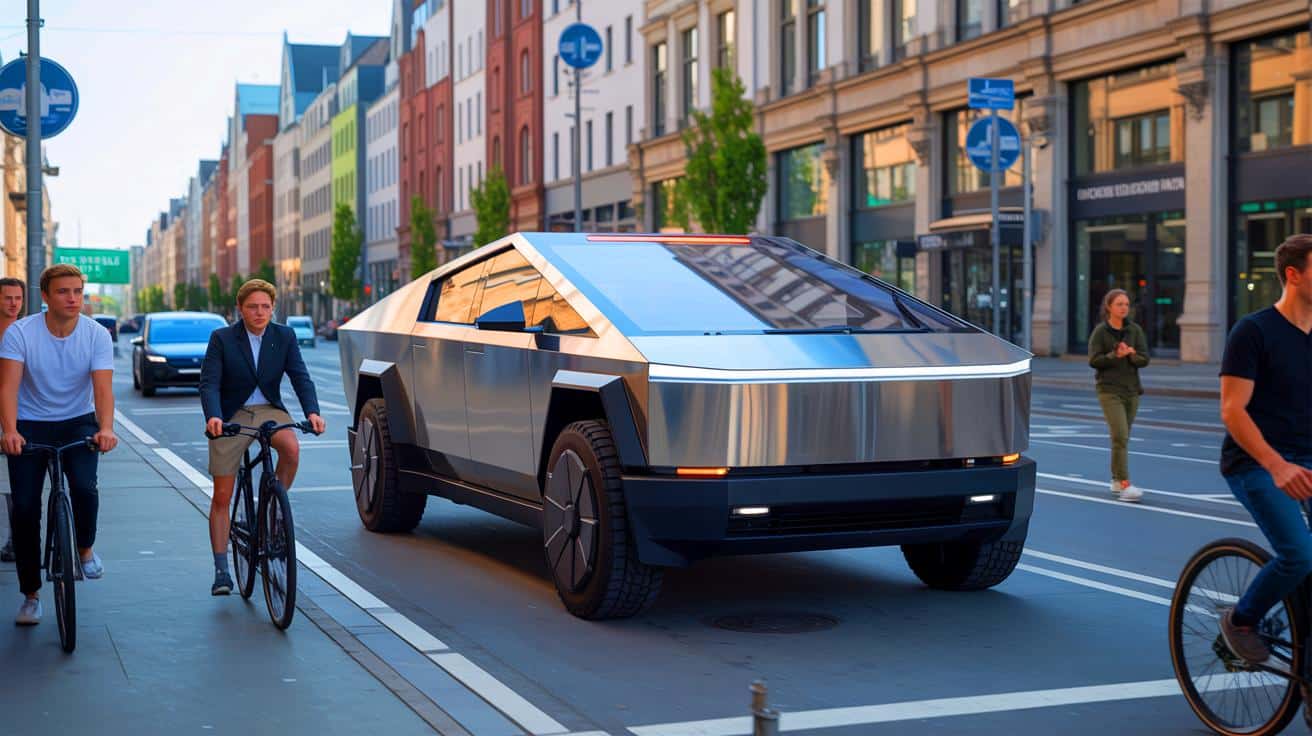
Germany’s refusal to allow the Tesla Cybertruck on its roads primarily centers around stringent safety standards. European Union regulations require vehicles to have specific impact protection zones and prohibit sharp exterior edges, both of which are areas where the Cybertruck falls short. The vehicle’s massive curb weight also poses a challenge, as EU standards mandate speed limiters for vehicles exceeding 3.5 tons. The U.S. Army’s admission that the Cybertruck does not meet these standards underscores the regulatory hurdles that prevent its legal operation in Germany.
These safety measures are designed to protect vulnerable road users, including cyclists and pedestrians. The sharp edges and heavy weight of the Cybertruck present potential hazards, leading the German authorities to deny the exemption request from U.S. military forces. This decision reflects the broader commitment of the German government to uphold road safety and protect its citizens from potential risks associated with non-compliant vehicles.
The Role of the German Federal Ministry of Transport
The German Federal Ministry of Transport (FMoT) plays a crucial role in regulating vehicle imports and ensuring compliance with EU standards. While the ministry permits some non-EU-compliant vehicles to be imported by American service members through a special system managed by USAREUR-AF, the Cybertruck's significant deviations from legal requirements ruled out this possibility. The ministry's statement emphasized that the vehicle's operation on public roads in Germany could not be safely ensured, leading to the request's denial.
This decision highlights the challenges faced by U.S. military personnel who wish to bring their vehicles overseas. The FMoT's strict adherence to safety regulations exemplifies the importance of maintaining consistent standards across the EU, ensuring that all vehicles on the road meet necessary safety criteria. This approach reflects the ministry's commitment to road safety and the well-being of all road users in Germany.
Impact of the Cybertruck's Design and Security Concerns
Beyond safety regulations, the Cybertruck's distinctive design has also raised concerns. The vehicle's unusual styling makes it stand out in traffic, which could potentially compromise the security of U.S. military personnel. German officials noted that the Cybertruck's lack of legal standing in the country, combined with its unique appearance, could make it easy to identify American service members in traffic. This risk of exposure is another factor that contributed to the denial of the import request.
The emphasis on security considerations underscores the multi-faceted nature of vehicle import decisions. For military personnel, maintaining a low profile can be crucial for safety, particularly in foreign countries. The Cybertruck's unmistakable presence could inadvertently place service members at risk, highlighting the need for careful evaluation of both safety and security aspects when considering vehicle imports.
Options for U.S. Military Personnel
With the German government's decision, U.S. military personnel stationed in Germany find themselves with limited options regarding the Cybertruck. Those who already own the vehicle must leave it in the United States or face the prospect of it remaining unused in Europe. This situation highlights the importance of understanding and navigating vehicle import regulations for service members living abroad.
The denial of the Cybertruck's import request serves as a reminder of the complexities involved in vehicle ownership for military personnel stationed overseas. It also raises questions about the adaptability of innovative vehicle designs within established regulatory frameworks. As automotive technology continues to evolve, how will countries balance innovation with safety and security considerations to accommodate the needs of diverse populations?