

“He Just Reinvented the Wheel”: Denver Inventor’s Radical SurfacePlan Design Could Rewrite How Cars Move Forever
 By
Ethan Kowalczyk
By
Ethan Kowalczyk
| IN A NUTSHELL |
|
Throughout history, the wheel has remained one of humanity’s most significant inventions, dating back approximately 5,500 years to ancient Mesopotamia. This ancient innovation has since become indispensable in countless applications, from transportation to manufacturing. Over the years, inventors have attempted to reinvent the wheel, quite literally, in various creative ways. Enter David Henson, a Denver-based inventor, who proposes a revolutionary wheel concept known as “SurfacePlan.” Henson’s ambitious idea aims to transform vehicular motion by applying force directly to the road, promising a new era of efficiency and innovation. However, this bold concept raises questions and challenges that need to be addressed before it can become a reality.
Revolutionizing an Age-Old Invention
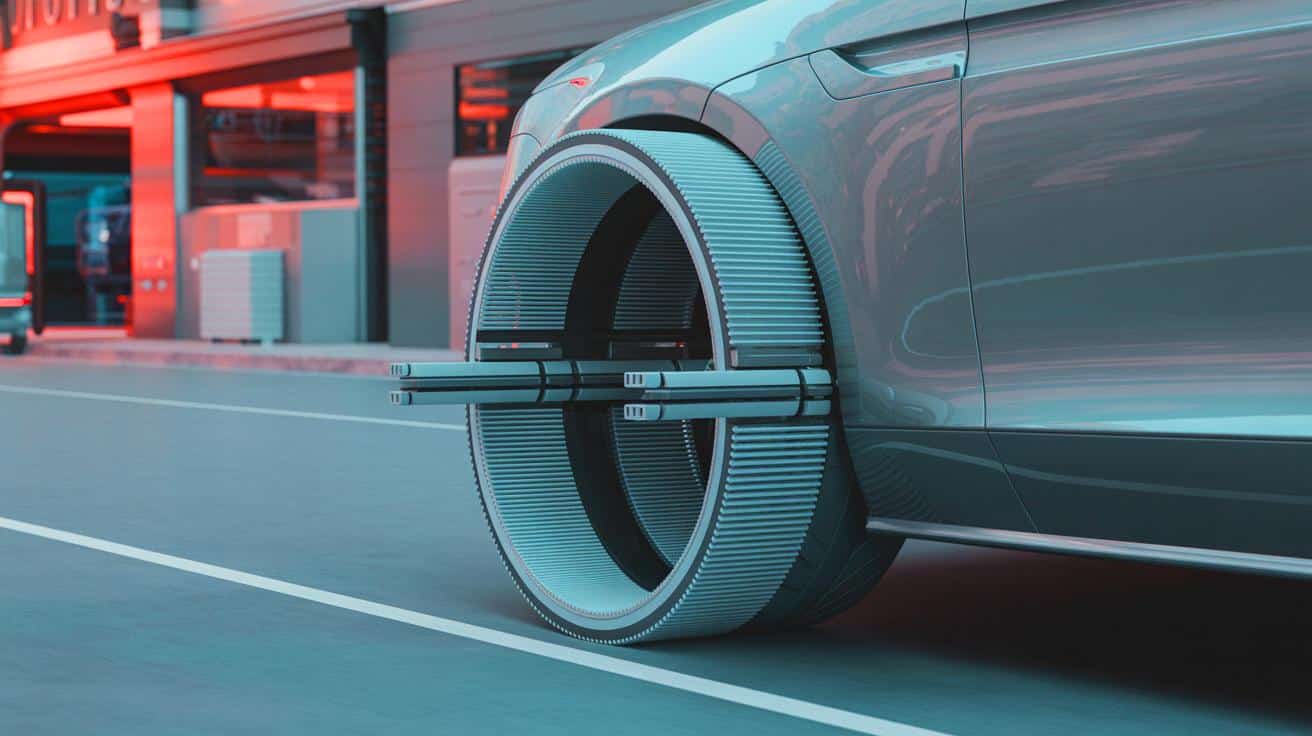
The wheel, as a mechanism, has seen numerous adaptations and iterations since its initial invention. In the realm of automotive innovations, David Henson’s “SurfacePlan” represents a novel approach. His design replaces traditional wheel spokes with piston-like linear actuators. These actuators, which can be powered electrically, hydraulically, or pneumatically, are intended to extend beyond the wheel’s perimeter to directly interact with the road surface. This approach aims to eliminate the need for complex drivetrains, potentially reducing vehicle weight by up to 75%.
Henson envisions a future where fewer moving parts and programmable tire treads lead to lighter vehicles with improved traction. The concept is driven by the aspiration to control motion in fundamentally new ways, opening the door to innovative vehicle designs. Yet, as with any groundbreaking idea, there are inherent challenges and uncertainties. The system’s success hinges on overcoming mechanical and engineering obstacles that could hinder its viability.
Technical Challenges and Concerns
While the SurfacePlan concept holds promise, it is not without its potential pitfalls. The primary challenge lies in the mechanics of the pushrods, which deliver force diagonally downward rather than axially. This results in a vertical lift component that could inadvertently reduce traction by lifting the tire from the ground. Moreover, the extension of pushrods through the tire surface introduces concerns about durability and exposure to environmental elements like mud and grit.
Another significant challenge is the power requirement for the actuators. If each wheel contains 50 to 100 actuators, the power demand could be substantial. While electric linear actuators are a possible solution, their cumulative weight and complexity might offset the proposed benefits. Alternative power sources, such as pneumatics or hydraulics, offer potential solutions but introduce their own complications, including maintenance and lifespan issues.
Volkswagen Unleashes Its Own Epic Gymkhana Video: A Thrilling Ride!
Comparisons and Existing Alternatives
David Henson’s SurfacePlan concept is not the first attempt to revolutionize wheel design. The automotive industry has seen innovations like Michelin’s airless “Tweel” and electric hub motors, which integrate the entire drivetrain into the wheel. Unlike the SurfacePlan, these alternatives deliver torque in a more conventional manner, which is well-understood and reliable. The electric hub motor, in particular, offers a compact and efficient solution without the added complexity of Henson’s design.
Despite these existing technologies, Henson believes his direct-push wheel design could find niche applications where its unique advantages are most beneficial. However, the concept remains in its early stages, requiring further development, prototyping, and testing to assess its feasibility and practical application. Until then, the SurfacePlan remains an ambitious idea, seeking the right context to thrive.
The Path Forward: From Idea to Reality
For David Henson, the journey from concept to reality involves more than just innovative thinking. It requires collaboration, investment, and rigorous testing. To bring his vision to life, Henson has initiated a Wefunder crowd investment program, reaching out to the innovation community for support. He hopes that by sharing his idea, others will see its potential and contribute to its development and commercialization.
Henson’s SurfacePlan is a testament to the spirit of invention, pushing the boundaries of what is possible. While the idea is still in its infancy, it represents a bold step toward reimagining vehicular motion. Whether the world will embrace this new wheel design remains to be seen, but the journey of innovation is paved with such audacious endeavors.
As we consider the future of wheel technology, we are reminded of the importance of innovation and experimentation. Will Henson’s SurfacePlan concept find its place in the automotive industry, or will it remain a visionary idea? The answer lies in the hands of inventors, engineers, and investors who dare to explore new possibilities. How will these emerging technologies shape the vehicles of tomorrow? The road ahead is open to endless possibilities.
Continue reading