


The evolution of car technology over the years
 By
Ethan Kowalczyk
By
Ethan Kowalczyk

|
IN A NUTSHELL |
|
The story of car technology is less a linear tale than a succession of disruptive leaps that have redefined how people move, work and live. What began as bespoke, hand-built horseless carriages in the late 19th century quickly became mass-produced instruments of mobility when assembly-line manufacturing made the automobile affordable to millions. Technical priorities shifted (streamlined bodies and aerodynamics improved speed and economy; postwar prosperity fueled a taste for high-performance engines; energy crises forced attention to fuel efficiency and emissions control. In the late 20th and early 21st centuries the industry pivoted again as microprocessors, sensors and wireless networks transformed vehicles into nodes of information: safety systems, navigation and infotainment fused with mechanical systems to produce smarter, safer cars. Today, accelerating advances in electric vehicles, autonomous driving and lightweight, sustainable materials signal another dramatic realignment. The debate now centers on trade-offs between convenience, safety, environmental impact and equity) making the evolution of cars not just a technical chronicle but a mirror of shifting social and economic priorities.
The birth of mass production and early engineering
The narrative of automobile technology begins not merely with a single invention but with a decisive shift from artisanal craftsmanship to industrialized production. Karl Benz’s 1886 Patent-Motorwagen is rightly celebrated as an early practical automobile, but the radical change came when engineers and industrialists learned to scale manufacture. Henry Ford’s adoption of the assembly line in the 1910s transformed cars from bespoke curiosities into accessible tools of daily life. That transformation was an engineering victory as much as a social one: it forced designers to think about parts standardization, manufacturing tolerances, and serviceability in ways that bespoke builders never had to consider.
Mass production created new technical constraints that spurred innovation rather than stifle it. Engineers had to prioritize reliability, ease of repair, and cost-effective materials, and those priorities in turn shaped powertrains, chassis design, and even early electrical systems. The result was not only greater vehicle availability but an expanding ecosystem of suppliers and aftermarket services that accelerated technical progress. The Model T is a case in point: it was simple by necessity, but its ubiquity created a platform for iterative improvements in fuel delivery, ignition systems, and lubrication practices.
The early period also established a pattern that persists: technological advances follow when economic structures enable them. When production methods lowered cost barriers, market demand broadened, and engineers gained the resources and feedback needed to refine systems. This interplay between economics and engineering set a durable precedent, progress in automotive technology would rarely be purely technical; it would be economic, social, and regulatory as well.
Streamlining, aerodynamics and the rise of performance culture
By the 1930s and 1940s, automotive thinking shifted from mere utility to performance, comfort, and style. Designers borrowed from aeronautics and industrial design to produce more streamlined forms, driven by an emerging recognition that aerodynamics directly affected fuel consumption and top speed. This period codified the idea that form could follow function in measurable ways: curves and tapered tails were not just fashionable, they were technical responses to fluid dynamics.
The emergence of the muscle car culture in the 1950s and 1960s complicated the engineering agenda, pitting raw power against efficiency. Iconic models such as the Ford Mustang and Chevrolet Camaro signaled that performance could be a mass-market aspiration. Engineers responded with bigger displacement, improved carburetion and ignition, and strengthened drivetrains. But this pursuit of speed also revealed tensions, greater power demanded better braking, suspension, and cooling systems, creating whole new areas of technical focus.
Throughout these decades, automotive advancements were uneven but cumulative. Styling and marketing amplified technical choices, and manufacturers who mastered both reaped market rewards. The long arc from streamlining to performance culture shows how design, consumer desire, and engineering constraints intersect. Contemporary retrospectives, including comprehensive lists of major postwar innovations, help map how these stylistic and performance-driven changes paved the way for later safety and efficiency technologies (MotorTrend).
Regulation, fuel crises and the push for efficiency
The 1970s marked a decisive inflection: external shocks and public concern forced automakers to prioritize fuel efficiency and emissions control. The oil embargoes exposed the vulnerability of fuel-dependent transportation systems and shifted both consumer demand and policy. Governments introduced emissions standards that compelled manufacturers to adopt technologies such as catalytic converters, fuel injection, and exhaust aftertreatment systems. These were not optional niceties; they became engineering imperatives tied to compliance and market access.
Regulation reframed innovation as a compliance-driven necessity rather than pure performance enhancement. That reframing changed research agendas. Smaller-displacement engines with higher efficiency, early turbocharging experiments, and lean-burn strategies became mainstream. Automakers had to reconcile reduced fuel consumption with acceptable drivability, prompting advances in engine management electronics and sensor systems. The result was a multi-disciplinary effort spanning chemistry (catalysts), control theory (electronic fuel control), and materials science (heat-resistant components).
Decades later, the environmental imperative has evolved into a strategic battleground for market leadership. The rise of electric vehicles accelerated as battery technology improved and as companies responded to both regulation and shifting consumer priorities. The trajectory from fuel crises to electrification is chronicled across recent retrospectives and technical reviews; these analyses illustrate how regulatory pressure can catalyze disruptive shifts in propulsion technology (Autobidmaster, Clemson OpenTextbooks).
Digitalization, connectivity and the software-defined car
The late 20th and early 21st centuries saw cars evolve into computers on wheels. The integration of microprocessors, sensors, and networked systems transformed a vehicle’s architecture from mechanical assemblies into highly interdependent software-driven platforms. This shift created a new axis of competition: technology firms and automakers began to battle over control of the user experience (infotainment, navigation, and telematics) while cybersecurity and software updates became operational necessities.
Engineering priorities pivoted toward software reliability, over-the-air updates, and sensor fusion. Advanced Driver-Assistance Systems (ADAS), which rely on cameras, radar, and lidar, emerged as exemplars of complex mechatronic design. These systems required not only hardware innovation but also rigorous algorithm development and validation. The result has been a convergence of automotive and tech-industry practices: continuous integration, over-the-air patching, and data-driven feature rollouts. Publications summarizing the past decade of such changes highlight how rapidly expectations have shifted (HowToGeek).
At the same time, radical experiments demonstrate the breadth of possibility. AI-assisted design has produced concept hypercars that blur human and machine authorship, while companies are pushing extreme outputs from electric powertrains to redefine performance limits. These developments, covered in investigative pieces and design reveals, argue that software and electrification are jointly redefining what a car can be (LeftLaneNews, LeftLaneNews).
Autonomy, electrification and the economics of future mobility
Contesting visions of the next automotive era are centered on three intertwined forces: autonomous driving, full electrification, and new ownership or usage models. Technically, autonomy demands robust sensor suites, resilient AI, and redundant actuators; economically, it requires new business models for fleet operations, insurance, and regulation. The debate is no longer whether these technologies are possible, but how they will be integrated responsibly and profitably at scale.
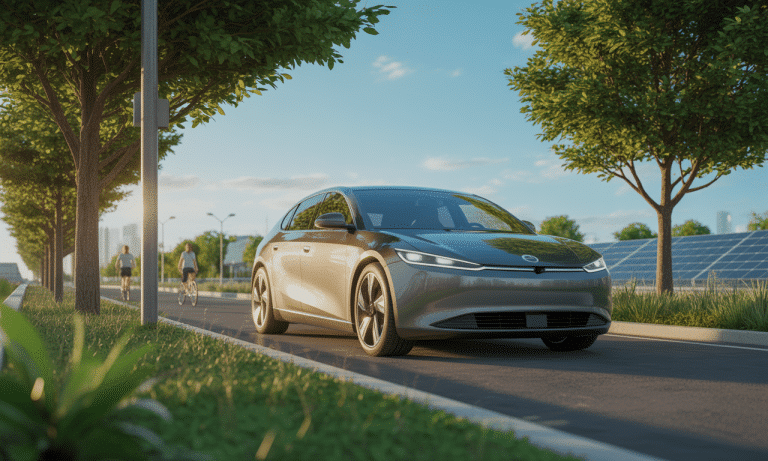
Electrification is moving beyond niche models to mass-market reinterpretations of classic names and body styles. Reimagined vehicles like the retro-styled, electric Buick Electra Orbit and concept updates to mainstream models illustrate strategic positioning: legacy brands are leveraging nostalgia while adopting zero-tailpipe-emission powertrains to stay relevant (LeftLaneNews, LeftLaneNews). Meanwhile, niche players push boundaries, Lamborghini’s pivot toward hybrid and off-road supercars demonstrates how performance heritage can be reconciled with new propulsion systems (LeftLaneNews).
Policy and market signals will determine the pace of change, but some technical trajectories are clear: higher energy-density batteries, scalable fast-charging infrastructure, and modular software stacks that allow manufacturers to iterate rapidly. The economics of autonomy will likely produce a mixed landscape, private ownership will coexist with shared, autonomous fleets, each demanding different reliability and maintenance paradigms. What remains decisive is the willingness of firms to invest across hardware, software, and services simultaneously.
| Era | Key technological shift | Representative outcome |
|---|---|---|
| Early 1900s | Mass production | Affordable vehicles; standardized parts |
| 1950s, 1960s | Performance focus | Muscle cars; stronger drivetrains |
| 1970s, 1990s | Emissions control | Catalytic converters; fuel efficiency standards |
| 2000s, 2020s | Digitalization | Software-defined vehicles; ADAS |
| 2020s onward | Electrification & autonomy | EVs, autonomous platforms, new business models |
For readers who want deeper historical context and multimedia perspectives on the industry’s evolution, authoritative overviews and documentary resources remain invaluable. They show how the interplay of technology, design, and regulation has shaped both the possibilities and limits of automotive progress (Britannica, MotorTrend, Autobidmaster).
The Continuing Argument on Automotive Progress
The trajectory of automobile technology is not merely a sequence of inventions but a contest between competing priorities: performance, cost, and social responsibility. From Karl Benz’s early gasoline engine to Henry Ford’s assembly line innovations, the industry has repeatedly proven that mass production and engineering breakthroughs can democratize mobility. Yet the historical gains in accessibility were matched by new challenges (urban congestion, pollution, and resource dependence) forcing manufacturers and policymakers to re-evaluate priorities and push for fuel efficiency and regulatory change.
Technical evolution advanced again when designers embraced aerodynamics and lightweight materials to improve performance and economy, and when electronics brought unprecedented connectivity and safety systems into mainstream cars. These shifts show that incremental advances often deliver greater societal value than single, spectacular innovations. The rise of electric vehicles and hybrid powertrains is not an isolated trend but the culmination of decades-long pressures: energy security, emissions standards, and consumer demand for lower operating costs. Arguably, EV adoption demonstrates how technological feasibility converges with policy and market incentives to reshape an entire sector.
Looking forward, the debate centers on disruptive potential versus realistic deployment. Autonomous driving promises profound benefits (reduced accidents, increased productivity, and new mobility models) but it also raises questions about safety standards, ethics, and infrastructure readiness. Similarly, the push for sustainable materials and circular supply chains confronts industrial inertia and economic constraints. The sensible position is not to idolize any single technology but to insist on integrated solutions that balance safety, sustainability, and affordability.
Ultimately, the evolution of car technology should be judged on its capacity to deliver equitable mobility while minimizing harm. Policymakers, manufacturers, and consumers must remain engaged in a pragmatic dialogue that prioritizes measurable outcomes over hype. Only by aligning innovation with clear societal goals can the next chapters of automotive history fulfill their promise rather than repeat past trade-offs.
Q: What event truly marks the birth of the automobile? A: It is reasonable to assert that the invention of the first practical gasoline-powered vehicle in the late 19th century (typically associated with Karl Benz and his 1880s motorwagen) constitutes the birth of the modern automobile. That innovation shifted transport from animal power to mechanized propulsion and set a technological trajectory that manufacturers and society have followed ever since. Q: Why is the Model T considered a turning point in automotive history? A: One can argue that the Model T’s significance lies less in a single technical leap and more in the democratization achieved through the assembly line. By dramatically lowering production cost, manufacturers turned cars from luxuries into mass-market goods, reshaping urban planning, economies and social mobility, an impact that single-vehicle innovations alone could not have produced. Q: How did car design evolve toward aerodynamics and why does it matter? A: The shift toward streamlined shapes in the 1930s, 1940s was a deliberate engineering response to performance and efficiency demands. Prioritizing aerodynamics reduced drag, improved fuel economy and influenced the aesthetic language of cars. Arguably, this was the moment designers and engineers began treating bodies as functional components, not merely shells. Q: Were muscle cars a step forward or a step back for automotive technology? A: The rise of high-displacement, high-performance models in the 1950s, 1960s showcased engineering prowess and cultural aspiration, but it also emphasized power over efficiency. From a technological standpoint they advanced engine development and performance tuning; from a sustainability perspective they highlighted trade-offs that later policy and market forces had to correct. Q: How did the 1970s oil crisis change car technology and industry priorities? A: The oil shock forced a decisive pivot: manufacturers and regulators prioritized fuel efficiency and emissions reduction. This pressured automakers to shrink engines, adopt new emissions control hardware like catalytic converters, and accelerate research into lightweighting and alternative powertrains. The effect was structural, not temporary. Q: What did the digital revolution add to automobiles? A: Embedding computers and connectivity transformed cars into integrated electronic platforms. Features once optional (such as advanced safety systems, navigation and infotainment) became standard. This trend argues that vehicles are now equally about software and data as they are about mechanical systems, redefining how value is created and updated over a car’s life. Q: Are electric vehicles (EVs) an inevitable future for cars? A: It is persuasive to claim that EVs represent an inevitable direction because they address emissions, energy security and urban pollution. However, inevitability depends on solving infrastructure, battery supply and lifecycle sustainability issues. Thus, EV adoption is likely inevitable in principle, but contingent in practice. Q: How realistic is widespread autonomous driving in the near term? A: While progress in sensors, machine learning and systems integration has been rapid, broad deployment of fully autonomous vehicles remains constrained by technical edge cases, regulatory frameworks and social acceptance. The argument here is that autonomy will expand incrementally (enhancing driver assistance and specific use cases) rather than achieving universal self-driving overnight. Q: What are the most significant challenges facing future car technology? A: The chief obstacles are multi-dimensional: scaling clean energy for propulsion, embedding robust software and cybersecurity, and ensuring equitable access to new mobility modes. Each challenge invites policy, industrial and societal responses; without coordinated action, technological advances risk exacerbating inequality and environmental strain rather than resolving them. Q: How should manufacturers balance innovation with responsibility? A: Manufacturers must argue for a balanced strategy: pursue breakthroughs in performance and autonomy while prioritizing safety, lifecycle environmental impact and transparent governance. Innovation detached from responsibility can accelerate adoption but compound risks; responsible innovation builds trust and long-term viability.The evolution of car technology over the years : Frequently Asked Questions
Continue reading