



“He Said No To $100M”: Ferrari Owner Rejects Record Offer For Ultra-Rare F50 GT1, Stuns Collectors Chasing The Holy Grail Of Maranello
 By
Avi Cohen
By
Avi Cohen
| IN A NUTSHELL |
|
In an era marked by record-breaking auctions and astronomical valuations, the automotive world was taken aback when Arthur Zafiropoulo, a private owner, reportedly turned down a $100 million offer for his Ferrari F50 GT1 during the Monterey Car Week. This decision not only made headlines but also showcased the value placed on rarity and historical significance over monetary gain. The F50 GT1 is no ordinary vehicle; it is a symbol of engineering excellence and holds a unique place in the history of Ferrari, making Zafiropoulo’s decision both surprising and intriguing.
The Legend of the Ferrari F50 GT1
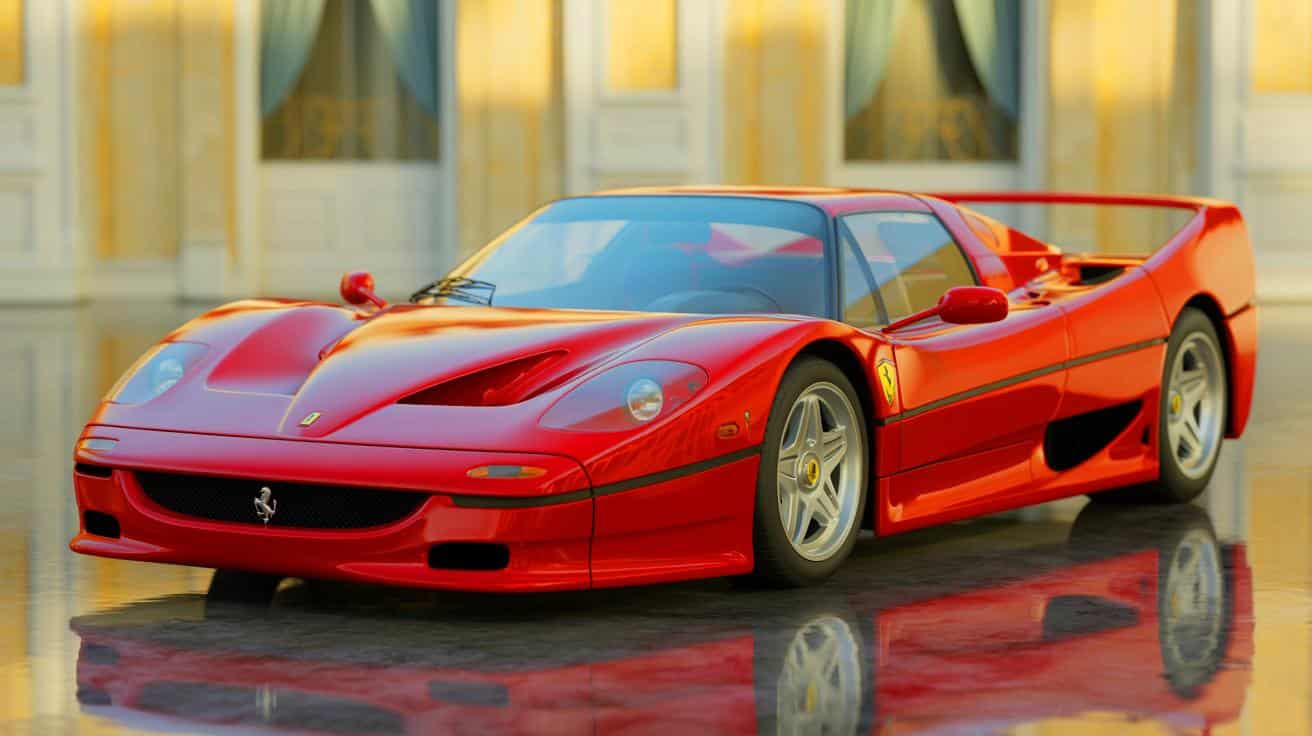
The Ferrari F50 GT1, chassis number 001, stands as a testament to Ferrari’s racing ambitions during the 1990s. Developed in collaboration with Dallara and Michelotto, this car was intended to compete in the GT1 racing category. However, changing regulations in the racing world led to the shelving of the GT1 program in 1997, rendering the investment obsolete before it could make a mark on the tracks.
This particular model is distinguished by its 4.7-liter V12 engine, which was designed to produce a formidable 739 horsepower at 10,500 rpm. The vehicle’s construction is equally impressive, built around a carbon fiber monocoque with carbon body panels and enhanced aerodynamics. These features were intended to challenge and surpass the McLaren F1 GTR, a dominant force in racing at the time.
Despite its intended purpose, only three F50 GT1s were ever completed, with chassis 001 being the crown jewel. This rarity, combined with its untested potential on the track, contributes significantly to its allure and value.
Comparing Record-Breaking Sales
In the world of high-value Ferraris, the F50 GT1's rumored $100 million offer would have surpassed any previous sales records. To put this into perspective, the 1963 Ferrari 250 GTO, a car with its own legendary status, was sold for a reported $70 million, holding the record for the most expensive Ferrari sold privately.
The potential sale of the F50 GT1 at such a staggering price highlights its exceptional nature. The car's history, limited production, and engineering feats make it an automotive masterpiece. Ferrari enthusiasts and collectors regard it as the holy grail of modern Ferraris, a sentiment that undoubtedly influenced the monumental offer.
Yet, despite the opportunity to set a new benchmark in automotive sales, Zafiropoulo's decision to retain ownership reflects a deeper appreciation for the car's historical significance and personal value. The monetary offer, while substantial, could not outweigh the intrinsic worth of this unique vehicle.
Understanding the Owner's Decision
Arthur Zafiropoulo's choice to decline the $100 million offer speaks volumes about his connection to the F50 GT1. As the first and only private owner of this rare vehicle, Zafiropoulo's decision underscores a commitment to preserving its legacy. The car has remained with him for decades, a stable ownership story that is rare in the world of supercars.
Zafiropoulo's decision may be viewed as unconventional, but it aligns with a broader understanding of value beyond financial metrics. For some collectors, the allure of owning a piece of automotive history that cannot be replicated holds greater significance than any monetary gain. This perspective is increasingly rare in a market where record-breaking sales are often prioritized.
The decision to retain the F50 GT1 also raises questions about the future of ultra-rare vehicles. As values continue to rise, owners like Zafiropoulo must weigh the benefits of selling against the intangible value of ownership.
The Future of Ultra-Rare Ferraris
The case of the Ferrari F50 GT1 raises important questions about the future of ultra-rare vehicles in a rapidly evolving market. As demand for rare and historically significant cars grows, so too does the pressure on owners to part with their prized possessions for increasingly high sums.
For collectors and enthusiasts, the allure of owning a vehicle like the F50 GT1 lies not only in its rarity and performance but also in its story. Each car carries with it a narrative that extends beyond its engineering, reflecting the ambitions and achievements of its creators.
"A car like the Ferrari F50 GT1 is more than just a vehicle; it is a piece of art, a testament to a bygone era of racing ambition."
Looking forward, the decisions of owners like Zafiropoulo may set a precedent for how these unique vehicles are valued and preserved. Will the market continue to prioritize financial gain, or will the intrinsic value of historical significance prevail?
The decision by Arthur Zafiropoulo to keep his Ferrari F50 GT1, despite a record-breaking offer, highlights the complex relationship between value, rarity, and personal connection. As the automotive world continues to evolve, how will collectors balance the allure of financial gain with the intangible worth of preserving history?