
“50 Miles Per Hour”: Kawasaki Unveils Hydrogen Robot Horse That Reads Your Body Movements
 By
Ethan Kowalczyk
By
Ethan Kowalczyk
| IN A NUTSHELL |
|
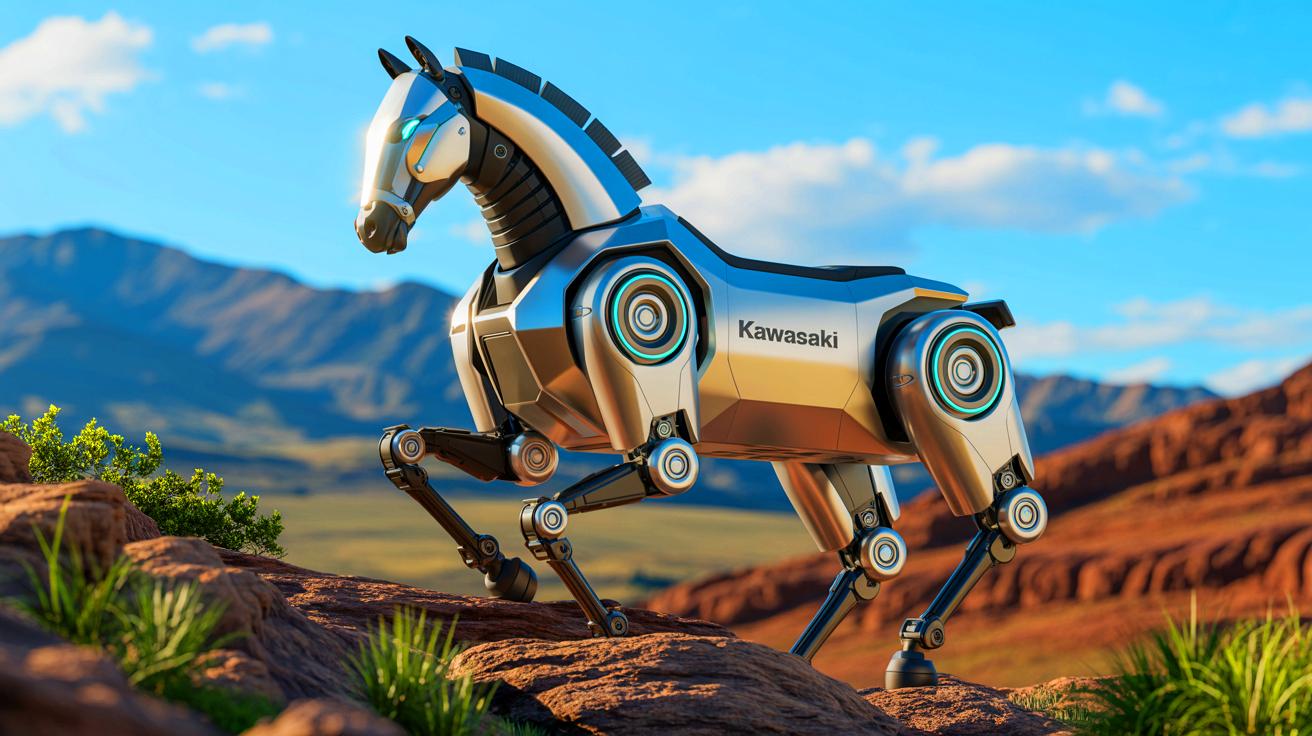
Kawasaki Heavy Industries has unveiled a groundbreaking concept vehicle that has captured the imagination of both tech enthusiasts and futurists alike. The Corleo, a hydrogen-powered robot horse, represents a fusion of advanced technology and imaginative design. This innovative quadruped robot is steered with the rider’s body movements, guided by an AI vision system capable of traversing challenging terrains. Unveiled at the Osaka Kansai Expo, the Corleo is not just a vehicle but a glimpse into the future of personal mobility. As we delve deeper into its features and implications, questions about its practicality and potential applications arise.
The Innovative Design of Corleo
The Corleo stands out as a unique concept that combines robotics, artificial intelligence, and eco-friendly technology. At its core is a 150cc hydrogen-fueled generator engine, which powers the robot while producing only water as a byproduct. This not only highlights its environmentally friendly credentials but also sets it apart from traditional combustion engines that emit harmful pollutants. The design includes bifurcated rubber-treaded hooves, providing stability and grip on rough terrains.
The robot’s structure is engineered to support riders of varying sizes, with adjustable-length stirrups and a sophisticated seating system. The seating area accommodates two passengers, with a floating seat unit that moves independently from the robot’s body. This design ensures comfort and stability, even at high speeds. The Corleo is also equipped with a wind-deflecting screen and a full-color dashboard, suggesting its capability to reach speeds of over 50 miles per hour.
Advanced AI and Mobility Capabilities
Central to Corleo’s operation is its sophisticated AI system, which continuously analyzes the position of both the rider and the robot. This ensures a secure seating experience, allowing the rider to steer the robot through subtle body movements. The AI’s ability to interpret and respond to the rider’s body language as a primary control input is a testament to its advanced capabilities.
The robot’s AI also evaluates potential footfalls ahead, selecting the safest paths through varying terrains. This feature is particularly useful for off-road and uneven surfaces, where traditional vehicles might struggle. At night, Corleo enhances safety by illuminating the path with a series of arrows, providing a clear visual guide for the rider.
The Conceptual and Practical Implications
While the Corleo is an exciting concept, it also raises questions about its practicality and future applications. The vehicle was presented as part of a vision for 2050 mobility, an ambitious timeline that reflects the challenges and uncertainties of developing such advanced technology. Despite the skepticism surrounding its feasibility, the Corleo provides valuable insights into the potential of hydrogen-powered robotics in personal transportation.
Its design and capabilities suggest possible applications beyond leisure, such as in search and rescue operations, where the ability to navigate difficult terrains could be invaluable. However, the concept remains largely speculative, with Kawasaki acknowledging that the current prototype is more of a standing model than a fully operational vehicle.
Comparisons with Existing Rideable Robots
The Corleo is not the first rideable robot to capture public attention. Other companies have explored similar innovations, such as XPeng’s rideable Unicorn, designed for children and featuring a robotic arm capable of lifting small objects. These developments indicate a growing interest in rideable robots and suggest that such vehicles may become more common in the future.
However, Kawasaki’s vision of a high-speed, all-terrain robot horse pushes the boundaries of current technology. The Corleo’s ability to leap across chasms and sprint at high speeds presents practical challenges that must be addressed before such a vehicle can be realized. While the concept is thrilling, it also highlights the need for further research and development to make these visions a reality.
As Kawasaki continues to refine the Corleo, the future of rideable robots remains uncertain yet promising. The concept opens up a world of possibilities, challenging traditional notions of personal mobility. As we look to the future, how will advancements in robotics and artificial intelligence redefine our modes of transportation and interaction with machines?
Continue reading