



Car safety features everyone should know about
 By
Ethan Kowalczyk
By
Ethan Kowalczyk
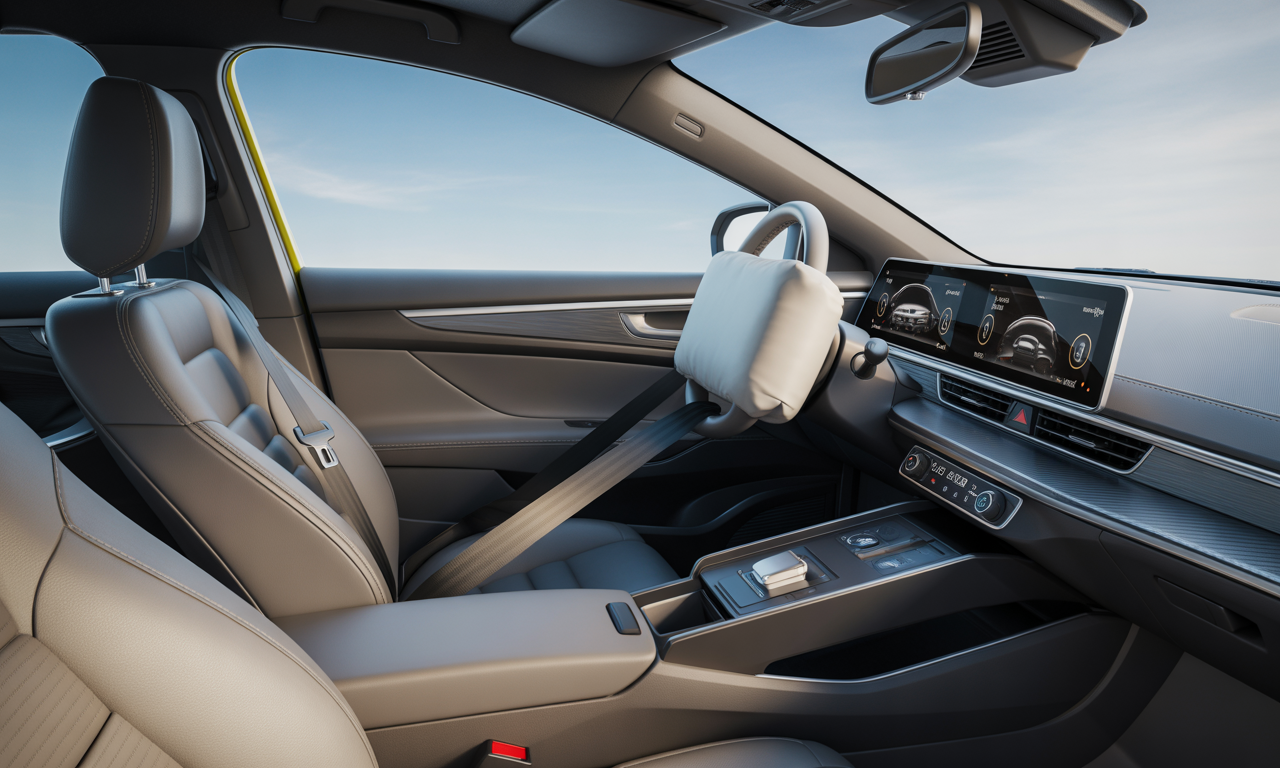
|
IN A NUTSHELL |
|
Automotive safety has moved from optional luxury to essential equipment. Recent research by Corey Harper finds that vehicles fitted with crash-avoidance technologies reduce collisions by roughly 3.5%, a seemingly small shift that translates into as much as $264 billion in possible annual savings when multiplied across the national fleet. That arithmetic gives urgency to a simple argument: consumers and regulators should treat systems such as autonomous emergency braking (AEB), electronic stability control (ESC) and anti-lock brakes (ABS) as baseline protections, not optional extras. Likewise, driver aids (from lane-keeping assist and blind-spot detection to adaptive headlights, pedestrian detection and tire pressure monitoring (TPMS)) materially reduce everyday risks, not just headline crashes. Journalists, buyers and fleet managers must understand how these technologies work and prioritize them at purchase and in regulation. As vehicles grow more connected and sensor-rich, the debate is no longer about which features exist but which ones drivers and policymakers will insist on to cut injuries, save money and make roads demonstrably safer.
Active collision-prevention systems that intervene before impact
Active collision-prevention systems are no longer optional extras; they are the defensive backbone of modern road safety. Research shows that cars equipped with crash-avoidance technologies reduce collision rates by roughly 3.5%, which, when scaled to the national level, corresponds to annual upper-bound savings in the hundreds of billions, a figure often cited near $264 billion. That arithmetic is not just an accounting exercise: it reflects fewer injuries, lower emergency medical costs, and reduced property damage.
Systems like forward collision warning (FCW) and autonomous emergency braking (AEB) act as a layered safety net. FCW uses radar, lidar, and cameras to provide early alerts; when those warnings go unheeded, AEB will apply the brakes automatically to avoid or mitigate an impact. Emergency brake assist (EBA) complements these by recognizing panic braking and instantly delivering maximum brake pressure even if the driver’s pedal force is insufficient.
These features shift the balance from reactive survival to proactive avoidance, and that is why they should influence purchase and policy decisions. Adaptive cruise control (ACC) extends this logic to highway travel by maintaining safe gaps and adjusting speed smoothly, reducing rear-end collisions linked to inconsistent following distances.
When arguing for broader adoption or when advising a buyer, emphasize that these technologies are proven extensions of human capability, they detect what a distracted or tired driver might miss and can act faster than reflexes allow. For a concise catalog of the latest offerings and explanations tailored for consumers, resources such as GoodCar and the comprehensive guide at Driver’s Drift are useful starting points for assessing which active systems are standard versus optional on different models.
Driver awareness and lane-management tools that reduce human error
Human error remains the main cause of crashes, so systems that enhance driver awareness tackle the root problem. Technologies such as lane departure warning (LDW) and lane-keeping assist (LKA) use cameras to monitor lane markings and either warn or subtly steer the vehicle back into place. These features are designed specifically to counter fatigue and momentary distraction, conditions that are predictable and frequent in long-distance and commuter driving.
When the question is whether to trust automation to nudge or to correct steering, the empirical argument favors mild intervention: small steering inputs or tactile alerts prevent catastrophic lane drift without usurping driver control. Blind spot monitoring (BSM) and rear cross-traffic alert (RCTA) extend situational awareness laterally and rearward, eliminating the old “shoulder check” blind spots and preventing sideswipes or backing collisions that are common in crowded lots.
Driver monitoring systems take a more direct approach by watching the driver: infrared cameras and behavioral algorithms detect prolonged eye closure, extended gaze away from the road, or erratic steering. They generate audible, visual, or haptic prompts before a dangerous lapse escalates. For buyers weighing options, check practical reviews and feature breakdowns like those at KBB and explainers like AutoGoShop to understand calibration and typical false-alert behavior.
High-speed alerts and curve speed warning systems are less glamorous but crucial: they compare your speed to known speed limits or map-derived curve data and warn you when speed is inappropriate for an upcoming geometry change. These features are particularly persuasive when advising novice drivers or when choosing a family car where predictable, automated checks reduce risk without significant behavioral change.
Braking and stability systems that keep control when conditions worsen
Braking and stability technologies are the mechanical counterargument to loss-of-control incidents. The trio of anti-lock braking system (ABS), electronic stability control (ESC), and traction control system (TCS) forms an integrated safety suite: ABS prevents wheel lock during hard stops so the driver can still steer; ESC detects and corrects understeer or oversteer by selectively braking wheels and reducing engine torque; TCS prevents excessive wheelspin during acceleration. Together they address different phases of a control-loss event, deceleration, lateral stability, and traction.
Arguing for their inclusion is straightforward: these systems demonstrably reduce the most common single-vehicle crashes and rollovers by restoring predictable handling when the unexpected happens. Brake assist variants, such as EBA, amplify human intent in emergencies by ensuring full braking force is applied quickly, and hill assist prevents rollback on inclines by temporarily holding brake pressure as the driver transitions to acceleration.
To make comparisons easy, this table summarizes their primary roles and the typical road situation where each matters most.
| System | Primary function | Most critical scenario |
|---|---|---|
| ABS | Prevents wheel lock; maintains steering during hard braking | Emergency braking on wet or icy surfaces |
| ESC | Maintains intended path by braking individual wheels and cutting power | High-speed evasive maneuvers and low-grip turns |
| TCS | Prevents excessive wheelspin during acceleration | Starting or accelerating on snow, ice, or gravel |
When advising fleet managers or shoppers, emphasize that these systems are not mutually exclusive; they are synergistic and should be evaluated as a package. Reviews comparing system responsiveness and false intervention rates are available from specialist outlets and can help decide between models and calibration philosophies.
Structural and passive protections that absorb energy and preserve survival space
Passive safety is about physics: controlling energy, preserving volume, and protecting vulnerable body parts. The most persuasive argument for robust passive design is simple, well-engineered structures and restraints save lives even when a crash is unavoidable. Seat belts and airbags form the primary restraint system, with belts keeping occupants positioned and airbags providing a rapid cushion that reduces head and chest trauma. Modern seat belts add pre-tensioners and load limiters to manage forces more effectively during a severe impact.
Structural features such as crumple zones and a reinforced safety cage work together: the crumple zones absorb and dissipate kinetic energy, extending the impact duration, while the safety cage maintains a survivable cabin volume. Side-impact beams, energy-absorbing steering columns, and laminated (shatter-resistant) glass further mitigate intrusion and secondary injuries like lacerations or ejection. These systems are engineering responses to specific injury mechanisms and should be treated as coordinated components, not standalones.
Child safety anchors (LATCH) deserve particular emphasis for families: they reduce installation errors for child seats and materially lower the risk of injury to the most vulnerable passengers. For practical guidance on choosing vehicles with superior passive protection and how restraint systems perform in crash tests, consumer and expert resources such as Friends Car Rental and KBB provide accessible breakdowns of ratings and typical failure modes.
Lighting, sensors, and convenience features that prevent avoidable hazards
Improved visibility and environmental sensing often produce outsized safety returns for limited investment. Adaptive headlights swivel and reshape beams based on steering angle, vehicle speed, and incline to illuminate curves and hills before the vehicle is pointed directly at them; automatic high beams deliver maximum illumination without dazzling other drivers. Better visibility yields reaction time, and reaction time saves lives.
Sensors and alerts such as parking sensors, rearview cameras, and blind spot detection turn close-quarters maneuvers from guesswork into measured actions, dramatically reducing low-speed crashes in driveways and lots. Tire pressure monitoring systems (TPMS) are deceptively critical: they prevent underinflation-related blowouts and preserve handling and braking performance.
Emerging convenience features also carry safety implications. Curve speed warning and high-speed alerts use GPS and map databases to warn when vehicle speed is inappropriate for upcoming geometry or posted limits, nudging drivers away from risky choices. For those assessing long-term tech trends or deciding which optional packages matter, consumer-facing roundups and forward-looking pieces (including coverage of how safety is evolving even in performance and specialty vehicles) are found at outlets like LeftLaneNews and broader technology discussions such as LeftLaneNews on flying cars.
When arguing which features to prioritize, frame the decision around real-world risk reduction, not novelty: adaptive lighting, reliable sensors, and simple alerts consistently reduce low-visibility and low-speed incidents, and they integrate well with the active and passive systems already outlined. For a practical checklist to consult before purchase, guides like LeftLaneNews’s buying advice and deep-dive explainers at AutoGoShop are useful complements to test-drive impressions and crash-test ratings.
Modern vehicles are not just metal and engines; they are networks of lifesaving systems that together shift the odds in favor of survival. The data are unambiguous: equipping cars with crash avoidance features produces measurable safety gains and tangible economic benefits. Even a seemingly modest reduction in collisions (about 3.5% in the study often cited) translates into hundreds of billions in avoided costs annually, which underlines that investing in safety is both an ethical imperative and a smart economic choice.
Arguments that treat advanced systems as optional conveniences miss the point that technologies like Adaptive Headlights, Brake Assist, Pedestrian Detection, and Lane-Keeping Assist change outcomes at critical moments. These features do not replace driver responsibility but provide critical buffers against human error: they extend perception, accelerate appropriate responses, and intervene when milliseconds matter. The cumulative effect (fewer rear-end crashes, fewer run-off-road incidents, and fewer pedestrian injuries) is the difference between a minor fender-bender and a life-or-death event.
Beyond the headline collision statistics, the case for adoption is practical. Routine systems such as Anti-Lock Braking System and Tire Pressure Monitoring System protect handling and reduce mechanical failure risks, while systems like Adaptive Cruise Control and Driver Monitoring lower fatigue-related incidents on long drives. Prioritizing vehicles that integrate these technologies, and maintaining them properly, should be a non-negotiable part of personal and fleet safety policy.
In short, the evidence supports a straightforward conclusion: widespread adoption and upkeep of proven active and passive safety systems will save lives and reduce societal costs. Policymakers, buyers, and fleet managers who argue against prioritizing these technologies should confront both the human and financial opportunity costs of inaction. The prudent, evidence-based stance is clear, make safety features a standard expectation, not an optional extra.
Essential Car Safety Features You Should Know
Q: Why should drivers care about modern car safety features?
A: Because today’s safety technologies do more than comfort, they actively cut crash risk and costs. Research shows vehicles fitted with crash-avoidance systems reduce collisions by roughly 3.5%, a reduction that scales into hundreds of billions in annual avoided crash costs. That makes these features not optional extras but practical investments in safety and savings.
Q: What do Adaptive Headlights do and why are they important?
A: Adaptive headlights swivel, reshape, and dim based on steering, speed and road grade so you see around bends and over hills without dazzling others. Better night visibility prevents surprise hazards and reduces the likelihood of late-night collisions, so they materially improve nighttime safety.
Q: How does an Anti-Lock Braking System (ABS) prevent accidents?
A: ABS detects when a wheel is about to lock and rapidly modulates brake pressure so you retain steering control during hard stops. That control often lets drivers steer around obstacles instead of skidding straight into them, a simple mechanical change with proven crash-avoidance value.
Q: What is the role of Brake Assist (Emergency Brake Assist)?
A: Brake Assist recognizes panic braking behavior and instantly applies maximum braking force even if the driver didn’t push the pedal fully. It compensates for human hesitation in emergencies and pairs with ABS to minimize stopping distance when every fraction of a second matters.
Q: How does Autonomous Emergency Braking (AEB) differ from warnings?
A: While warnings alert you, AEB steps in when you don’t react fast enough and automatically applies the brakes to avoid or soften an impact. This active intervention turns what might be a severe crash into either no collision or a much lower-speed impact, reducing injuries and damage.
Q: What is Forward Collision Warning (FCW) and why does it matter?
A: FCW uses radar, lidar, and cameras to detect an imminent frontal collision and gives early audible or visual alerts. That extra notice buys drivers critical seconds to brake or steer away, lowering rear-end crash frequency and severity.
Q: How do Pedestrian and Cyclist Detection systems save lives?
A: These systems fuse camera and radar data to recognize people and bicycles and then warn the driver or trigger automatic braking. In urban settings where vulnerable road users are common, that targeted detection directly reduces fatal and severe injuries.
Q: Why is Electronic Stability Control (ESC) considered essential?
A: ESC intervenes when a vehicle starts to skid by applying brakes to specific wheels or reducing engine power to keep the car on its intended path. By preventing loss of control and rollovers, ESC addresses one of the leading causes of single-vehicle crashes.
Q: What safety gain does the Traction Control System (TCS) provide?
A: TCS stops excessive wheelspin during acceleration on slippery surfaces by cutting engine power or braking individual wheels. That restores grip and stability, making acceleration safer on wet, icy, or loose surfaces.
Q: What’s the difference between Lane Departure Warning (LDW) and Lane-Keeping Assist (LKA)?
A: LDW alerts you when you drift out of lane markings; LKA goes further by nudging the steering to keep the car centered. Both reduce run-off-road and unintended lane-change collisions, but LKA actively corrects the vehicle when the driver doesn’t.
Q: How do Blind Spot Monitoring and Rear Cross-Traffic Alert improve safety?
A: Blind Spot Monitoring uses radar or cameras to alert you to vehicles outside mirror view, preventing risky lane changes. Rear Cross-Traffic Alert warns of approaching traffic when reversing. Together they address common visibility-related collisions in multi-lane and reversing scenarios.
Q: Why are Parking Sensors and a Rearview Camera valuable?
A: These systems reveal obstacles behind and around the vehicle, preventing back-over incidents and low-speed collisions in confined spaces. They protect children, cyclists, and property by giving a clear view and proximity alerts that mirrors alone cannot provide.
Q: What does the Tire Pressure Monitoring System (TPMS) do for safety?
A: TPMS warns you of underinflated tires before they become hazardous. Proper tire pressure preserves handling, braking performance, and fuel efficiency; early warnings reduce the risk of blowouts that can cause sudden loss of control.
Q: Why are passive features like airbags, seat belts, crumple zones, and a reinforced safety cage still crucial?
A: Active systems prevent crashes, but passive features protect occupants when a crash occurs. Seat belts restrain, airbags cushion, crumple zones absorb energy, and the safety cage preserves survival space. Their engineered synergy is the backbone of occupant survivability.
Q: How do side-impact beams, an energy-absorbing steering column, and shatter-resistant glass contribute to protection?
A: These elements limit intrusion and reduce secondary injuries: side-impact beams resist door collapse, the collapsible steering column prevents the wheel from being pushed into the driver, and laminated glass holds together to avoid lacerations and ejection. They convert structural forces into survivable outcomes.
Q: What is the LATCH system and why must parents know it?
A: LATCH provides standardized anchor points for child seats, making proper installation simpler and more secure than relying only on seat belts. Correctly anchored car seats significantly reduce injury risk for the most vulnerable passengers.
Q: How do Adaptive Cruise Control (ACC) and Driver Monitoring Systems reduce risk on long drives?
A: ACC maintains a safe following distance automatically, cutting rear-end collisions and driver workload. Driver Monitoring detects distraction or fatigue and issues alerts. Together they address human limitations (fatigue and inattention) that are frequent contributors to crashes.
Q: Are features like Curve Speed Warning, Hill Assist, and High-Speed Alerts really useful?
A: Yes. These targeted systems prevent scenario-specific mistakes: Curve Speed Warning warns when approach speed to a bend is unsafe, Hill Assist stops rollback on slopes, and High-Speed Alerts flag speeding relative to posted limits. They remove simple but dangerous human errors in demanding situations.
Q: Can technology replace attentive driving?
A: No. These systems are designed as safeguards and amplifiers of safe behavior, not substitutes for it. Relying solely on automation is risky; the driver must remain engaged because systems have limits and can fail or be outmatched by complex road scenarios.
Q: How should drivers keep these safety systems effective?
A: Regular maintenance is essential: keep sensors and cameras clean, maintain correct tire pressure, update vehicle software when recommended, and have safety-critical components checked by a professional after impacts or warning lights. Proper upkeep ensures the systems perform when needed.