



What to look for when buying a used car
 By
Ethan Kowalczyk
By
Ethan Kowalczyk
|
IN A NUTSHELL |
|
When shopping for a used car, buyers must move beyond appearance and focus on verifiable facts: a vehicle’s true worth hinges on its vehicle history, mechanical condition, and documented maintenance records. Dealers and private sellers may emphasise cosmetic fixes, but journalists and consumer advocates agree that the first priorities are title status and accident history, which reveal whether the car has hidden damage or salvage branding. A thorough mechanical inspection by an independent technician exposes wear that a short test drive cannot, while careful scrutiny of mileage and service stamps helps verify odometer honesty. Pricing must be evaluated against comparable listings to determine true price/value, and potential buyers should prioritise vehicles with intact safety features and recent recalls addressed. Asking pointed questions, demanding documentation and insisting on an inspection reframes the transaction from hopeful purchase to informed decision, protecting buyers from costly surprises and offering leverage in negotiation.
Mechanical inspection checklist
Engine health is the foundation of any used car purchase. Check for oil leaks, bubbling coolant, and strange smells under the hood. Open the oil cap and touch the dipstick: oil should be smooth and amber, not gritty or milky. If you detect a burnt smell, excessive smoke, or oil that looks contaminated, the engine may have serious wear or past overheating. Look for consistent oil level and no signs that the head gasket has failed, white residue or oil in the coolant are warning signs.
Transmission behavior is equally critical. For automatics, shifts should be smooth without hesitation; for manuals, the clutch pedal should engage cleanly and not slip under load. A jerky shift or delayed engagement often translates to costly repairs down the road. Check the transmission fluid color and smell when possible, dark, burnt-smelling fluid implies neglect.
Belts, hoses, and mounts are inexpensive to replace but tell a story about prior maintenance. Cracked belts, swollen hoses, and loose mounts point to deferred care. Test for compression problems by listening for knocking at idle and under acceleration, and by noting any excessive exhaust smoke. For a quick primer on how engines work and what certain noises mean, consult a concise overview like the one at this resource, which can help you interpret symptoms during inspection.
| Item | What to look for | Urgency |
|---|---|---|
| Oil | Clean, amber color; no metal flakes; correct level | High |
| Coolant | Proper level; no oil contamination; no sweet odor | High |
| Transmission fluid | Clear/red (auto); no burning smell | High |
| Belts/hoses | No cracks, soft spots, or bulges | Medium |
| Mounts | No excessive engine movement or vibration | Medium |
Bring a mechanic for a pre-purchase inspection if you encounter any of these high-urgency items; the cost of a professional check is negligible compared to major repairs. A careful mechanical inspection reduces the chance of buying a problem vehicle and gives you leverage in negotiation.
Exterior and interior condition analysis
Exterior appearance reveals more than cosmetics; it signals past accidents, exposure, and maintenance habits. Inspect panel gaps and paint texture across doors, fenders, and the hood. Uneven gaps or mismatched paint indicate bodywork or replacement parts. Rust around wheel wells, undercarriage, and door sills is a red flag, surface rust can be treated, but deep frame corrosion compromises structural integrity. If you see bubbling paint near seams or the bottoms of doors, probe carefully: that is often the start of progressive rot.
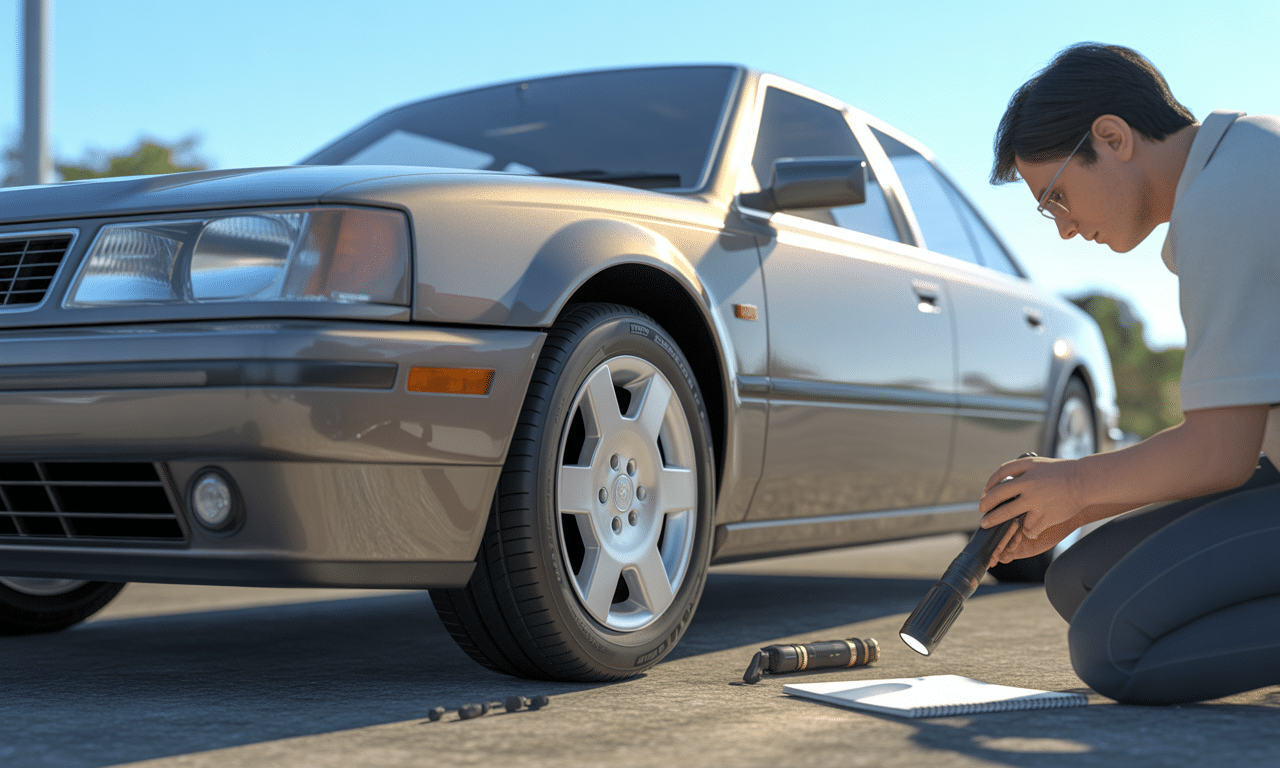
Look under the car with a flashlight for frame bends, welds, or fresh undercoating that might conceal past repairs. Check seals around windows and the trunk for water stains or musty odors; water intrusion leads to electrical problems and interior mold. For the interior, test all switches, HVAC controls, infotainment, and seat adjustments. Worn seats, a sagging headliner, or cigarette burns don’t kill a deal by themselves but paint a picture of how the vehicle was treated.
Tire wear tells you about alignment and suspension. Uneven tread wear (inside or outside shoulders) suggests misalignment or worn suspension components. Measure tread depth and check the spare. Lights and lenses should be free of cracks and condensation. If you crave an aspirational angle or want context on how vehicle desirability can influence long-term ownership costs, consider how buyer demand affects value and repair choices, some affordable performance options are covered in this overview of affordable supercars, which highlights trade-offs between excitement and upkeep.
Take photos of any damage and document discrepancies before committing; visible issues will form the basis for price negotiation and future repair budgeting. A meticulous exterior and interior check reveals both immediate defects and likely maintenance trends.
Vehicle history and documentation review
Paperwork is where facts replace impressions. Request the title, maintenance records, and any available vehicle history report. A clean, branded, and lien-free title is essential, salvage or rebuilt titles greatly reduce resale value and often reflect serious prior damage. Review service records for regular oil changes, timing belt replacements, and major repairs; consistent documentation is a proxy for responsible ownership. Absence of records doesn’t guarantee problems, but it increases uncertainty and risk.
Odometer authenticity is crucial. Look for inconsistencies between the mileage recorded on service receipts and the dashboard readout. Check for digital cluster tampering or replaced clusters, repair shops often note cluster replacements in service histories. A vehicle history report can flag reported accidents, flood damage, or title brands; use it alongside the seller’s disclosure. If the seller refuses to provide documentation or discourages an independent check, treat that reluctance as a warning sign.
Verify recall status and open safety issues through the manufacturer or regulatory websites. For used cars that may have specialized needs (such as frequent maintenance or aging components) read up on typical upkeep; practical maintenance advice can be found at resources like this maintenance guide, which outlines common tasks and their expected intervals. Documented routine care directly reduces the likelihood of hidden defects and supports accurate valuation.
Keep copies of everything you receive. Records give you legal and negotiating leverage and help you forecast near-term expenses. Failing to verify documentation transforms an otherwise reasonable deal into a gamble.
Test drive and driving impressions
The test drive is the moment the car reveals its true behavior. Start cold and hot to catch issues that only appear after warming up. Pay attention to startup noises, idling smoothness, and dashboard warning lights. Under acceleration, listen for rattles, clunks, or turbo lag if equipped. Brakes should be firm and free of vibration; a pulsing pedal hints at warped rotors. If the car pulls to one side when braking or cruising, that indicates alignment or caliper problems that will not resolve without repair.
Try different road types (highway, local streets, and rough surfaces) to test stability, steering response, and NVH (noise, vibration, harshness). For manual transmissions, ensure the clutch engages smoothly and that shifts are precise. For automatics, evaluate shift timing and check for slipping under load. If you’re considering an electric vehicle, assess regenerative braking behavior, charging port condition, and battery range claims. Electric-specific maintenance expectations and cost dynamics are discussed in context at this electric maintenance resource, which helps weigh upfront savings against long-term service considerations.
Test the electronics: cruise control, adaptive systems, backup cameras, and sensors. Faulty electronics can be expensive to diagnose and repair. Drive with the radio off and windows up to better detect subtle noises. Trust your instincts, uncomfortable vibrations, odd smells, or inconsistent responses are not the kind of quirks that become endearing. Record anything unusual and consider a second test drive after a mechanic inspection; what seems acceptable in a short run may become intolerable during everyday use.
Pricing, negotiation, and red flags
Valuation starts with research. Compare local listings, private-sale prices, and dealer offerings to build a realistic price range. Use mileage, trim level, documented maintenance, and condition to adjust comparables. Market demand can inflate prices for desirable models, while slow-moving inventory provides leverage. If the seller’s price is far outside market norms, demand justification with service records or recent repairs; otherwise, treat it as negotiable or avoidable. A reasonable seller will back their price with transparent history and allow inspections.
Factor in immediate repairs you will need to take care of (tires, brakes, timing belt, or battery replacements) and include those estimates in your offer. Warranties and return policies differ by seller: private sales generally have no warranty, while dealers may offer limited coverage. If the vehicle has recurring electrical gremlins, mismatched panels, or undisclosed maintenance issues, those are red flags that should drastically reduce your willingness to pay full price. For perspective on future ownership costs and how an initially cheap car can become expensive, consult cost projections and lists of value-oriented models like the affordable future cars overview.
Use test results and documented issues to make a reasoned counteroffer. Ask for repairs prior to sale or a price reduction that reflects documented repair estimates. Walk away if you encounter evasive answers, incomplete paperwork, or pressure tactics; a confident buyer who knows the market holds the advantage. Finally, be wary of deals that look too good to be true: unreasonably low prices, sellers in a hurry, or requests for unusual payment methods are classic scams. Arm yourself with data, insist on transparency, and negotiate from a position of informed skepticism.
Key Factors to Prioritize When Buying a Used Car
When evaluating a used vehicle, prioritize vehicle history and documented maintenance records. A clear title, consistent service logs, and a clean history free of major accidents materially reduce future risk. Relying solely on appearance is a mistake; a polished exterior can mask problems. Demand the VIN and verify past ownership, flood or frame damage, and odometer consistency.
Insist on a thorough mechanical inspection by a trusted independent mechanic before purchase. Visual checks should include engine leaks, transmission behavior, brake condition, and suspension health. A professional pre-purchase inspection uncovers costly defects and creates leverage for negotiation. If the seller resists, treat that resistance as a red flag.
Make the test drive non-negotiable and structured: test on varied roads, listen for unusual noises, and replicate typical driving conditions you’ll face. Evaluate steering response, acceleration, shifting smoothness, and any dashboard warnings. Use the test drive to assess comfort and to validate claims in the listing, mismatched descriptions often indicate deeper issues.
Assess the total cost of ownership rather than just the asking price. Consider fuel economy, expected repair costs, insurance premiums, and impending maintenance items like timing belts or major service intervals. Factor these into your maximum offer and be ready to walk away if numbers don’t align with market norms.
Negotiate based on documented facts: inspection findings, market comps, and repair estimates. Seek written guarantees or a short-term warranty if possible. Prioritizing these elements (history, inspection, test drive, and cost analysis) turns an emotional purchase into a defensible, rational decision that limits regret and protects your investment.
Frequently Asked Questions about Buying a Used Car
Q: What are the first things I should inspect when I see a used car in person?
A: Start with a systematic walkaround: check the body panels for mismatched paint, look under the car for leaks, inspect the tires for uneven wear, and verify the VIN on the frame matches the paperwork. These visible signs are critical because they reveal past collisions, poor maintenance, or hidden damage that will cost you money and safety later.
Q: How much does a vehicle history report matter?
A: A vehicle history report is indispensable. It exposes accidents, title branding (salvage, rebuilt), odometer discrepancies, and past ownership. You should treat it as a baseline truth: if the report shows red flags, your bargaining position changes, and you should either demand a price cut or walk away.
Q: Should I always get a professional pre-purchase inspection?
A: Yes. A trusted, independent mechanic performs a mechanical inspection that uncovers engine, transmission, suspension, and electrical problems you won’t spot visually. Paying for an inspection is cheap compared to unexpected repairs; it’s a decisive risk-reduction step that often saves more than it costs.
Q: What should I look for during a test drive?
A: Use the test drive to evaluate engine performance, transmission shifts, braking feel, steering alignment, and any unusual noises or vibrations. Test under varied conditions (city, highway, hills) because problems often show up only under load. If the car hesitates, clunks, or feels unstable, that’s evidence you should demand repairs or a price cut.
Q: How can I verify the odometer reading is accurate?
A: Cross-check the odometer with service records, the vehicle history report, and interior wear (pedals, steering wheel, seat bolsters). Large inconsistencies suggest odometer rollback or misrepresented mileage, which directly affects value and future costs, treat any mismatch as a deal-breaker until explained and documented.
Q: Do maintenance and service records really affect the car’s value?
A: Absolutely. Complete maintenance records prove consistent care and justify firm pricing; missing or sporadic records signal deferred maintenance that will require immediate spending. Use the records as leverage during negotiation, well-documented cars deserve premium treatment.
Q: Is buying from a dealer safer than buying from a private seller?
A: Dealers usually offer more consumer protections (warranties, certified inspections, and limited recourse) while private sellers often sell cheaper but “as-is.” Choose based on your tolerance for risk: if you want reassurance and legal protections, favor a dealer; if you want the lowest price and accept more risk, a private sale is viable but insist on inspections and history checks.
Q: What paperwork must I insist on before completing a purchase?
A: Demand the vehicle title (clean and transferable), a signed bill of sale, any maintenance records, and proof of lien release if applicable. Verify VINs on all documents match the vehicle. Without complete, correct paperwork you expose yourself to legal headaches and potential loss of ownership rights.
Q: How should I approach price negotiation on a used car?
A: Base your negotiation on objective facts: market comparables, the vehicle history report, the cost of identified repairs, and the results of the inspection. Start with a fair but lower offer, justify it with evidence, and be ready to walk away. The strongest negotiating position is a documented list of flaws and a clear maximum you will pay.
Q: Is buying a car sold “as-is” acceptable?
A: “As-is” sales shift all risk to you. They can be acceptable only if you perform a thorough inspection, obtain a history report, and accept the possibility of immediate repairs. Argumentatively, you should avoid “as-is” unless the price adequately compensates for potential unknowns or you have the mechanical expertise to evaluate the car yourself.