

“China Makes Car Batteries That Can’t Catch Fire”: New Safety Rules Force Extreme Testing While Electric Vehicle Explosions Become Impossible Forever
 By
Renée Castellano
By
Renée Castellano
| IN A NUTSHELL |
|
The global automotive industry is undergoing a significant transformation as the world shifts towards more sustainable energy sources. Electric vehicles (EVs) are at the forefront of this change, promising to reduce carbon emissions and reliance on fossil fuels. However, concerns about battery safety, particularly the risk of fires, have posed challenges to widespread adoption. Recently, China announced a new safety standard, GB38031-2025, aimed at eliminating such risks. This standard sets rigorous requirements for electric vehicle batteries to prevent incidents of overheating and combustion. As China plays a pivotal role in the global EV market, this development could have far-reaching implications for the industry worldwide.
New Safety Standards Aim to Eliminate Battery Fires
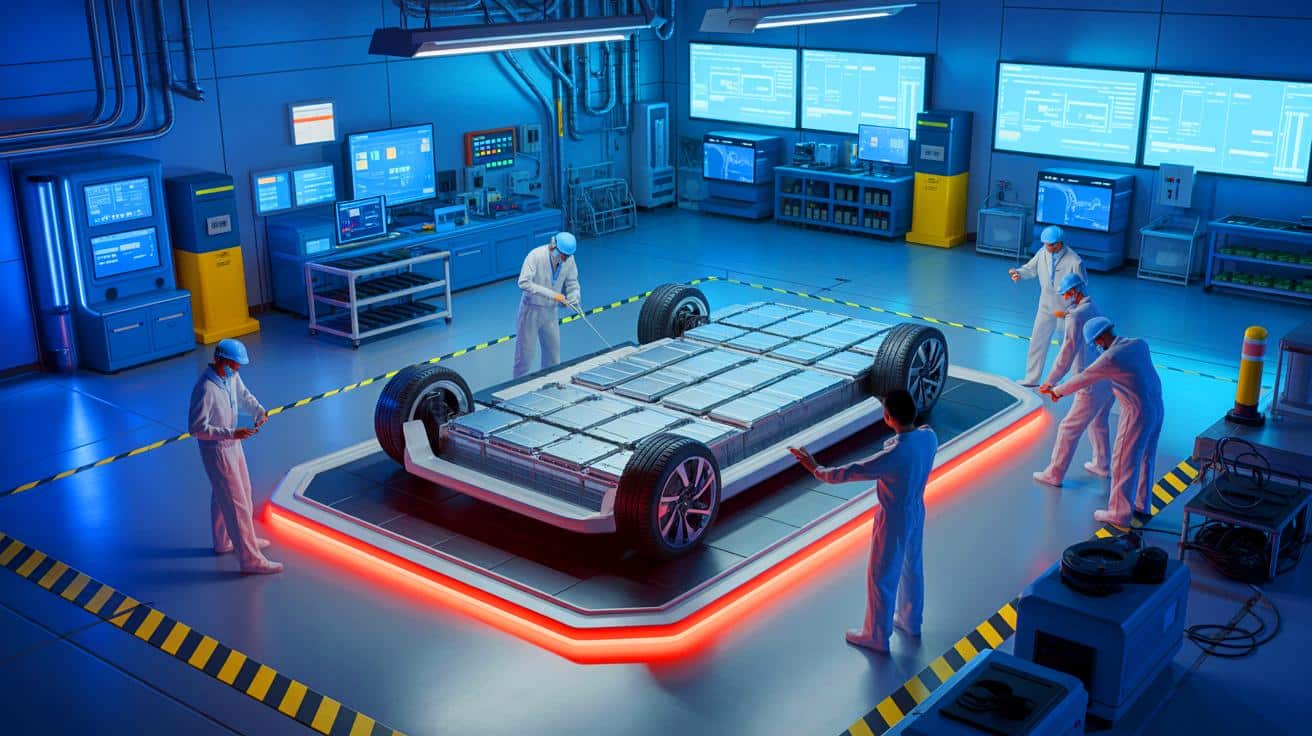
On April 15, 2025, China’s government, through the Xinhua News Agency, unveiled the GB38031-2025 standard. This regulation focuses on the safety of traction batteries used in electric vehicles. The goal is to eliminate the risk of battery fires or explosions, which have been a significant concern for consumers and manufacturers alike. To achieve compliance, batteries will undergo a series of stringent tests designed to ensure safety under various conditions.
These tests include impact resistance from beneath the vehicle, which simulates scenarios where a car might collide with an obstacle on the road. Additionally, batteries will be subjected to short-circuit tests to verify their stability after extensive use, specifically following 300 cycles of rapid charging. There’s also a focus on improving insulation resistance requirements for alternating current battery systems. Despite these stringent measures, batteries will still be equipped with alarms to warn passengers of potential hazards, ensuring an additional layer of safety.
Why trucks remain essential for small businesses in the modern era
Potential Global Impact of China's New Regulations
China's influence on the electric vehicle market cannot be overstated. As one of the largest producers of EVs and their components, China's regulatory changes are likely to have significant global repercussions. Major Chinese battery manufacturer CATL, which supplied 40% of the world's automotive batteries in 2024, already aligns with the new standards. Many prominent automotive brands, including Volvo, Mercedes-Benz, and Peugeot, rely on CATL for their battery needs.
This alignment with GB38031-2025 suggests a shift towards universally safer battery technologies. As these standards become a benchmark, international manufacturers may adopt similar specifications to ensure market competitiveness and consumer confidence. The ripple effect could accelerate the transition to electric mobility, making EVs a safer and more viable option for consumers worldwide.
Enhancing Consumer Confidence and Environmental Progress
One of the primary barriers to electric vehicle adoption has been consumer skepticism regarding battery safety. Incidents of battery fires have been widely publicized, creating hesitancy among potential buyers. By addressing these safety concerns directly, China's new standards aim to restore confidence among consumers. As these batteries become more reliable, the perception of electric vehicles as a safe and dependable alternative to conventional cars will likely improve.
This development is not only about enhancing safety but also about supporting the global transition to green energy. As electric vehicles become more attractive to consumers, the shift away from internal combustion engines may accelerate, contributing to a reduction in greenhouse gas emissions. The introduction of these safety standards could thus play a crucial role in the broader ecological transition.
Challenges and Opportunities for the Automotive Industry
While the new safety standards present clear benefits, they also pose challenges for the automotive industry. Manufacturers must invest in research and development to meet these stringent requirements, which could increase production costs. However, the potential for innovation is significant. Companies that successfully navigate these challenges may gain a competitive edge by offering superior safety features.
Moreover, the alignment of global manufacturing practices with these standards could facilitate international collaboration and standardization. This might lead to more efficient production processes and a more cohesive global market for electric vehicles. The industry's ability to adapt to these changes will be crucial in determining the pace at which electric vehicles can become the norm.
As the world continues to grapple with the demands of climate change and the need for sustainable transport solutions, China's new battery safety standards represent a significant step forward. These regulations promise to enhance safety and potentially accelerate the adoption of electric vehicles globally. However, they also present challenges that the industry must address. As we look to the future, the question remains: how will these developments shape the trajectory of electric mobility on a global scale?