
“Denver Inventor Claims He’s Reinvented The Wheel”: Radical SurfacePlan Design Uses Piston-Like Actuators To Push Cars Directly Off The Road Surface
 By
Renée Castellano
By
Renée Castellano
| IN A NUTSHELL |
|
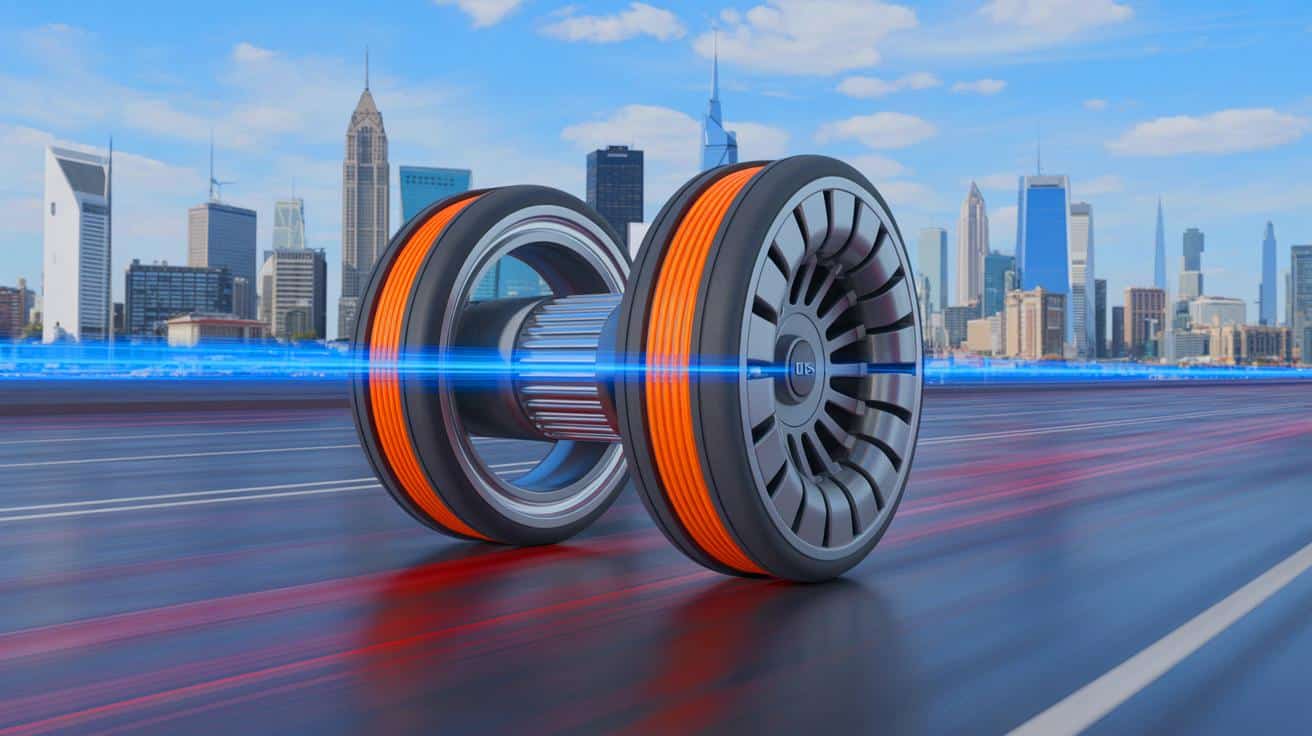
The wheel, a fundamental invention dating back 5,500 years, has been crucial in shaping human civilization. Originating in Uruk, ancient Mesopotamia, the wheel laid the foundation for numerous advancements. This society not only brought forth the wheel but also many pivotal concepts we rely on today, such as writing, mathematics, and the 24-hour day. Despite its ancient beginnings, the wheel continues to evolve, with inventors constantly seeking to innovate beyond its original design. A recent development, the SurfacePlan wheel, proposes a radical shift in how we perceive wheel-based systems, aiming to redefine vehicular motion by applying force directly to the road.
Innovative Origins of the Wheel
The invention of the wheel is often credited to the inventive minds of ancient Mesopotamia. This civilization was known for its remarkable contributions to human progress, ranging from the creation of cities to the development of mathematics and complex legal systems. The wheel’s initial purpose was likely to enhance the production of ceramics, with the first wheels serving as pottery wheels. This simple yet revolutionary design laid the groundwork for countless applications that followed.
Throughout history, the wheel has been adapted and improved upon, influencing various aspects of daily life. Its versatility and effectiveness have made it a staple in transportation and machinery. While the basic concept remains unchanged, the pursuit of innovation has led to numerous attempts at reinventing the wheel, each seeking to improve efficiency, functionality, or adaptability.
The SurfacePlan Concept: A New Paradigm
David Henson's SurfacePlan concept presents a novel approach to wheel design, seeking to replace traditional drivetrains with a system that applies force directly to the road. By using piston-like linear actuators with rubber tips, the SurfacePlan design aims to propel vehicles forward more efficiently. This method could potentially reduce the weight of vehicles by up to 50-75%, offering a lighter, more streamlined alternative to current systems.
This innovative approach challenges the conventional wisdom of wheel mechanics by shifting the focus from torque to direct thrust. The implications of such a design could be far-reaching, potentially leading to lighter vehicles with programmable tire treads and improved traction. However, the practicality and durability of this system remain to be seen, as it faces numerous engineering challenges.
Supercar maintenance: Tips for keeping your ride in top shape
Challenges and Considerations
Despite its promising potential, the SurfacePlan concept must address several critical challenges. One major concern is the delivery of linear force, which could inadvertently lift the tire off the ground and reduce traction. Additionally, the system's reliance on numerous actuators may complicate maintenance and increase the risk of mechanical failure.
Another challenge lies in the power requirements of the actuators. Whether driven electrically, hydraulically, or pneumatically, these components must generate significant force to move a vehicle effectively. The complexity of the design also raises concerns about the system's ability to withstand high-speed centrifugal forces and the environmental conditions that wheels typically encounter.
Why trucks remain essential for small businesses in the modern era
Future Prospects and Considerations
While the SurfacePlan wheel is still in its conceptual stage, it offers an intriguing glimpse into the future of transportation. The potential advantages of such a system, including reduced vehicle weight and enhanced control, make it an exciting prospect for further development. However, practical implementation will require extensive testing and refinement to address the challenges identified.
The existence of electric hub motors, which already integrate the drive train within the wheel, presents a viable alternative to the SurfacePlan design. These motors deliver torque reliably and have been tested extensively. Nevertheless, Henson's concept may find niche applications where its unique properties are advantageous, provided it undergoes successful prototyping and testing.
The evolution of the wheel continues to captivate inventors and engineers, as they strive to push the boundaries of what is possible. As new designs emerge, they must balance innovation with practicality to achieve widespread adoption. Will the SurfacePlan concept become a landmark in the history of wheel design, or will it inspire further innovations that redefine transportation? The future holds the answer to this intriguing question.
Continue reading