

“It Watches the Trail From Above”: Toyota Tests Drone Co-Pilots to Guide Off-Road Drivers Through the Toughest Terrain
 By
Ethan Kowalczyk
By
Ethan Kowalczyk
| IN A NUTSHELL |
|
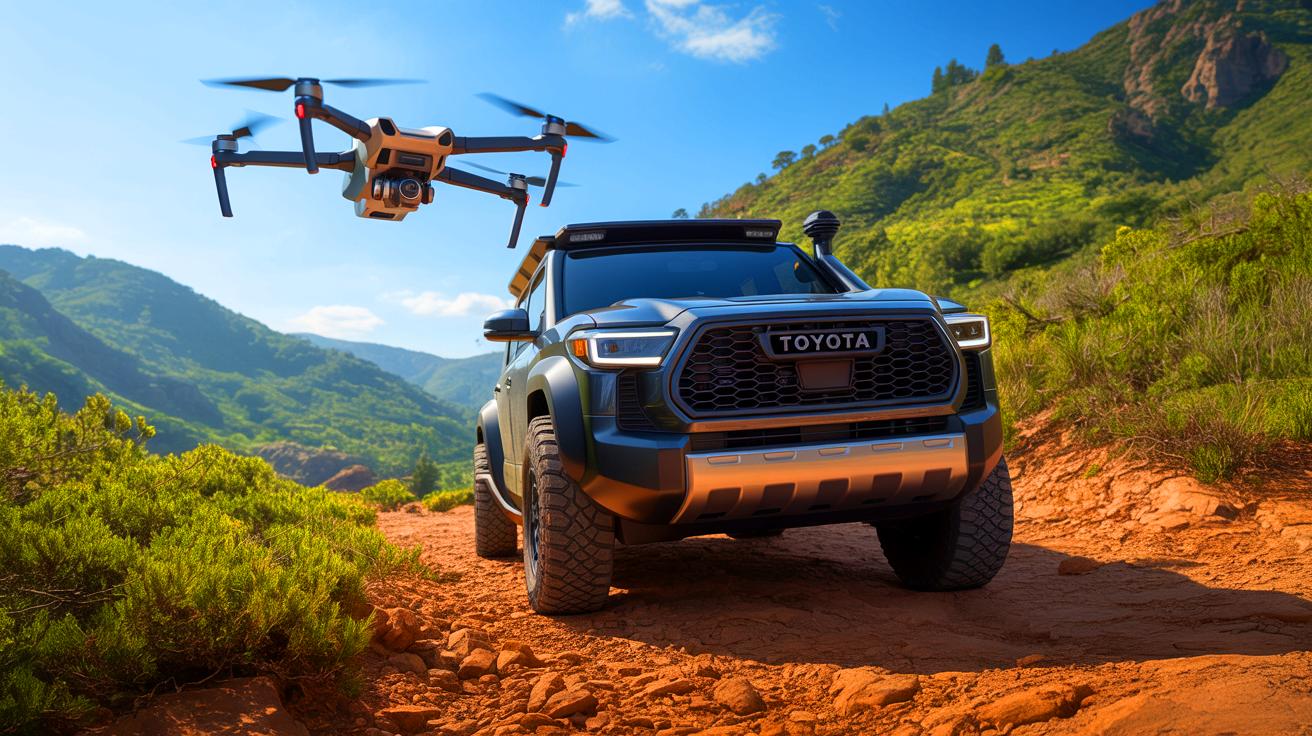
Toyota, the renowned Japanese automaker, has taken a step into the future by exploring the use of drones as co-pilots for off-road vehicles. According to a recent filing with the Federal Aviation Administration (FAA), Toyota aims to equip vehicles with drone systems that provide real-time terrain views to assist drivers navigating difficult trails and unpaved roads. This move represents a significant shift in how automakers perceive the potential of unmanned aerial systems. With drones offering a unique perspective on the terrain, the technology promises to enhance safety and situational awareness for off-road enthusiasts.
Why Automakers Are Turning to Drones
Toyota’s exploration into drone technology highlights a broader trend within the automotive industry. As drone technology becomes more affordable and regulatory landscapes evolve, automakers are increasingly considering aerial systems to address challenges that ground vehicles cannot tackle. Toyota’s investment in Joby Aviation’s electric air taxis demonstrates its commitment to advancing aerial technology.
However, the focus on off-road applications targets a different issue: enhancing safety and awareness for traditional vehicles. In off-road environments, scouting ahead on foot can pose significant risks. By deploying drones, automakers provide drivers with a bird’s-eye view of potential hazards without compromising safety. This shift toward integrating drones into vehicle systems underscores a growing recognition of their potential to revolutionize off-road driving experiences.
Toyota Set to Electrify with New Land Cruiser and RAV4 Electric Vehicles
How the System Would Work
Toyota’s proposed drone system, as outlined in its FAA filing, is designed to give drivers comprehensive views of the local environment. By offering real-time visuals of potential hazards around and underneath the vehicle, drivers can plan safer routes and optimize vehicle operations. The drones would primarily operate near the vehicle, occasionally flying above the treeline to offer broader perspectives.
Such a system could prove invaluable for overlanders, search-and-rescue teams, and military operations where understanding the terrain is crucial. Essentially, the drone system would provide off-road vehicles with their reconnaissance capabilities, enhancing safety and efficiency in challenging terrains.
Toyota Unveils New Components for Its Fan-Favorite Four-Cylinder Engine
Regulatory Support and Reality Check
The timing of Toyota’s filing coincides with significant updates to U.S. drone regulations. In August 2025, Transportation Secretary Sean Duffy introduced new rules for Beyond Visual Line of Sight (BVLOS) operations, aiming to expand commercial drone usage across various sectors, including automotive systems. These proposed rules could eliminate the need for case-by-case waivers, facilitating the integration of drones into diverse applications.
Toyota’s filing references these regulatory changes, indicating the company’s readiness to advance its drone concept if regulations permit. However, a spokesperson emphasized that the initiative remains exploratory, with no immediate product plans. This cautious approach reflects Toyota’s strategy of testing the regulatory waters while exploring potential innovations. The off-road drone system, while intriguing, remains a concept rather than an imminent reality for drivers.
Potential Impact on Off-Road Driving
The introduction of drones as co-pilots for off-road vehicles could transform the driving experience for enthusiasts. By providing real-time terrain views, drivers would be better equipped to navigate challenging environments. This capability would not only enhance safety but also open new possibilities for adventure seekers.
Moreover, the potential applications extend beyond recreational use. Search-and-rescue operations, military missions, and remote expeditions could benefit significantly from the enhanced situational awareness that drone systems provide. As technology continues to evolve, the integration of drones into vehicle systems could redefine the boundaries of off-road exploration, offering a blend of innovation and practicality.
The exploration of drone technology by Toyota marks a significant step toward integrating aerial systems into traditional automotive environments. While the concept remains in its early stages, the potential benefits are substantial. As regulatory frameworks develop and technology advances, the possibility of drones becoming an integral part of off-road driving grows. How will these emerging technologies continue to reshape the automotive landscape and redefine the limits of exploration for drivers?
Continue reading