



Revolutionary Two-Headed Truck Pod Promises to Slash Carbon Footprint: Will It Transform Shipping Forever?
 By
Renée Castellano
By
Renée Castellano
| IN A NUTSHELL |
|
As the world grapples with the urgent need to reduce greenhouse gas emissions, the transportation sector in the United States stands out as a major contributor. According to the Environmental Protection Agency (EPA), transportation was responsible for 28% of all greenhouse gases emitted in 2022, with a significant portion coming from heavy vehicles like trucks. This context presents a unique opportunity to address emissions through electrification, especially in long-haul trucking. However, the transition is fraught with challenges, including high costs and limited infrastructure. A California-based startup, Revoy, is attempting to tackle these obstacles with an innovative approach that could transform the industry.
The Challenges of Electrifying Long-Haul Trucking
Electrifying long-haul trucking is not as straightforward as it may seem. While electric vehicles (EVs) offer the promise of lower emissions and reduced operational costs, several barriers hinder their widespread adoption in the trucking industry. The initial costs of electric trucks are significantly higher than their diesel counterparts. This is a critical issue for trucking companies, many of which operate on tight margins. Additionally, electric trucks face limitations in range and charging infrastructure. Current electric prime movers are expensive, have limited range, and require long charging times, making them less attractive for long-haul routes.
Moreover, the existing infrastructure for fast-charging heavy vehicles in the U.S. is inadequate. Without sufficient charging stations, the demand for electric trucks remains low, discouraging further investment in the necessary infrastructure. Freight companies are intrigued by the potential benefits of electric vehicles, such as lower running costs and improved drivability, but they are cautious due to the substantial upfront investment and practical limitations. As a result, electric vehicles comprise only a small fraction of new heavy truck sales in the country.
Revoy’s Innovative Solution
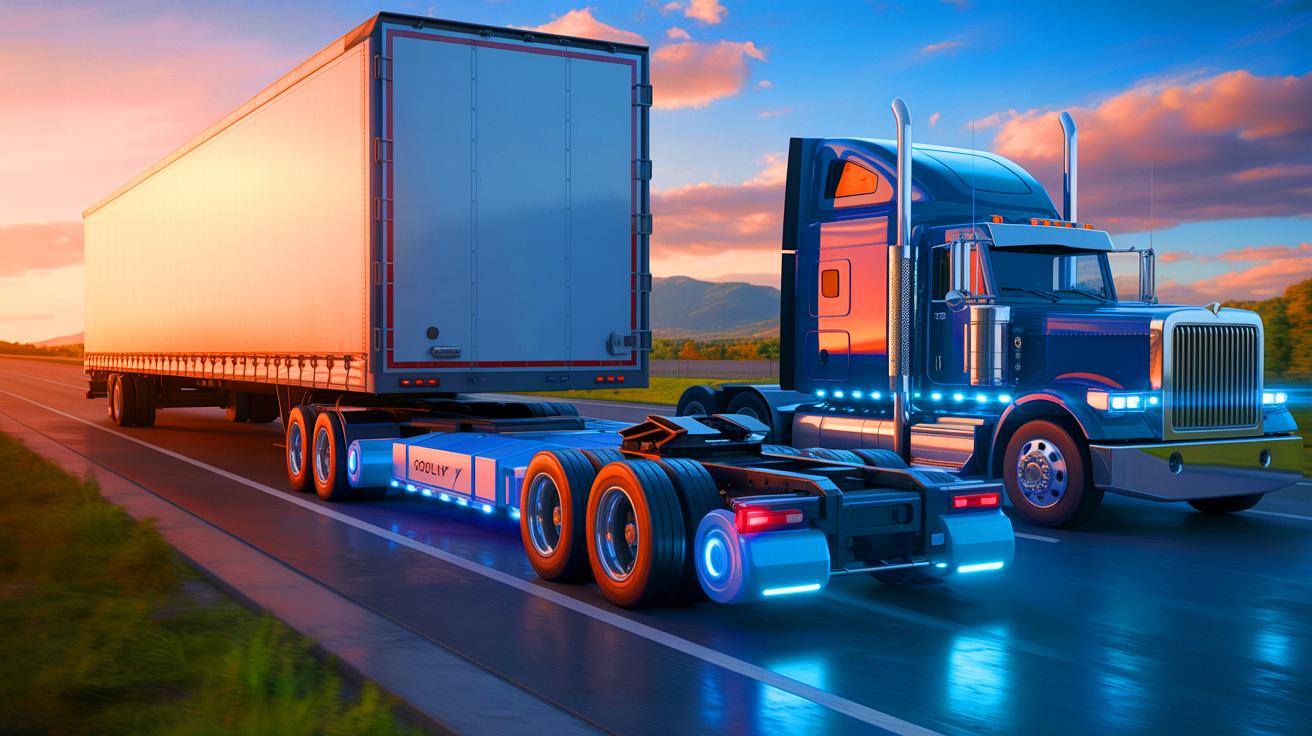
Revoy, a startup based in California, aims to overcome these barriers with a novel product and business model. The company’s flagship product is a dolly that can be integrated between the tractor and trailer of any standard diesel semi-truck. This dolly is powered by a battery with a capacity of 575 kWh, comparable to those found in fully electric prime movers. It provides a range of approximately 250 miles per charge, with plans to develop a higher-capacity unit in the future.
The dolly connects to a truck’s standard fifth-wheel hitch and features a smart kingpin, as well as sensors that interface with the truck’s air and electrical lines. Despite its 11-ton weight, the dolly is designed to enhance the driving experience through features like assisted steering correction, regenerative braking, auto-reversing, and blind-spot detection. These enhancements are accessible to drivers via a cellphone app, making the system user-friendly.
A Game-Changing Business Model
Revoy’s business model is as innovative as its product. Rather than selling the dollies outright, the company leases them to truckers on a per-mile basis. This approach allows freight operators to electrify their routes without incurring significant capital costs. The lease rate is structured to ensure that operators can at least break even, considering the savings on fuel costs. This model effectively lowers the entry barrier for trucking companies looking to adopt electric power.
Another key component of Revoy’s business strategy is the establishment of swap stations along major routes. At these stations, truckers can quickly exchange a depleted dolly for a fully charged one, a process that takes about four minutes. This is significantly faster than refueling a diesel truck and much quicker than charging an electric vehicle battery. The swap stations are strategically located and also offer amenities like refreshments, making them convenient for drivers.
Potential Impact and Future Prospects
Revoy’s solution has the potential to significantly impact the trucking industry by making electric power more accessible and practical. The added weight of the dolly does reduce the available payload under federal weight limits, but Revoy contends that most truck loads are constrained by space rather than weight. This means a majority of tractor-trailers could benefit from the service without significant drawbacks.
While Revoy’s model is currently focused on the U.S. market, there is potential for expansion internationally. For instance, the system could be adapted to work with the long-distance trucking networks in countries like Australia, where swap stations powered by solar energy could help electrify routes across vast distances. However, the applicability of the dolly with twin-trailer configurations, common in places like Canada and Australia, remains an open question.
Revoy’s innovative approach to electrifying long-haul trucking could serve as a model for other regions grappling with similar challenges. By addressing both the technological and economic barriers to adoption, the company paves the way for a more sustainable future in freight transportation. As the industry continues to evolve, how will other regions and companies adapt to these changes in the pursuit of reducing emissions and achieving sustainability goals?