


“This Car Stopped Itself And No One Was Inside”: San Bruno Police Face Chaos After Waymo Pulls Illegal U-Turn And Exposes Legal Black Hole
 By
Ethan Kowalczyk
By
Ethan Kowalczyk
| IN A NUTSHELL |
|
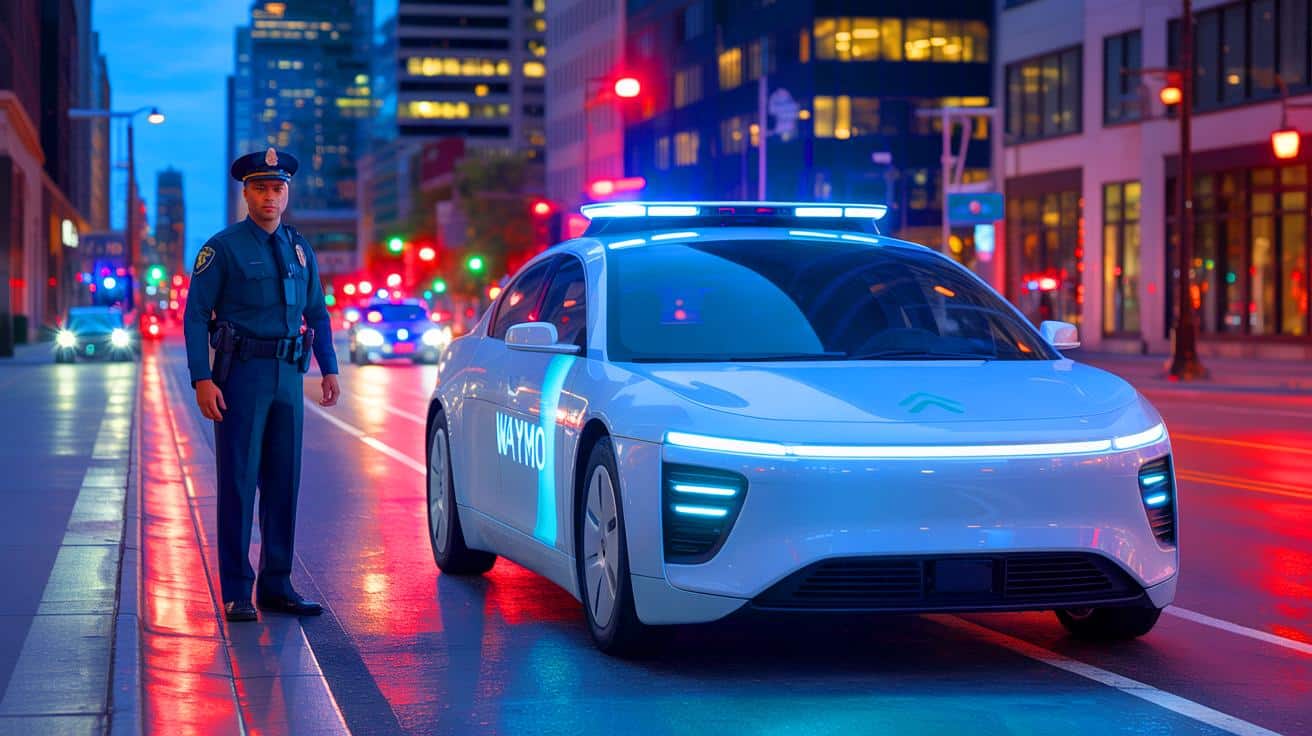
In an incident that underscores the evolving relationship between technology and law enforcement, police officers in San Bruno, California, recently found themselves in an unprecedented situation. During a routine patrol, an officer noticed a vehicle making an illegal U-turn. This initially typical traffic stop took an unexpected turn when officers approached the driver’s seat and discovered the car was devoid of a human driver. The vehicle in question was a Waymo Jaguar I-Pace, a part of the autonomous vehicle fleet that is gradually becoming a familiar sight on American roads. The episode raises questions about accountability and regulatory frameworks as autonomous technology continues to advance.
The Rise of Autonomous Vehicles
The advent of autonomous vehicles represents a significant shift in transportation technology. Companies like Waymo have been at the forefront of developing cars that can navigate streets without human intervention. Currently operating in several U.S. cities, Waymo plans to expand into major urban centers such as Miami, Washington, D.C., and New York City. With the company reporting over 10 million fully autonomous trips, the presence of these vehicles is becoming increasingly common. Yet, as the San Bruno incident illustrates, the integration of driverless cars into everyday life is not without its complications. The absence of a human driver poses unique challenges to existing traffic laws and enforcement procedures.
While autonomous vehicles promise enhanced safety and efficiency, they also demand a reevaluation of traffic regulations. Traditional traffic laws assume the presence of a human driver, responsible for any infractions. The San Bruno police, confronted with a traffic violation committed by an autonomous vehicle, found their citation procedures inadequate. This incident highlights the necessity for legal adaptations that address the unique nature of autonomous vehicles on the road.
How supercars are changing the face of automotive technology
Legal and Regulatory Challenges
Current traffic laws are primarily designed with human drivers in mind, creating a regulatory gap when it comes to autonomous vehicles. In the San Bruno case, officers were left puzzled as their citation books did not include provisions for driverless infractions. While the police contacted Waymo to address the issue, this approach is far from a permanent solution. Discussions are underway concerning legislation that would allow authorities to issue citations directly to the companies operating autonomous fleets when their vehicles violate traffic laws. However, the timeline for such legislation remains uncertain, leaving a temporary void in enforcement capabilities.
The potential for new legislation reflects a broader need for comprehensive regulatory frameworks that can accommodate the rapid technological advancements in transportation. Lawmakers face the challenge of balancing innovation with public safety, crafting policies that encourage development while ensuring accountability.
Waymo's Expansion and Public Perception
Waymo's expansion into new markets suggests a growing public acceptance of autonomous vehicles. As the company prepares to launch services in cities like Dallas and New York, it is clear that driverless technology is gaining traction. However, public perception remains mixed, with incidents like the San Bruno U-turn serving as reminders of the technology's limitations. While autonomous vehicles are designed to reduce human error, they are not infallible.
Public trust in autonomous technology hinges on the industry's ability to address safety concerns effectively. Incidents involving driverless cars tend to attract significant attention, highlighting the importance of transparency and communication from companies like Waymo. Building public confidence requires not only technological reliability but also a clear understanding of how these vehicles interact with traditional traffic systems.
The Future of Traffic Enforcement
The San Bruno incident poses important questions about the future of traffic enforcement in an era dominated by autonomous technology. As the presence of driverless cars increases, law enforcement agencies must adapt their strategies and tools to maintain public safety. This adaptation may include the development of new protocols for interacting with autonomous vehicles and the integration of technology that can communicate directly with these cars.
Additionally, the role of law enforcement may evolve to focus more on monitoring and regulating the software controlling these vehicles, rather than the vehicles themselves. This shift could lead to partnerships between law enforcement and technology companies, promoting a collaborative approach to road safety. As autonomous vehicles become more prevalent, the dialogue between tech innovators, policymakers, and law enforcement will be crucial in shaping the future landscape of traffic management.
The incident in San Bruno is a microcosm of the complex issues surrounding the integration of autonomous vehicles into everyday life. While technology progresses rapidly, the regulatory and enforcement frameworks have yet to catch up. As these vehicles continue to proliferate, how will society balance technological innovation with the need for public safety and accountability?
Continue reading