



“You Won’t Hear It Coming”: China’s New Maglev Breakthrough Silences Tunnel Booms and Could Finally Replace Domestic Flights
 By
Graham Pettigrew
By
Graham Pettigrew
| IN A NUTSHELL |
|
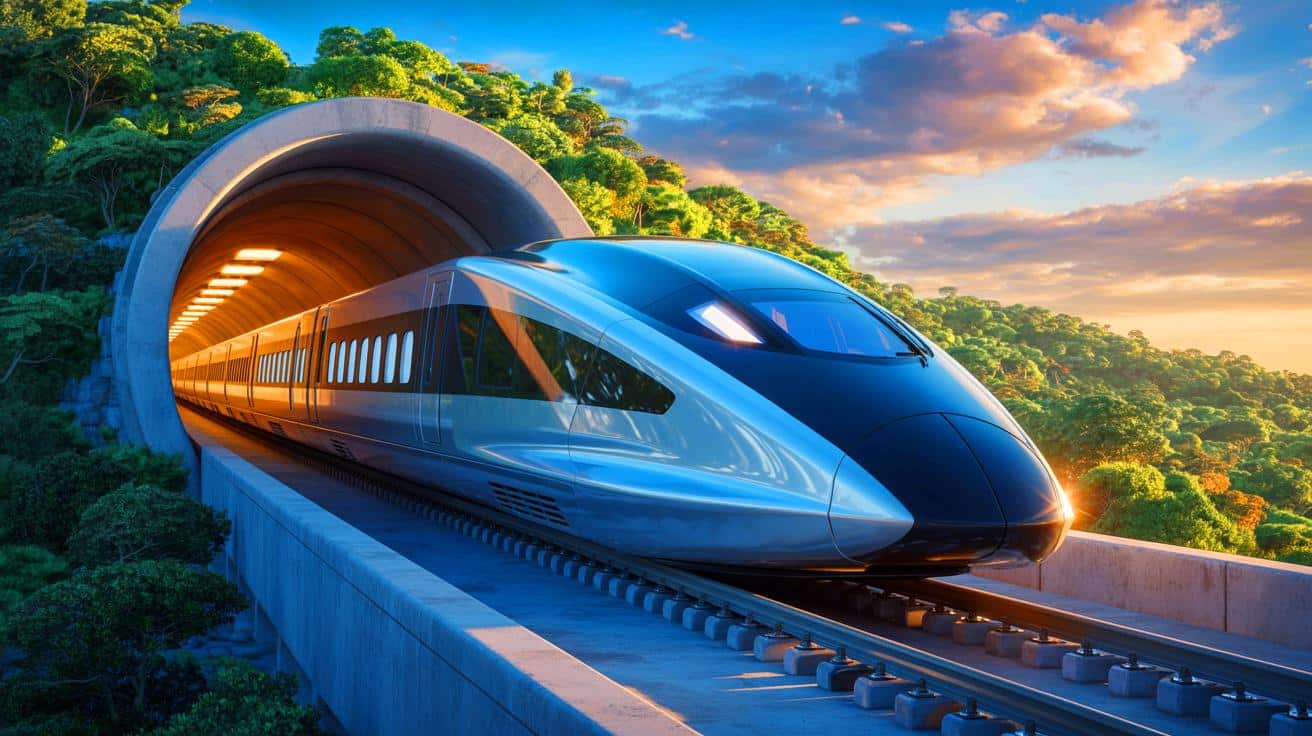
China has once again pushed the boundaries of transportation technology, unveiling a remarkable advancement in magnetic levitation (maglev) trains. The introduction of a sound-absorbing buffer designed to mitigate the notorious “tunnel boom” effect marks a pivotal moment for high-speed rail innovation. This development not only aims to improve passenger comfort but also addresses significant environmental noise concerns. With this breakthrough, China aspires to revolutionize rail travel, potentially making domestic flights obsolete. As the world watches, the implications of this technology could reshape global transportation dynamics.
How the Buffer Works
The “tunnel boom” is a well-known phenomenon that occurs when high-speed trains exit tunnels. It results from the rapid compression of air ahead of the train, similar to a piston effect, which then releases with a loud thump. This sound grows more disruptive as train speeds increase. For instance, while conventional trains traveling at 217 mph require tunnels of at least 3.7 miles to produce this effect, maglev trains at 373 mph can trigger the boom in tunnels as short as 1.2 miles.
The ingenious solution from Chinese engineers involves a buffer crafted from lightweight, porous materials. This buffer, alongside a porous coating on the tunnel walls, allows the compressed air to gradually escape, functioning similarly to a firearm silencer. Initial tests have shown that this design reduces pressure fluctuations by up to 96%, significantly diminishing the tunnel boom effect. By addressing this challenge, the buffer empowers maglev trains to operate at higher speeds without the drawbacks of increased noise and pressure, paving the way for more advanced rail systems.
China’s Revived Maglev Push
China's introduction of the new buffer coincides with a strategic push to expand maglev technology. The China Railway Rolling Stock Corporation (CRRC) is actively testing a prototype capable of reaching sustained speeds of 373 mph. Currently, China's maglev service, exemplified by the Shanghai airport shuttle, operates at 286 mph over a short distance of 19 miles. However, with these advancements, China aims to extend both the range and speed of maglev lines.
This initiative is part of a broader strategy to reduce reliance on domestic flights. By offering a compelling alternative in high-speed rail, China envisions maglev lines that could rival the 2.5-hour flight time between major cities like Beijing and Shanghai. Although no official routes have been approved, several provincial governments are advocating for pilot projects, reflecting a strong interest in expanding maglev infrastructure across the nation.
A Mixed Global Picture
China is not alone in its quest for maglev supremacy. Japan is developing the Chuo Shinkansen, intended to connect Tokyo and Osaka at speeds of 314 mph, potentially slashing travel time to just 67 minutes. However, the project faces delays, casting doubt on its planned 2027 launch. South Korea, on the other hand, has successfully implemented shorter maglev lines, demonstrating the technology's potential in urban settings.
In stark contrast, the United States has encountered obstacles, as the federal government recently withdrew funding for an East Coast maglev project due to planning issues, community opposition, and cost overruns. This divergence highlights the varying levels of commitment and success in adopting maglev technology across the globe. As countries explore high-speed rail solutions, China's buffer technology emerges as a promising answer to one of the industry's most persistent challenges.
Why trucks remain essential for small businesses in the modern era
The Road Ahead for High-Speed Rail
China's pressure-relief buffer signifies a substantial advancement in making super-fast rail travel commercially viable. Should large-scale trials confirm the 96% reduction in shock waves, this innovation could overcome one of the final technical hurdles impeding the widespread adoption of maglev technology. With the potential for faster, cleaner, and more efficient travel, this breakthrough could transform cross-country transportation, offering a viable alternative to traditional rail and short-haul flights.
The global implications of this development are profound. As the demand for sustainable and efficient travel solutions grows, China's maglev advancements might inspire other nations to expedite their high-speed rail projects. The question remains: will this innovation trigger a new era of high-speed travel worldwide, and how will different countries respond to the challenges and opportunities it presents?
As China forges ahead with its ambitious maglev plans, the global transportation landscape stands on the brink of a potential revolution. With pressing environmental concerns and the need for efficient travel solutions, will other nations follow China's lead and embrace the promise of high-speed rail? How different countries adapt to this technological shift could define the future of global transportation.
Continue reading