


“Hong Kong Students Destroyed Tesla”: Solar Car With 88-Pound Battery Crosses Australia While Billion-Dollar EVs Look Like Dinosaurs
 By
Keisha Holloway
By
Keisha Holloway
| IN A NUTSHELL |
|
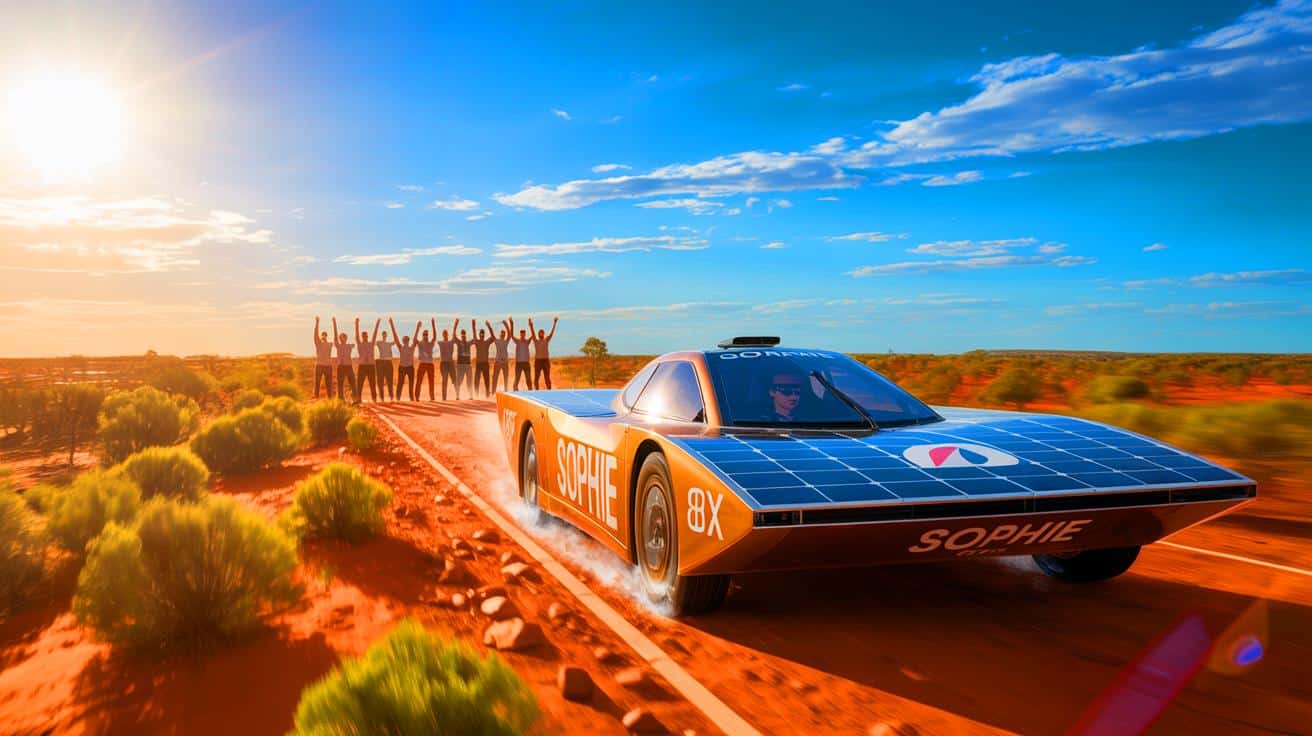
The 2025 Bridgestone World Solar Challenge marked a significant milestone in the evolution of solar-powered electric vehicles (EVs). Among the competitors, the Sophie 8X, a student-built car from Hong Kong’s Vocational Training Council, emerged victorious in the Cruiser Class. This triumph was not just a testament to the vehicle’s engineering excellence but also highlighted the potential of solar energy in reshaping the future of transportation. The race, which spanned approximately 1,864 miles across the demanding Australian outback, showcased a blend of innovation, strategy, and endurance, pushing the boundaries of what solar power can achieve in the automotive world.
The Innovation Behind Sophie 8X
The Sophie 8X stands out for its remarkable efficiency. At the heart of this vehicle is a 15.2 kWh battery, significantly smaller and lighter than those found in mainstream electric vehicles. While popular models like the Tesla Model Y rely on larger, heavier batteries, the Sophie 8X’s design is all about maximizing efficiency. The car’s battery, weighing just 88 pounds, is complemented by a roof equipped with six square meters of solar cells. These cells are not merely supplementary; they play a crucial role in keeping the battery charged and directly powering the vehicle.
The vehicle’s lightweight design, coupled with its solar capabilities, allowed it to outperform heavier competitors. In a race where every ounce counts, the Sophie 8X’s combination of advanced lithium battery pouches and a lightweight structure proved to be a winning formula. These innovations underscore a shift in how we might think about future EV designs, focusing on efficiency and renewable energy sources.
Volkswagen Unleashes Its Own Epic Gymkhana Video: A Thrilling Ride!
Advanced Motors and Aerodynamics Deliver Results
The technological prowess of the Sophie 8X extends beyond its solar capabilities. The team behind the vehicle made significant improvements in its motor and aerodynamic design. By collaborating with Guangdong-based partners, they developed in-wheel permanent magnet synchronous motors that were 18 percent lighter than those used in previous iterations. These motors, paired with a third-generation silicon carbide semiconductor controller, enhanced the vehicle’s energy conversion efficiency.
To further streamline performance, the team employed computational fluid dynamics (CFD) modeling to refine the car’s aerodynamics. The result was a carbon fiber body designed to minimize drag, essential for maintaining high efficiency over long distances. These enhancements were crucial in the Sophie 8X’s ability to maintain a competitive edge, ultimately leading to its victory over formidable opponents like Estonia’s Solaride III Enefit and Italy’s Onda Solare.
A Step Closer to Real-World EVs
The success of the Sophie 8X in the Bridgestone World Solar Challenge is not merely about winning a race; it represents a step toward integrating solar-powered vehicles into everyday life. One of the vehicle’s most notable achievements is its legal authorization to operate on public roads in Hong Kong. This approval signifies that the Sophie 8X meets recognized automotive safety standards, paving the way for potential future developments in solar-powered transportation.
Chris Selwood, the event ambassador, lauded the achievement, highlighting the team's journey from a non-competitive finish in 2023 to winning the Cruiser Cup in 2025. This progression underscores the potential for student-led initiatives to make significant contributions to the automotive industry, particularly in the realm of sustainable energy.
Impact on the Future of Solar-Powered Vehicles
The Bridgestone World Solar Challenge has long been a platform for innovation in solar technology. Since its inception in 1987, the event has attracted over 10,000 participants from leading universities and research groups worldwide. Institutions like Cambridge University, Stanford University, and Tokai University have all played roles in advancing solar power applications in transportation.
The competition pushes the limits of what solar power can achieve, and the success of vehicles like the Sophie 8X demonstrates the viability of solar energy as a primary power source for cars. This shift could have far-reaching implications for the automotive industry, encouraging further research and development in solar technologies and potentially leading to more widespread adoption of solar-powered vehicles.
The triumph of the Sophie 8X in the 2025 Bridgestone World Solar Challenge raises important questions about the future of transportation. As student teams continue to push the boundaries of what is possible with renewable energy, how will mainstream automotive manufacturers respond to these innovations? Can we expect to see a larger shift towards solar-powered vehicles on our roads? The answers to these questions will shape the future of sustainable transportation.