


“Ford Built A Camaro Killer In Secret”: Boss 302 Engine Hits 8,000 RPM While Chevrolet’s Racing Dreams Get Destroyed
 By
Renée Castellano
By
Renée Castellano
| IN A NUTSHELL |
|
In the late 1960s, Ford sought to reclaim its dominance in the SCCA Trans-Am sports car racing series. The Chevrolet Camaro had overshadowed the Mustang, capturing the spotlight with its triumphant performances. To counter this, Ford introduced the Mustang Boss 302, a model designed to meet Trans-Am requirements and take the fight to Chevrolet on both the track and the showroom floor. This special version was equipped with a unique 302-cubic-inch V-8 engine, setting it apart from its predecessors. The Boss 302, produced from 1969 to 1970, was a testament to Ford’s commitment to innovation and performance during this golden era of muscle cars.
The Birth of the Mustang Boss 302
The Ford Mustang Boss 302 was born out of necessity. Ford needed a vehicle that could compete with the Chevrolet Camaro Z/28 in the Trans-Am series. The rules stipulated that a road-going version of the race car must be available to the public, with a minimum of 1,000 units sold. Thus, the Boss 302 package was introduced, featuring a 302-cubic-inch V-8 engine. This engine replaced the previously available 289- or 390-cubic-inch units, offering a new level of performance.
The Boss 302 was not just about straight-line speed; it was engineered to excel on road courses. This focus on handling distinguished it from other muscle cars of the era, which often prioritized raw horsepower. The production run was short, spanning only two years, with the vehicle making a lasting impression on the automotive world. The Boss 302’s legacy was cemented by its unique combination of design, performance, and engineering prowess.
Volkswagen Unleashes Its Own Epic Gymkhana Video: A Thrilling Ride!
Spotting a Classic: Identifying the Boss 302
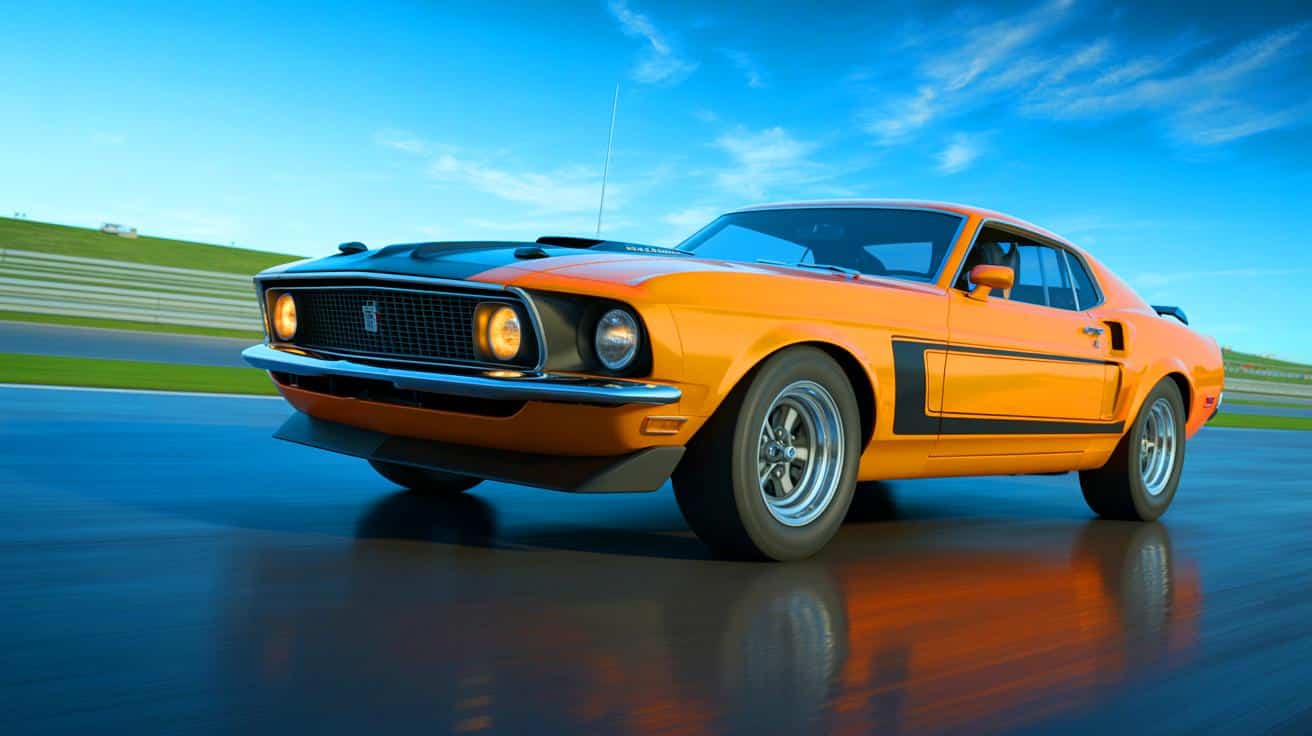
Identifying a classic Ford Mustang Boss 302 is a treat for any car enthusiast. The 1969 model was offered in four distinct colors: Acapulco Blue, Wimbledon White, Calypso Coral, and Bright Yellow. These striking hues were complemented by blacked-out elements, including the tail panel, grille, hood, and decklid. Optional features such as black louvers and a rear spoiler added to its distinctive appearance.
By 1970, the Boss 302 had evolved visually. The stripes, a signature feature, changed from a C-shape to a hockey stick design, meeting a slimmer hood stripe. The headlights were repositioned inward, making room for new vents. Inside, the Boss 302 shared similarities with standard Mustangs but could be customized with deluxe options like a tachometer. Designed by Larry Shinoda, the Boss 302’s aesthetic and mechanical features reflected his vision, ensuring that it stood out both on and off the track.
The Heart of the Beast: The 302 V-8 Engine
The heart of the Mustang Boss 302 is its powerful 302-cubic-inch V-8 engine. This engine borrowed its wedge-shaped head design from the larger 351 Cleveland, enhancing its breathing capabilities with enlarged intake and exhaust valves. Solid lifters, forged components, and high-compression pistons allowed for high-rpm performance, making it a true thoroughbred engine.
Durability was also a key consideration, with enhancements such as improved cooling and a strengthened engine block. One of the pioneering features was an early electronic rev limiter, ensuring longevity and reliability. The Boss 302's engine was paired exclusively with a four-speed manual transmission, offering three rear-gear ratios and a choice between locking and limited-slip differentials. This setup contributed to its impressive track performance, nearly achieving one horsepower per cubic inch.
The Boss 302's Racing Journey
The Ford Mustang Boss 302 made its racing debut in the 1969 SCCA Trans-Am series, achieving early success with four wins in the first five races. However, the season was dominated by Mark Donohue and Roger Penske's Chevrolet Camaro Z/28. In 1970, the Boss 302 turned the tables, claiming the Trans-Am championship by winning more than half the races. This victory was aided by improvements in tire and pit stop strategies, as well as the absence of Donohue and Penske, who had shifted focus to the AMC Javelin.
Although Ford officially exited Trans-Am racing in 1971, private teams continued to campaign the Boss 302, securing additional wins despite stiff competition. The Boss 302's racing legacy is a testament to its engineering excellence and the skill of its drivers, solidifying its place in motorsport history.
The Boss 302's Return and Legacy
In 2012, Ford revived the Boss 302 nameplate, bringing modern performance enhancements to the iconic model. The new Boss 302 featured a 5.0-liter V-8 engine, producing 444 horsepower and 380 lb-ft of torque. Chassis upgrades included adjustable shocks, a larger rear sway bar, and staggered 19-inch wheels, optimizing its handling for track performance.
The 2012 model offered a TracKey for maximum performance and the Laguna Seca edition, which included additional performance enhancements. The revival of the Boss 302 captured the spirit of its predecessor while integrating modern technology, ensuring its appeal to a new generation of drivers. As the market for classic cars continues to evolve, the Boss 302 remains a sought-after collector's item. Its enduring legacy raises the question: how will the next generation of enthusiasts preserve and celebrate the heritage of iconic vehicles like the Boss 302?
Continue reading