

“They Just Solved Range Anxiety”: Mahle’s Multi-Fuel Engine-Generator Could Let EVs Drive 800 Miles on a Single Charge
 By
Ethan Kowalczyk
By
Ethan Kowalczyk
| IN A NUTSHELL |
|
In the rapidly evolving landscape of automotive technology, innovations that extend the range of electric vehicles (EVs) are becoming increasingly significant. At the recent IAA Mobility Munich show, German component manufacturer Mahle unveiled a breakthrough in this domain with its multi-fuel engine-generator designed to extend hybrid driving ranges up to 838 miles. This development comes at a crucial time as the automotive industry grapples with the challenges of reducing emissions while maintaining practical driving ranges. With Europe trailing behind markets like China and North America in adopting range-extended electric vehicles, Mahle’s innovation could be a game-changer in addressing both environmental concerns and consumer demands for longer driving ranges.
Mahle’s Vision for Range-Extended Electric Vehicles
Mahle’s range-extender is more than just an add-on to electric vehicles; it represents a fundamental shift in vehicle architecture. By allowing for smaller batteries that reduce cost, weight, and material usage, this system paves the way for a new generation of vehicles that are both affordable and efficient. The range-extender offers simple and flexible refueling options while enabling zero-emissions local driving, addressing the range anxiety that often accompanies electric vehicles.
Arnd Franz, CEO and board chairman of Mahle, has emphasized the importance of integrating range-extended electric vehicles into the future automotive market. He argues that Europe is lagging behind in adopting these technologies due to political hurdles. In his speech at the IAA Mobility show, Franz stressed the need for Europe to embrace competition among various technologies to enhance its competitiveness on the global stage. This includes exploring hybrids, hydrogen engines, and sustainable fuels alongside battery-powered electric vehicles.
Challenges and Opportunities in the European Market
The European Union’s ambitious 2035 target to eliminate CO2 emissions from new cars and vans poses a significant challenge for the automotive industry. While the goal aims to phase out combustion engines, it has faced criticism for being impractical. The auto industry is lobbying for a more inclusive approach that incorporates various emissions-cutting technologies.
Mahle’s range-extender could play a crucial role in this transition. By offering a ready-to-install solution, it provides an immediate answer to the industry’s need for practical and sustainable vehicle solutions. The market for range-extended electric vehicles is projected to grow by 15% annually until 2030, highlighting a significant opportunity for Mahle and similar companies to influence the direction of automotive innovation in Europe.
Why trucks remain essential for small businesses in the modern era
Technical Innovations Driving Mahle’s Range-Extender
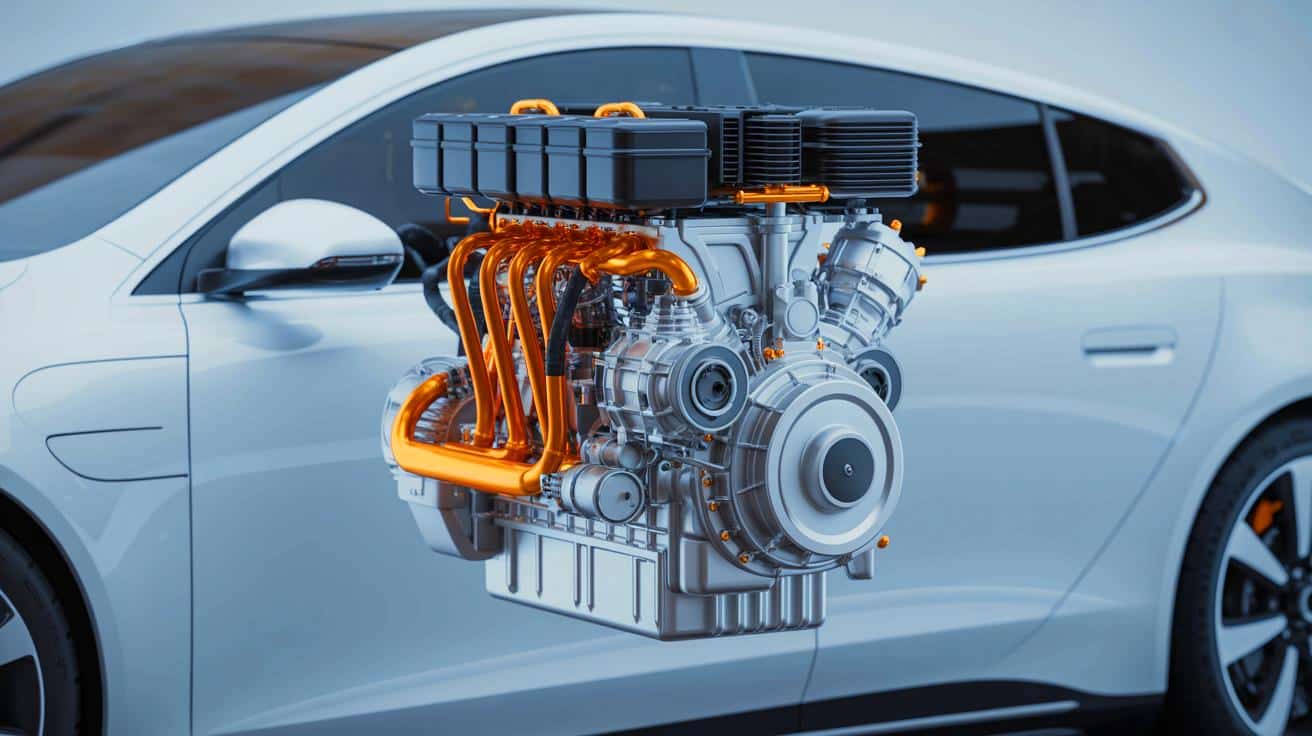
Mahle’s new range-extender system is a testament to its pioneering work in electric vehicle technologies. The system includes an 800-V generator that operates at over 97% efficiency, delivering a continuous output of 85 kilowatts. Notably, it achieves this efficiency without using rare-earth magnetic materials, thanks to a direct rotor cooling system.
The engine component of the system utilizes Mahle’s Jet Ignition technology, boasting an impressive 42% efficiency. This technology replaces the traditional spark plug with a pre-chamber that emits fast heat jets, resulting in rapid and stable combustion. This innovation allows for a higher compression ratio without the risk of knocking, ultimately reducing fuel consumption and enhancing overall efficiency.
Mahle’s innovation could double the range of most electric vehicles available in Europe today.
Future Implications for Automotive Manufacturers
The introduction of Mahle’s range-extender offers automotive manufacturers increased flexibility in designing vehicles that balance range, weight, and price. By incorporating a fuel-powered engine-generator, manufacturers can adjust battery sizes to optimize vehicle performance and cost-effectiveness. This flexibility is crucial as the industry moves toward sustainable and practical vehicle solutions.
Moreover, Mahle’s range-extender is designed to run on renewable biofuels, aligning with broader emissions-cutting strategies. As the European Commission reviews the 2035 engine ban, the role of range-extender systems in the future automotive market remains a pivotal area of interest. The outcome of this review will significantly influence how technologies from companies like Mahle and others will integrate into Europe’s automotive future.
As the automotive industry continues to evolve, the balance between environmental sustainability and consumer demands becomes increasingly complex. Mahle’s range-extender offers a promising solution, but whether it will be fully embraced remains uncertain. With Europe’s regulatory landscape in flux, the question remains: How will the industry adapt to these technological and regulatory challenges, and what role will innovations like Mahle’s play in shaping the future of transportation?