


“They Want a Fourth Light Now”: Scientists Propose Adding a White Signal So Self-Driving Cars Can Control Intersections (and humans just follow along)
 By
Owen Fairbrother
By
Owen Fairbrother
| IN A NUTSHELL |
|
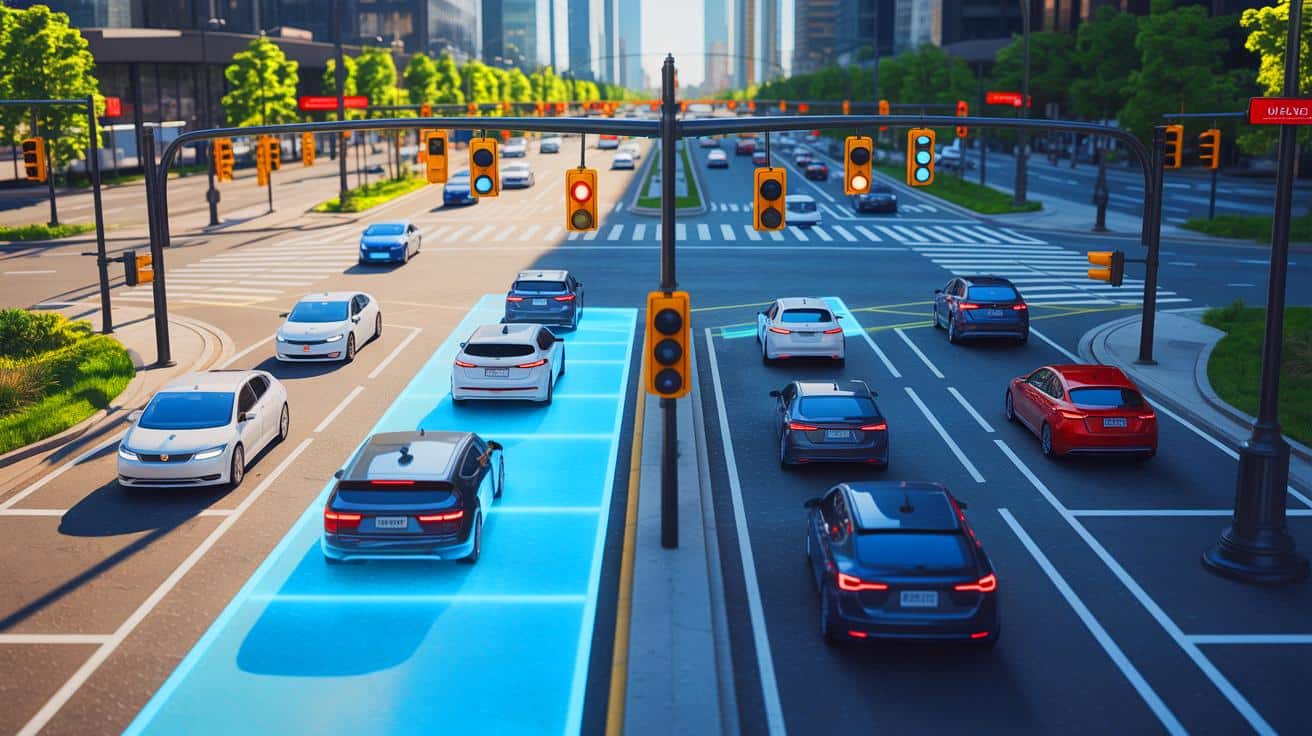
Researchers at North Carolina State University have proposed a novel solution to accommodate the influx of autonomous vehicles (AVs) on the roads: adding a white light to existing traffic signals. This additional light is not intended to replace traditional red, green, and yellow lights but will instead act as a complementary signal. The white light aims to facilitate communication between AVs and traffic signals to streamline intersection management. This initiative is part of a broader effort to integrate AVs into current traffic systems, enhancing safety and efficiency for both human and autonomous drivers.
Understanding the White Light’s Purpose
The introduction of the white light at intersections is designed to signal to human drivers that AVs are actively navigating the crossing. While North Carolina State University researchers have suggested using white as the color, any distinct color could theoretically serve the same purpose. The fundamental aim is to inform human drivers of AV presence and ensure a smoother traffic flow.
Importantly, traditional traffic signals will continue to operate as usual, with human drivers maintaining their current driving habits. Dr. Ali Hajbabaie, the lead researcher at NC State, emphasizes that the white light will not disrupt conventional driving practices. Instead, it will serve as an additional layer of information, helping human drivers coexist with AVs at intersections.
The Mechanics of the White Traffic Lights
The white phase is primarily focused on AVs approaching intersections. It allows these vehicles to communicate effectively with traffic signals and each other. This interaction relies on distributed computing, which enables AVs to collaborate and manage traffic flow efficiently. The white phase is activated when a significant number of AVs are present at the intersection, ensuring optimal traffic management.
During this phase, AVs can bypass traditional light cycles through real-time negotiation and data exchange. Human drivers, in turn, will follow the lead of the AVs ahead of them. When the number of AVs decreases, the system reverts to the standard red, yellow, and green signals, ensuring safety for human drivers. By facilitating smooth traffic flow, the white phase can reduce delays by approximately 3% with just 10% AV presence.
Benefits of the White Phase
One of the most significant advantages of the white phase is its potential to reduce traffic delays and minimize stop-and-go situations. As a result, intersections become more fuel-efficient, as vehicles move more seamlessly through them. In scenarios with a high density of AVs, delays can be reduced by up to 94%, highlighting the efficiency gains of this innovative approach.
By incorporating the white light system, trust between human drivers and AVs is fostered, paving the way for a coordinated traffic experience. The white phase effectively bridges the gap between human-driven and autonomous vehicles, creating a unified traffic flow. As more intersections adopt this system, the potential for smoother, more efficient roadways becomes increasingly achievable.
How supercars are changing the face of automotive technology
Initial Implementation and Testing
North Carolina State University's proposal is already in advanced stages of testing, with infrastructure being established to support the white light system. The initial tests are taking place in controlled environments, selected for their high AV density and limited pedestrian presence. These conditions provide an ideal testing ground for refining and optimizing the new system.
Ports have been identified as particularly suitable locations for testing due to their predictable traffic patterns and high vehicle throughput. Although white is the proposed color for AV signals, the emphasis is on effective traffic management rather than the specific color choice. As the concept of four-color traffic lights gains traction in the United States, the question of which state will first implement this innovative system remains open.
The introduction of a white light in traffic signals represents a significant step toward integrating autonomous vehicles into existing traffic systems. By enhancing communication and coordination at intersections, this initiative promises to improve traffic flow and safety. As testing continues, the potential for widespread implementation grows, raising the question: How will cities and states across the country adapt to and embrace this innovative approach to traffic management?
Continue reading