



“This Battery Runs 74 Days Without Stopping”: Australian Scientists Kill Lithium Forever While Electric Cars Get 997 Watt-Hours Per Kilogram
 By
Graham Pettigrew
By
Graham Pettigrew
| IN A NUTSHELL |
|
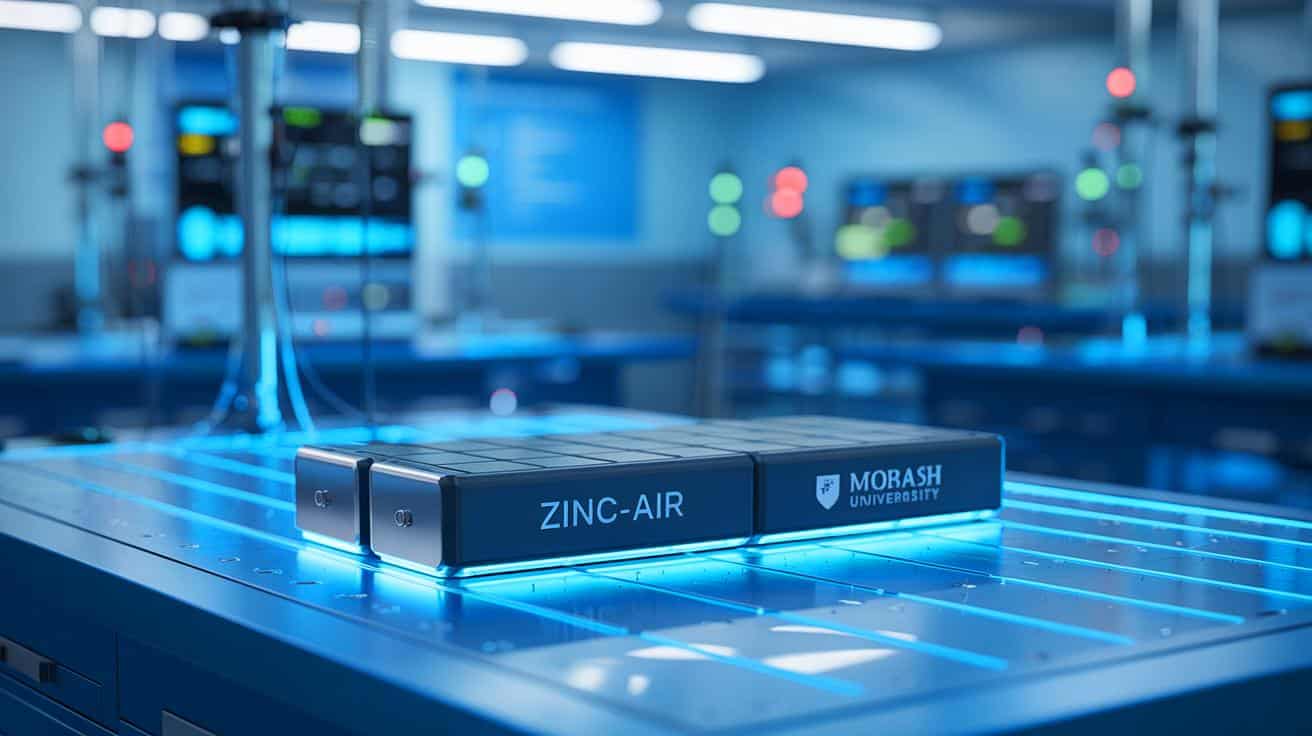
In an era where clean energy solutions are becoming increasingly vital, scientists at Monash University in Melbourne, Australia, have made a breakthrough that could reshape the future of energy storage. By developing a record-breaking zinc-air battery, they are paving the way for a new generation of more efficient, cost-effective batteries. This innovation replaces costly platinum catalysts with cobalt-doped carbon sheets, offering a promising alternative to traditional energy storage solutions. Under the guidance of Saeed Askari and Parama Banerjee, the research team has demonstrated that with atomic-level engineering, zinc-air batteries can achieve unprecedented performance and longevity.
Unlocking Zinc-Air Potential
Zinc-air batteries, or ZABs, are a type of metal-air electrochemical cell that harnesses the power of zinc oxidation with oxygen from the air. These batteries are celebrated for their high energy density and environmentally friendly composition, thanks to zinc’s abundance and low cost. As such, they are being considered for a range of high-capacity applications, including portable electronics, electric vehicles, and renewable energy storage systems.
Historically, zinc-air batteries have faced challenges in terms of limited output power and poor charge-discharge stability, which have hindered their practical application. However, the Monash University team has broken new ground by overcoming these limitations. Through heat treatment, they transformed 3D materials into ultra-thin carbon sheets and introduced cobalt atoms, resulting in a faster and more efficient battery solution. Remarkably, this innovation led to a battery that lasted 74 days and endured 3,570 charging cycles, showcasing the potential for rechargeable zinc-air batteries in real-world applications.
How supercars are changing the face of automotive technology
"Our advanced simulations revealed that the cobalt-iron atom pairs, combined with nitrogen dopants, enhance charge transfer and optimize reaction kinetics, solving one of the biggest bottlenecks for rechargeable zinc-air batteries," explained Saeed Askari.
Heat Treatment Sparks Progress
The Monash University team's innovative approach has yielded a battery with a power density of 229.6 milliwatts per square centimeter and an energy density of 997 watt-hours per kilogram. These figures represent significant advancements in the performance of zinc-air batteries. Over a period of two months, the researchers conducted rigorous battery tests to evaluate the design's capabilities.
Parama Banerjee, a senior lecturer at Monash University, emphasized the milestone achievement of running a rechargeable zinc-air battery continuously for more than two months. The stability and performance demonstrated in this study highlight the potential for these batteries to be applied to other clean energy technologies, such as fuel cells, water-splitting, and CO2 conversion. This breakthrough signals a move towards practical applications and mass adoption of zinc-air battery technology.
Expanding Applications for Zinc-Air Batteries
Currently, zinc-air batteries are primarily used in small devices like hearing aids. However, the recent advancements by the Monash University team suggest a broader scope for their application. With the newfound ability to recharge and sustain high power outputs, zinc-air batteries could become a viable option for high-demand applications.
Parama Banerjee remarked, "It demonstrates that this technology is ready to move beyond the laboratory and into practical applications." This sentiment underscores the potential for zinc-air batteries to transition from niche markets to mainstream use, particularly in sectors looking for sustainable and efficient energy storage solutions. The study's publication in the Chemical Engineering Journal further validates the significance of this research and its implications for the future of clean energy technologies.
Future Prospects in Clean Energy
The record-breaking performance of zinc-air batteries at Monash University marks a crucial step forward in the quest for sustainable energy solutions. By engineering catalysts at the atomic level, researchers have unlocked new possibilities for efficient and cost-effective energy storage. The implications of this breakthrough extend beyond zinc-air batteries, potentially influencing the development of other clean energy technologies.
As the world continues to seek alternatives to fossil fuels, innovations like these are critical. They offer a glimpse into a future where energy storage is not only more efficient but also more accessible and affordable. The challenge now lies in scaling these technologies for widespread use. What other advancements in energy storage will emerge as scientists continue to push the boundaries of what is possible?