

“This DeLorean Actually Flies Now”: YouTuber Builds 13kg Time Machine While Motors Generate 13,563kg Thrust Without Government Permission
 By
Ethan Kowalczyk
By
Ethan Kowalczyk
| IN A NUTSHELL |
|
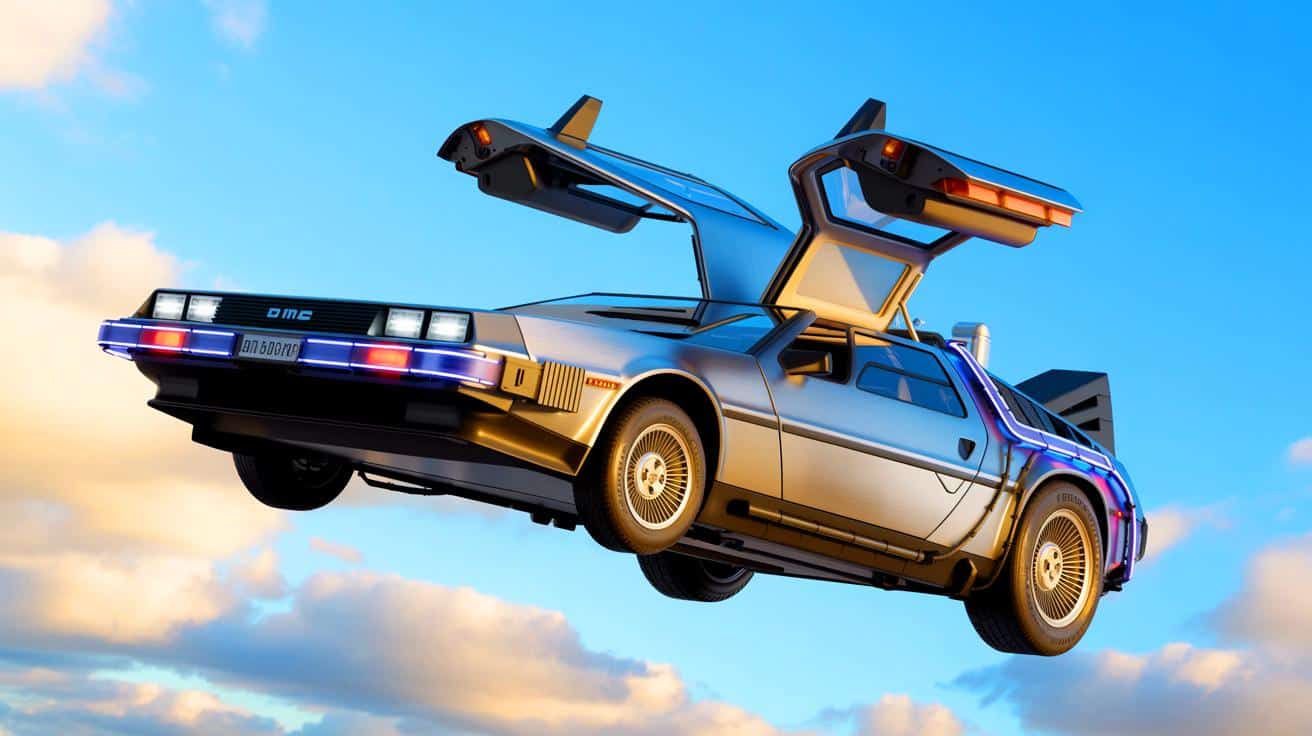
A YouTuber’s ambitious project has finally taken flight, literally. Brian Brocken, known for his inventive engineering, has successfully built a full-scale DeLorean prop that can actually fly. The culmination of years of work, Brocken’s project is not just a testament to his skills but also to the boundless possibilities of modern engineering. This feat was achieved through meticulous planning, a deep understanding of aerodynamics, and a relentless pursuit of innovation. Brocken’s journey from concept to reality showcases the power of creativity and determination in the world of DIY engineering.
The Evolution of a Dream
Brian Brocken’s journey to create a flying DeLorean began with a vision and a passion for engineering. The project started with a digital design, meticulously planned to achieve the perfect balance between aesthetics and functionality. The first step in bringing this vision to life was creating a foam body that closely matched the digital model. The body was crafted with precision, ensuring the final product weighed a mere 13.890 kg, almost identical to the calculated mass of 13.940 kg.
Initially, the DeLorean sat atop an aluminum frame, but it soon became clear that a lighter, more rigid structure was needed. Brocken then crafted a carbon-fiber frame, significantly reducing weight and increasing stability. This transition from aluminum to carbon fiber was crucial in achieving the flight capabilities Brocken envisioned. The visual impact of the foam DeLorean, juxtaposed with its carbon-fiber skeleton, brought a touch of 80s nostalgia while emphasizing the practical engineering behind the project.
Overcoming Technical Challenges
The technical challenges of creating a flying DeLorean were numerous and complex. Central to the project was achieving the appropriate thrust margins and frame rigidity. Brocken initially employed MP8318 100 kV motors with 30-inch propellers, planning for potential expansion to an octocopter configuration if needed. Initial thrust tests exceeded expectations, with each motor delivering 13.563 kg at full throttle, surpassing the advertised 12.5 kg.
Despite the promising thrust, the aluminum frame presented torsional issues during hover tests. The flexible nature of the frame caused unintended yaw movements, a problem eventually resolved with the more rigid carbon-fiber frame and refined PID tuning. Brocken also addressed practical challenges, such as designing a flap system to allow airflow to the propellers without compromising the vehicle's appearance. The gullwing doors featured concealed off-center hinges, maintaining the DeLorean’s iconic design while ensuring functionality.
Innovative Engineering Solutions
Brocken's project was not just about creating a flying car but also about pushing the boundaries of what is possible in DIY engineering. The carbon-fiber frame was a significant innovation, reducing the vehicle's weight and enhancing its structural integrity. The use of 3D-printed PLA connectors and forged carbon-fiber corners demonstrated Brocken's commitment to utilizing cutting-edge materials and techniques.
Another remarkable aspect of the project was Brocken's ability to repurpose existing technology creatively. A broken ABB IRB6400 robot became a CNC machine, further illustrating the resourcefulness that characterized the entire endeavor. This make-do ethos was evident throughout the project, as Brocken continually adapted and refined his design to overcome challenges and achieve his ultimate goal.
The Future of DIY Engineering
Brian Brocken's flying DeLorean is more than just a remarkable engineering achievement; it represents the future of DIY innovation. By documenting his process through a series of videos, Brocken has inspired countless viewers, demonstrating that with dedication and ingenuity, even the most ambitious projects are attainable. His work underscores the importance of iterative design, where each challenge presents an opportunity for improvement and learning.
As technology continues to evolve, the line between professional and amateur engineering blurs, opening new possibilities for those willing to experiment and innovate. Brocken's project serves as a beacon for aspiring engineers, highlighting the potential of combining traditional engineering principles with modern materials and techniques. What new frontiers will the next generation of DIY innovators explore?
Continue reading