


This Drone Fleet Declares War On Wildfires With Autonomous Detection And Automated Suppression In Minutes (It Saves Lives)
 By
Owen Fairbrother
By
Owen Fairbrother
| IN A NUTSHELL |
|
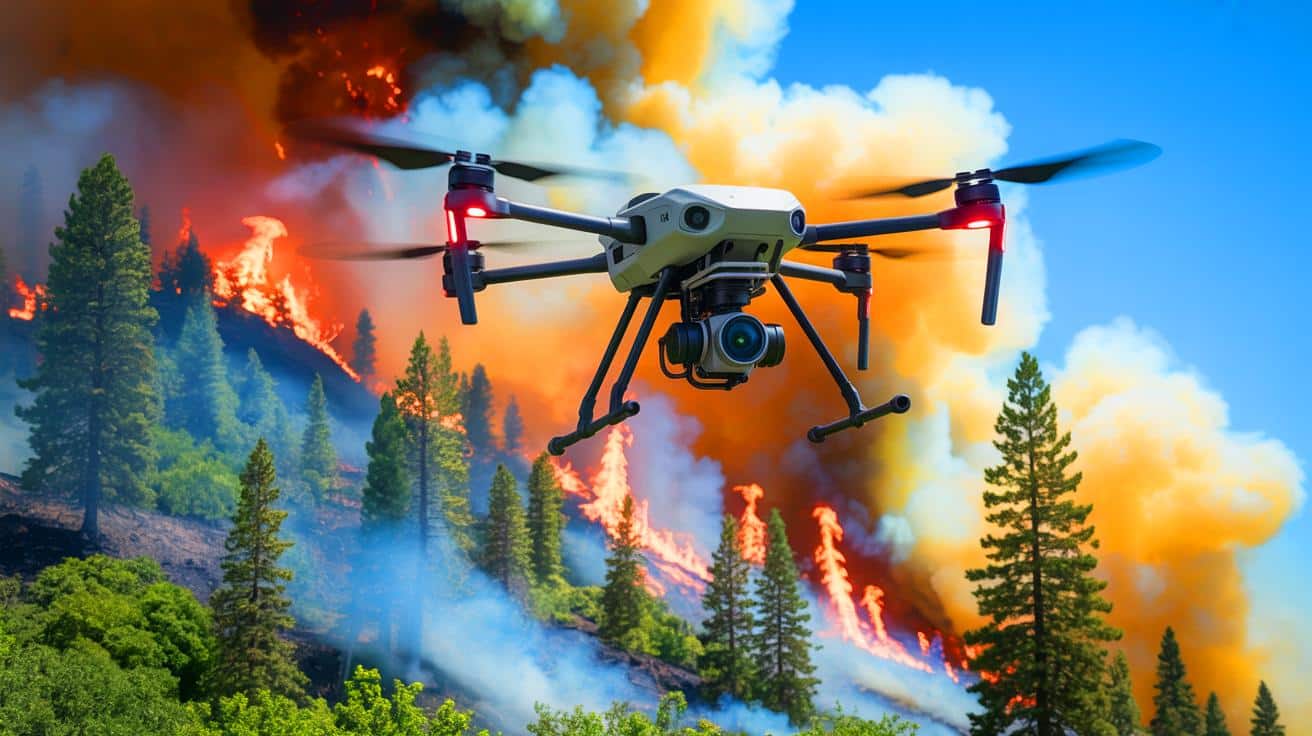
The increasing frequency and intensity of wildfires have posed significant challenges worldwide, prompting urgent calls for innovative solutions. In a groundbreaking collaboration, Anduril Industries and Korean Air have embarked on a project to develop an automated aerial platform designed to revolutionize wildfire response. By integrating unmanned systems, this initiative aims to manage the wildfire response cycle with minimal human intervention, enhancing efficiency and potentially saving lives and property. This partnership underscores the critical role of technology in addressing global environmental crises, setting a precedent for future collaborations in emergency response.
Revolutionizing Wildfire Response Through Automation
The collaboration between Anduril Industries and Korean Air marks a transformative approach to tackling wildfires. Anduril’s founder, Palmer Luckey, emphasized the outdated methods currently used in wildfire management, stating that the integration of Korean Air’s unmanned aerial vehicles (UAVs) into Anduril’s platform will significantly enhance automation and scalability. This partnership is poised to deliver a comprehensive and efficient response system, which is crucial in minimizing the devastating impact of wildfires.
The platform will utilize Anduril’s Lattice software to unify detection data from various sources, including air, land, and space sensors, to provide a cohesive operational picture. This integration allows for a rapid response, with UAVs quickly assessing the fire’s scale and status. The automation of these processes is expected to save countless lives and prevent billions in property damage by reducing response times and improving accuracy.
Leveraging Unmanned Systems for Effective Fire Management
The partnership aims to leverage Korean Air’s expertise in unmanned systems to address the global challenge of wildfires. As highlighted by a Korean Air spokesperson, their goal is to provide first responders with a significant technological advantage. This advantage comes from the ability to detect and contain fires more efficiently than traditional methods reliant on human visual detection, which can lead to critical delays.
By integrating Korean Air’s UAVs and jointly developed systems into Anduril’s Lattice platform, the collaboration seeks to offer a unified solution capable of rapid fire detection and containment. This approach is particularly advantageous in remote or inaccessible areas where traditional firefighting methods may be impractical or slow. The initiative also represents an expansion of the companies’ existing agreement to cooperate on unmanned systems in the Korean and Asia-Pacific markets.
The Technological Advantage of Anduril and Korean Air
The strengths of both Anduril Industries and Korean Air are critical to the success of this collaboration. Korean Air is at the forefront of UAV development in Korea, focusing on stealth and structural technologies to enhance performance. Anduril Industries, known for its software-defined, hardware-enabled capabilities, brings a wealth of experience in commercial and national security applications.
This collaboration leverages the technological expertise of both companies to create a robust wildfire response platform. The integration of Anduril’s Fury autonomous air vehicle (AAV) and Korean Air’s UAVs enables the platform to autonomously assess fire conditions and deploy additional resources as needed. This capability represents a significant advancement over traditional response models and highlights the potential of technology to solve complex environmental challenges.
A Vision for the Future of Emergency Response
This partnership between Anduril Industries and Korean Air is a significant step forward in the evolution of emergency response systems. By combining their expertise in unmanned systems and software integration, they aim to set a new standard for wildfire management. The potential benefits extend beyond immediate fire suppression, offering insights into how technology can be harnessed to address other environmental and humanitarian challenges.
As wildfires continue to pose a threat globally, the development of such advanced response platforms could serve as a blueprint for future innovations in disaster management. The collaboration invites reflection on how technology and strategic partnerships can be used to mitigate the impact of natural disasters and protect vulnerable communities.
As the world grapples with the escalating threat of wildfires, the collaboration between Anduril Industries and Korean Air offers a glimpse into the future of disaster response. By embracing automation and unmanned systems, they are paving the way for more effective and timely interventions. As this innovative platform evolves, it raises a critical question: How can other sectors harness similar technological advancements to address their own pressing challenges?
Continue reading