

“Tesla’s Sales Collapse 37% In Europe”: China Destroys Model Y While Federal Credits Disappear Forever Killing Everything
 By
Owen Fairbrother
By
Owen Fairbrother
| IN A NUTSHELL |
|
The third quarter of this year has brought a glimmer of hope for Tesla, as the automaker anticipates an upturn in vehicle deliveries. Analysts are revising their estimates, suggesting that Tesla could deliver between 430,000 and 480,000 vehicles. This performance marks a potential year-over-year increase, breaking the recent trend of declining deliveries. However, this resurgence may be short-lived. A combination of factors, including competitive pressures and changing economic incentives, poses significant challenges for Tesla in the upcoming quarters. As the company navigates these complexities, questions arise about its ability to sustain growth in the face of mounting obstacles.
Tesla’s Q3 Performance: A Temporary Reprieve
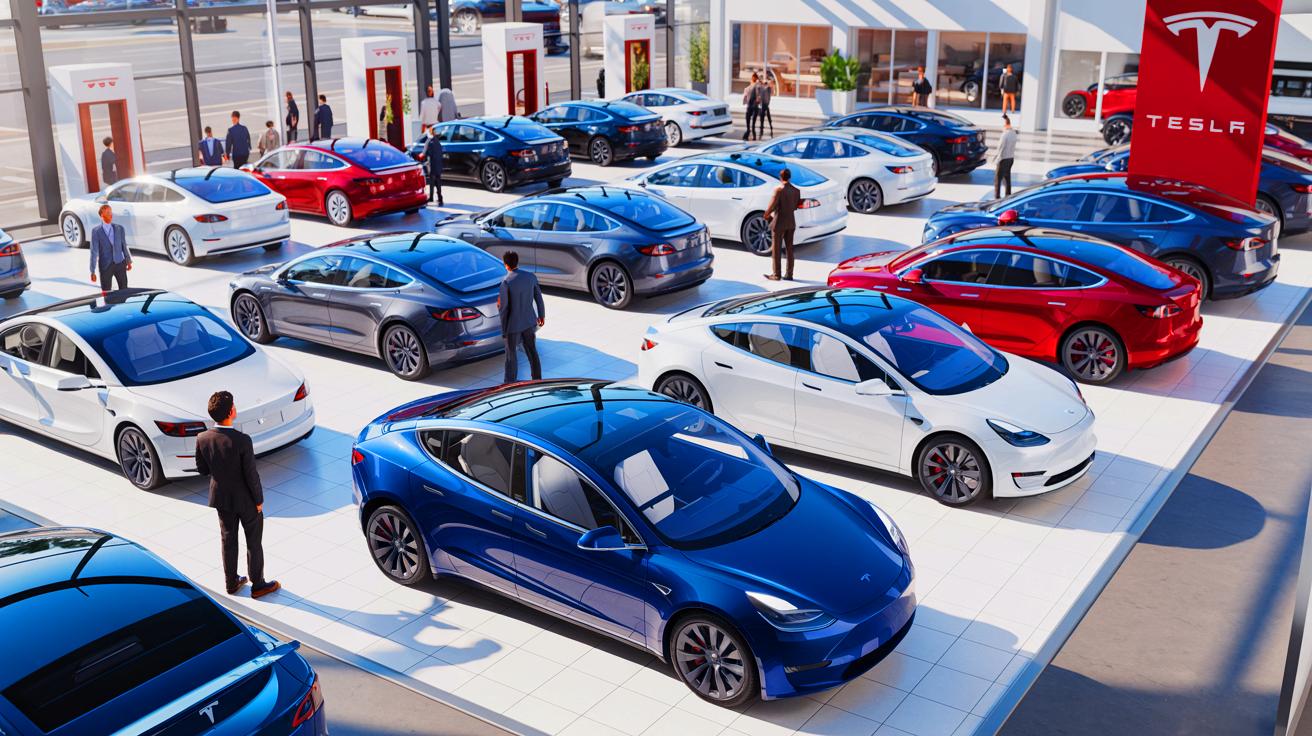
Tesla’s anticipated performance in the third quarter seems promising, thanks in large part to a surge in demand within the United States. This boost is primarily attributed to the expiration of federal tax credits for electric vehicles, which has prompted consumers to expedite their purchases. As a result, Tesla has managed to clear out nearly all its Model 3 and Model Y inventory, offering a temporary reprieve from its recent sales struggles. However, this spike in deliveries may not be sustainable, as the demand was merely pulled forward from the fourth quarter.
Despite the positive outlook for Q3, Tesla faces significant challenges in the global market. In Europe, the automaker continues to grapple with declining sales, as registration data indicates a drop of over 5,000 units compared to the same period last year. Year-to-date figures reveal a staggering 37% decrease in European sales. Similarly, in China, Tesla’s sales have dwindled by more than 24,000 units this year, exacerbating the company’s struggles in the competitive Chinese market.
The European and Chinese Markets: Persistent Challenges
While Tesla's Q3 performance in the U.S. is expected to improve, the European market tells a different story. The automaker has faced a significant decline in sales, with a year-to-date drop of 37%. This downturn reflects the increasing competition from Chinese automakers entering the European market, as well as the evolving consumer preferences in the region. As new models from competitors gain traction, Tesla's ability to maintain its market share in Europe remains uncertain.
In China, the challenges are equally daunting. The competitive landscape is fierce, with numerous local electric vehicle manufacturers vying for dominance. Tesla's sales have steadily declined, and the introduction of a stripped-down Model Y is unlikely to reverse this trend. As the Chinese market becomes more saturated, Tesla must innovate and adapt to retain its foothold. The question remains whether the automaker can navigate these headwinds and emerge stronger in these crucial markets.
Supercar maintenance: Tips for keeping your ride in top shape
The Role of Incentives and Competition
The expiration of federal tax credits for electric vehicles has played a significant role in Tesla's Q3 performance. This policy change created a temporary boost in demand, allowing Tesla to achieve higher delivery numbers. However, the long-term impact of such incentives is uncertain. As governments around the world reevaluate their stance on subsidies for electric vehicles, automakers like Tesla must contend with shifting market dynamics and consumer preferences.
Competition in the electric vehicle sector is intensifying, with traditional automakers and new entrants alike striving to capture market share. Tesla's dominance is increasingly challenged by rivals offering diverse models and competitive pricing. The introduction of new models from Chinese manufacturers further complicates Tesla's position in key markets. As the industry evolves, Tesla must innovate and differentiate itself to maintain its competitive edge.
The Road Ahead: Tesla's Strategic Imperatives
As Tesla navigates the challenges of a rapidly changing market, the company faces critical strategic decisions. The need for a refreshed vehicle lineup is apparent, as competitors introduce new models with advanced features and competitive pricing. Tesla's brand image, closely tied to Elon Musk, may also impact its appeal to consumers. The automaker must balance its innovation-driven ethos with the practicalities of market demands and consumer preferences.
Autonomy, once touted as a potential game-changer for Tesla, may not be the solution to its current challenges. While autonomous driving technology continues to advance, widespread adoption remains a distant prospect. In the meantime, Tesla must focus on bolstering its core offerings and expanding its presence in key markets. The road ahead is fraught with uncertainty, and Tesla's ability to adapt and innovate will determine its future success.
As Tesla navigates the complexities of the global electric vehicle market, the challenges it faces are multifaceted. From competitive pressures to changing economic incentives, the company's ability to sustain growth remains uncertain. As stakeholders ponder Tesla's future, one question looms large: Can Tesla maintain its leadership in the electric vehicle industry amidst intensifying competition and evolving market dynamics?